


It was reported late last month that North Korea had closed its borders to visitors over Ebola fears. The move speaks to the regime’s inexperience in dealing with the outside world, and is consistent with a dysfunctional approach that seems to impact all aspects of tourism in the secretive state. This is perhaps not surprising since, after decades of isolation, the Hermit Kingdom began eyeing the tourist dollar and cracked the door open without an established infrastructure or any idea of what foreign visitors might want to see. As a result, those who do decide to travel to Pyongyang — or will, after this ban is lifted (check tour Web sites for updates) — are treated to a unique, almost surreal experience.
Before deciding to visit, one has to do some soul-searching — is it even ethical? Certainly, the bulk of whatever money is paid ends up in the pockets of the regime, one starved for cash and attention. Your trip therefore will be contributing to that regime, in however small a way — no amount of mental gymnastics can obviate that culpability. Moreover, if you’re the type of person who enjoys a good debate and likes to challenge tour guides on sketchy historical assertions, then North Korea isn’t for you.
potemkin village
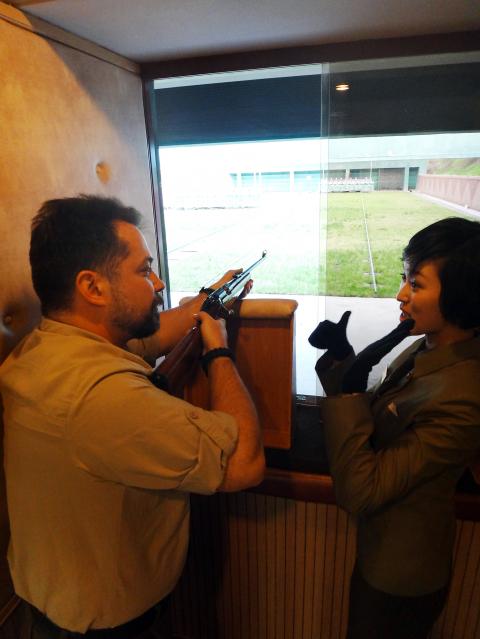
Photo: Dean Karalekas
How can such a closely-monitored visit give any insight into the country? True, Pyongyang is a Potemkin village, but as long as you are aware of the reality — that the North Korean caste system is one based on levels of loyalty to the Kim family, with only trusted members (and three generations of their descendants) even allowed to live in the capital — then you stand less of a chance of being sucked in by the propaganda.
On a recent trip, my tour was slated to visit a performing arts school — we pictured cute, little tykes trying to reach guitar frets with tiny fingers. Instead the bus arrived at the appropriately named Mangyongdae School Children’s Palace, complete with 120 rooms, a gym and a swimming pool.
Inside, they ushered us into a 2,000-seat theater, and the show began almost the second we were seated. It consisted of a series of thematic vignettes of children singing and dancing in perfect choreography, sets and lighting. The performances were outstanding and perfect in every minute detail.
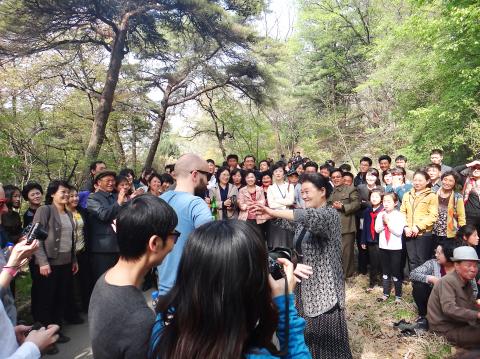
Photo: Dean Karalekas
“This is all kinds of wrong,” said a fellow tourist sitting next to me. Those poor kids, I remember thinking: not being allowed to run and play, and having to be trained — one wants to say “like monkeys,” but they were closer to robots. The takeaway from this, for me, was a very stern object lesson: “Look what we are willing to do to our own children,” it seemed to be saying. “What do you think we’d do to our enemies?”
On the way out, a couple of us needed to use the facilities, and we were puzzled to find that this palatial institution, with its imposing multi-story foyer and Broadway-like children’s show, did not have running water.
Peculiar conveniences
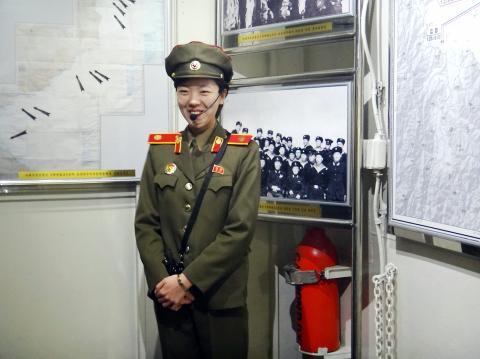
Photo: Dean Karalekas
This lack of plumbing at the palace is just one example of many such little peeks behind the curtain that suggest a well-hidden dysfunction. In another toilet-based example, while visiting Kim Il Sung square, a number of us needed to use the washroom, and one of the guides took us inside what we were told was a museum. Not expecting any visitors, the electricity was off in the entire building, but the on-site cafe still had a handful of employees manning the space — essentially sitting alone in the dark, chatting. After a few awkward minutes, the lights came on and we were directed to the facilities. No doubt many of our number lauded the management for their commitment to reducing their carbon footprint. Still, examples like this stand in stark contrast to the 24-hour lighting and playing of patriotic music at such sights as Mansudae, where stand the colossi of Kim Il Sung and Kim Jong Il.
Of course, without a tourist infrastructure in place, this dysfunction can sometimes work in your favor. While looking for a comfortable place on the bank of the Taedong river from which to watch an upcoming fireworks display, our guides, at the last minute, managed to secure permission for us to board a luxury riverboat — one already filled with party officials and other dignitaries. The last of us managed to hop aboard even as the ship was slipping its berth.
It is perhaps not surprising, given the DPRK’s unfamiliarity with the outside world and their desire to present an impressive front, that such ill-concealed maladjustment should peek through, even on the official tour stops. Fortunately, some groups manage to deviate somewhat from the packaged offerings, and these impromptu interactions with regular Koreans offer a more authentic, if oblique, insight into their daily lives. Whether this is dancing with locals in the wooded outskirts of the city, or taking in some target practice at the popular Pyongyang Shooting Range, it is the fleeting interactions with ordinary citizens that leave the best impression — that of decent, friendly people, curious about outsiders yet apprehensive about appearing too gregarious in view of the ubiquitous government minders. Indeed, it was a surprise to discover that, at least in some aspects, North Korea is less fanatical than many of our own countries.
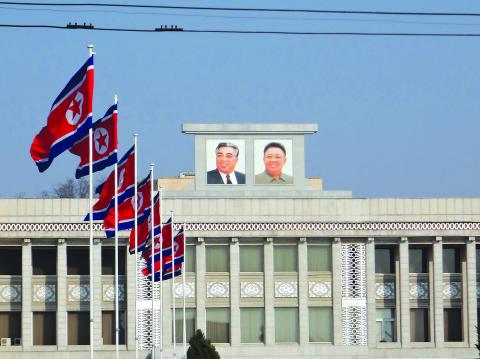
Photo: Dean Karalekas
Visit to the dmz
No visit to the DPRK is complete without a trip to Panmunjom, at the demilitarized zone (DMZ). When our party arrived in the main hall, called Panmungak, we were brought out to a balcony facing an almost identical building, called Freedom House, on the South Korean side. The moment had a frisson of irony as a group of tourists from Seoul were brought out at that very moment, barely 80m away. Naturally, each of us smiled and waved at our opposite numbers. They refused to reciprocate, and only later did we learn that tourists to the DMZ from the South side are given a stern warning by the US military not to wave or gesture across the zone in any way. There were no such concerns on the North side.
In fact, the soldiers on post duty couldn’t have been more different from their South Korean counterparts, who are aggressive and intimidating; their uniforms exquisitely tailored and pressed, and their boots as highly reflective as their sunglasses. And rather than standing to attention, some of them hover around the outside of their half of Conference Row, looking in at the tourists and making aggressive gestures through the windows.
For us, the whole experience was as relaxed and informal as the Southern equivalent was tense and prescribed, leading one to question, if only briefly, some of the presuppositions we have, as outsiders, about just who has truly drunk the Kool Aid in this conflict.
GETTING THERE:
You can choose to fly out of Beijing, or take the train to Pyongyang from Dandong, China
INFORMATION AND TOURS:
Entry to the DPRK is only permitted through approved tour operators, such as Koryo Tours and Young Pioneer
Koryo Tours: koryogroup.com
Young Pioneer: www.youngpioneertours.com
VISA INFORMATION:
Tour operators will handle your visa applications. Visas are issued on separate forms and not stamped into your passport
WHERE TO STAY:
Tourists can only stay at designated tourist hotels, such as the Koryo Hotel and the Yanggakdo International Hotel
WHAT TO BRING:
Collared shirt and tie, as well as slacks for men, to comply with the dress code for the Kumsusan Palace of the Sun, where Kim Il Sung and Kim Jong Il lie in state
Small gifts for your Korean guides. This is a tradition. Beauty products for women, cigarettes for men
Cameras, of course, but without GPS capability (these will be confiscated), and leave the telephoto lens at home
Spending money in Euro or RMB. Small bills
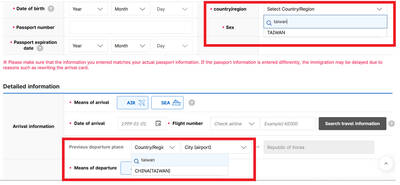
Jason Han says that the e-arrival card spat between South Korea and Taiwan shows that Seoul is signaling adherence to its “one-China” policy, while Taiwan’s response reflects a reciprocal approach. “Attempts to alter the diplomatic status quo often lead to tit-for-tat responses,” the analyst on international affairs tells the Taipei Times, adding that Taiwan may become more cautious in its dealings with South Korea going forward. Taipei has called on Seoul to correct its electronic entry system, which currently lists Taiwan as “China (Taiwan),” warning that reciprocal measures may follow if the wording is not changed before March 31. As of yesterday,

The Portuguese never established a presence on Taiwan, but they must have traded with the indigenous people because later traders reported that the locals referred to parts of deer using Portuguese words. What goods might the Portuguese have offered their indigenous trade partners? Among them must have been slaves, for the Portuguese dealt slaves across Asia. Though we often speak of “Portuguese” ships, imagining them as picturesque vessels manned by pointy-bearded Iberians, in Asia Portuguese shipping between local destinations was crewed by Asian seamen, with a handful of white or Eurasian officers. “Even the great carracks of 1,000-2,000 tons which plied
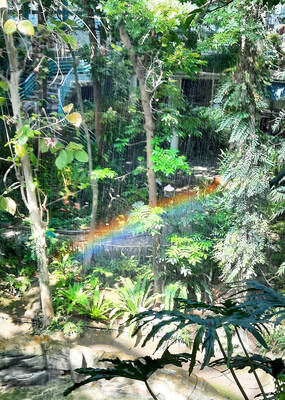
It’s only half the size of its more famous counterpart in Taipei, but the Botanical Garden of the National Museum of Nature Science (NMNS, 國立自然科學博物館植物園) is surely one of urban Taiwan’s most inviting green spaces. Covering 4.5 hectares immediately northeast of the government-run museum in Taichung’s North District (北區), the garden features more than 700 plant species, many of which are labeled in Chinese but not in English. Since its establishment in 1999, the site’s managers have done their best to replicate a number of native ecosystems, dividing the site into eight areas. The name of the Coral Atoll Zone might
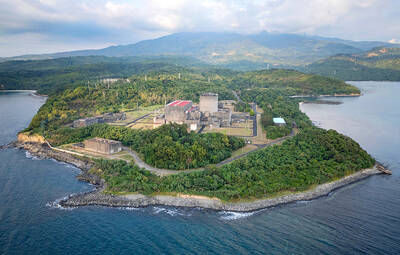
Nuclear power is getting a second look in Southeast Asia as countries prepare to meet surging energy demand as they vie for artificial intelligence-focused data centers. Several Southeast Asian nations are reviving mothballed nuclear plans and setting ambitious targets and nearly half of the region could, if they pursue those goals, have nuclear energy in the 2030s. Even countries without current plans have signaled their interest. Southeast Asia has never produced a single watt of nuclear energy, despite long-held atomic ambitions. But that may soon change as pressure mounts to reduce emissions that contribute to climate change, while meeting growing power needs. The


 RSS
RSS