


Founded by chef Mak Kwai Pui (麥桂培) in 2009, Tim Ho Wan (添好運), a dim sum restaurant chain from Hong Kong, is often praised as the world’s cheapest Michelin-starred restaurant. After establishing branches in Singapore and the Philippines, the restaurant opened its first outlet in Taipei during the summer, offering up authentic dim sum dishes priced between NT$78 and NT$138. Business is so good that customers commonly wait in line for up to two hours during peak hours. The restaurant, which is located just a three-minute walk from the Taipei Main Station MRT (台北車站), does not take reservations.
Hoping to beat the dinner rush, my friend and I arrived around 5:30pm on a weekday. But clearly others had the same plan as there were already dozens of people lined up. After a half-hour wait, during which time the staff had us fill out our order, we were seated at a tiny table. Tim Ho Wan follows tradition by keeping its decoration plain and tables close together. This is somewhat annoying because there is such a din in the crowded restaurant, I had to raise my voice when talking and could hear the conversation they were having at the next table.
Tim Ho Wan crowns its four most popular dim sum dishes as the “Big Four Heavenly Kings” (四大天王), and we decided to try them all. Baked buns with BBQ pork (NT$118) is the most popular of this royal family. According to the restaurant, they sold 66,000 buns during the one-month trial period — one bun every 17 seconds. The BBQ pork buns are fluffy and crumbly on the outside, and stuffed with tender pork cubes and a sweet and savory barbecue sauce. Unlike most restaurants, which use red artificial food coloring in their buns, Tim Ho Wan uses red rice.
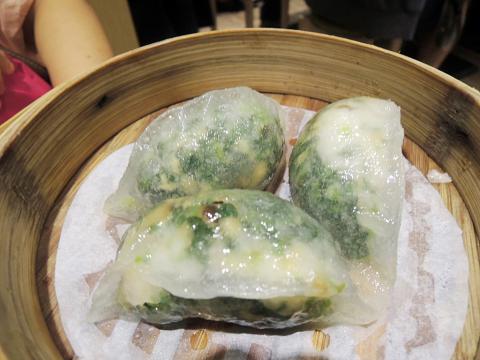
Photo: Eddy Chang, Taipei Times
The other “kings” are the pan-fried turnip cake (NT$98), steamed egg cake (NT$98) and vermicelli spring rolls with pig’s liver (NT$128). The turnip cakes (dubbed “carrot cake” on the menu) are slightly softer than ordinary turnip cakes, and the egg cake has an appealing brown sugar aroma that is not too sweet. The vermicelli rolls with pig’s liver were a nice change from the pork or shrimp varieties commonly found in Taiwan. The silky smooth rolls arrived drenched in an appealing combination of soy sauce, green onions and ginger.
Online food critics recommend the spring rolls with egg whites (NT$98), spinach dumplings with shrimp (NT$98), pork dumplings with shrimp (NT$128), vermicelli rolls with shrimp (NT$128) and, most impressive, the wasabi salad prawn dumplings (NT$128). These prawn dumplings, which are bursting with shrimp, are deep-fried until golden and crispy, and then decorated with a dollop of green wasabi and fish roe.
Each of us paid almost NT$600 for the meal, which was slightly more expensive than what they are charging at the outlets in Hong Kong. Overall, Tim Ho Wan was a unique dining experience with Michelin-starred delicacies in a small eatery’s atmosphere. The restaurant plans to open 10 outlets in Taiwan within five years. Hopefully, the new outlets can offer a better environment to match the good food.
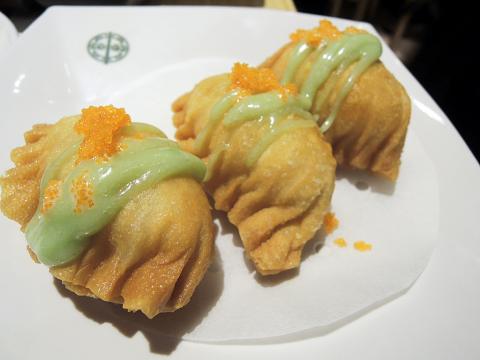
Photo: Eddy Chang, Taipei Times
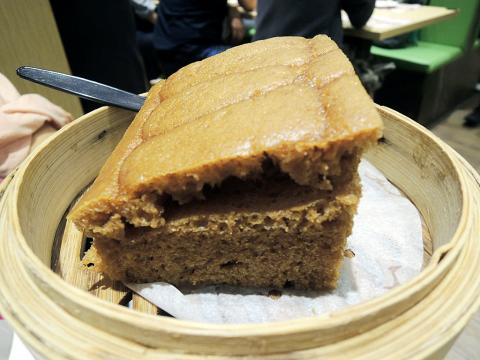
Photo: Eddy Chang, Taipei Times
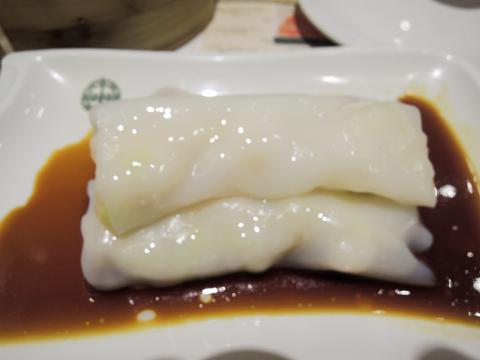
Photo: Eddy Chang, Taipei Times
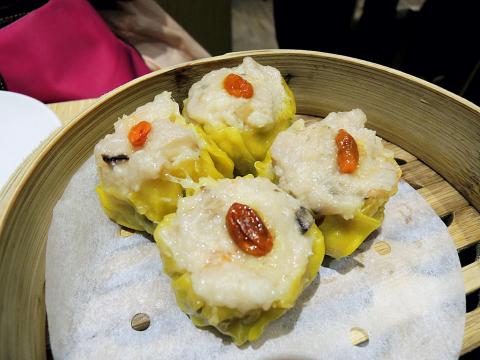
Photo: Eddy Chang, Taipei Times
If one asks Taiwanese why house prices are so high or why the nation is so built up or why certain policies cannot be carried out, one common answer is that “Taiwan is too small.” This is actually true, though not in the way people think. The National Property Administration (NPA), responsible for tracking and managing the government’s real estate assets, maintains statistics on how much land the government owns. As of the end of last year, land for official use constituted 293,655 hectares, for public use 1,732,513 hectares, for non-public use 216,972 hectares and for state enterprises 34 hectares, yielding
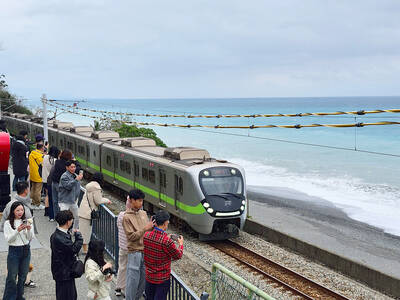
The small platform at Duoliang Train Station in Taitung County’s Taimali Township (太麻里) served villagers from 1992 to 2006, but was eventually shut down due to lack of use. Just 10 years later, the abandoned train station had become widely known as the most beautiful station in Taiwan, and visitors were so frequent that the village had to start restricting traffic. Nowadays, Duoliang Village (多良) is known as a bit of a tourist trap, with a mandatory, albeit modest, admission fee of NT$10 giving access to a crowded lane of vendors with a mediocre view of the ocean and the trains

The March/April volume of Foreign Affairs, long a purveyor of pro-China pablum, offered up another irksome Beijing-speak on the issues and solutions for the problems vexing the People’s Republic of China (PRC) and the US: “America and China at the Edge of Ruin: A Last Chance to Step Back From the Brink” rang the provocative title, by David M. Lampton and Wang Jisi (王緝思). If one ever wants to describe what went wrong with US-PRC relations, the career of Wang Jisi is a good place to start. Wang has extensive experience in the US and the West. He was a visiting
One of the challenges with the sheer availability of food in today’s world is that lots of us end up spending many of our waking hours eating. Whether it’s full meals, snacks or desserts, scientists have found that it’s not uncommon for us to be mindlessly grazing at some point during all of our 16 or so waking hours. The problem? As soon as this food hits the bloodstream in the form of glucose, it initiates the release of the hormone insulin. This in turn activates a switch present in every one of our cells, which is responsible for driving cell


 RSS
RSS