


Bad, wicked and horny. This is how viewers are encouraged to feel at this year’s Women Make Waves Film Festival (女性影展, WMW), which runs through Oct. 26 and features a lineup of nearly 80 feature, documentary, short and animated films from 22 countries.
Festival director Pecha Lo (羅珮嘉) says WMW has evolved considerably, and it’s now time for it to seek liberation.
“In our early days, we showed men loving men and women loving women. Then we talked about transgender issues. Now that we don’t have questions and doubts about who we are, we want to start to queer it up,” Lo told the Taipei Times.
Photos Courtesy of WMW
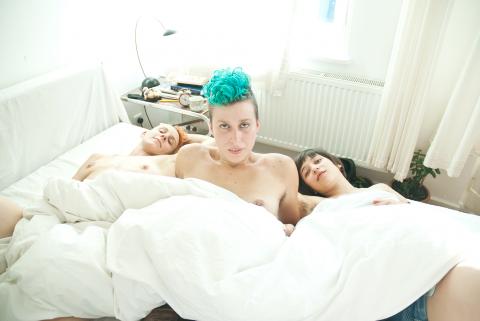
The work of Marit Ostberg, for example, explores queer politics through pornography. Currently based in Berlin, the Swiss filmmaker is internationally known for a series of queer feminist pornographic films. In her 2011 documentary Sisterhood, the lesbian porn director talks to participants in one of her porns about sexual power and pleasure as well as their experiences of taking part in the queer feminist porn scene in Europe.
“Watching the film, local audiences can get an idea of how situations vary in different countries. While some countries remain homophobic, others are open to different sexual orientations and gender identities. In Berlin, they have already looked into feminist porn as an industry,” Lo says.
Tomorrow night, Ostberg will attend the screenings of Sisterhood and two of her pornographic works, Authority and Share, and discuss her works.

Photos Courtesy of WMW
SHARE THE NEGATIVITY
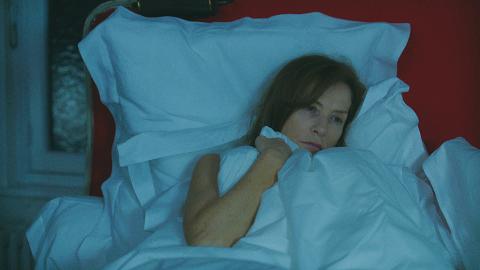
Those fed up with the tenets of positive thinking are invited to confront, accept and share their negative feelings with others. In The Alphabet of Feeling Bad, an experimental short by German artist Karin Michalski, American queer-feminist theorist and activist Ann Cvetkovich performs in a bed in accordance with her conversation with the filmmaker and defines negative feelings such as trauma and depression in alphabetic order, with the intension of politicizing them in the context of homophobia, racism and neoliberal capitalism.
Startlingly autobiographical and psychologically complex, Abuse of Weakness, the festival’s opening film, features Isabelle Huppert as director Catherine Breillat’s onscreen equivalent to explore the abusive, sado-masochistic relationship between a partly crippled film director and an unrepentant con man reportedly played by rapper Kool Shen.
Photos Courtesy of WMW
Breillat aficionados might want to take note that the French auteur will hold a talk after the screening of her film tonight.
Apart from the matter of sex, gender and queer politics, the festival organizers also attempt to address current social issues through cinematic works. In light of recent controversies surrounding the legislation of same-sex marriage, films in the section The Faces of Making a Family are intended to challenge the conventional idea about family. Jackie, for example, shows that the bond that links a family is not necessarily one of blood through a road trip taken by two twin sisters, who are raised by their two fathers, to see their surrogate mother whom they never meet.
With the sense of authenticity of a docudrama, Berlin- and Sundance-winning 52 Tuesdays weaves together an emotionally charged story about a teenage girl’s struggle to adjust her mother’s female-to-male gender transition.

Photos Courtesy of WMW
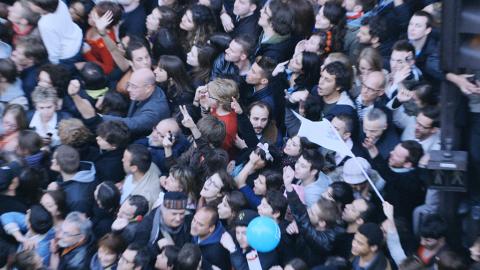
“The anti-gay marriage protest last year prompted us to return to the basic question: what is a family? It doesn’t just concern gays and lesbians. For example, straight people and asexual individuals may also want to form families not with a husband or a wife but with friends. And they need the kinds of legal guarantees that are found within the traditional institution of marriage,” Lo says.
Photos Courtesy of WMW

Photos Courtesy of WMW
Photos Courtesy of WMW

Taiwan’s English education system is being pulled apart by three opposing forces. Bilingual Nation 2030 pulls students toward English and global communication. Artificial Intelligence (AI) readiness pulls them toward digital judgment, verification and AI-mediated work. But Taiwan’s old exam culture pulls them back toward memorization, grammar drills, timed reading and correct answers. If the education system keeps using old exams to define success, it risks producing graduates who are neither genuinely bilingual nor genuinely AI-ready, but trained for tasks machines can already perform. The first force is Bilingual Nation 2030. Launched in 2018, the policy aimed to “help Taiwan’s workforce connect
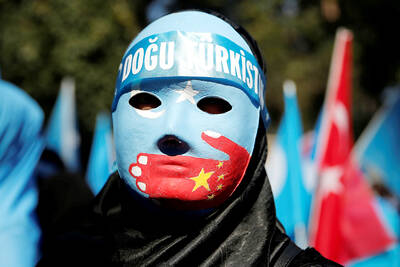
It seems every few days one bumps into one of those “real man” comments in which Taiwan is urged to “face reality” or similar, and “make a deal,” with the speaker implying that soon it will be too late. “Deal” advocates always present themselves as having a superior grip on reality, and the manly ability to make the “hard choice.” Their testosterone-laden language often echoes that of Taiwan sellout advocates. Note that such commentary always specifies a process (“make a deal, work with, make progress”), never the end state of what occupation by a violent authoritarian colonialist state will entail. In

“Taiwan’s Opposition Leader Comes to US With a Message Straight Out of Beijing” read a May 31 headline in the Wall Street Journal. Top US administration officials and members of Congress almost certainly read the WSJ, and if there was a bullet point takeaway that people in Washington should absorb ahead of Chinese Nationalist Party (KMT) Chair Cheng Li-wun’s (鄭麗文) arrival in DC on June 9, that headline is it. The last few columns have discussed this very topic, and the timing is not coincidental. While those top officials likely do not read the Taipei Times, judging by the number
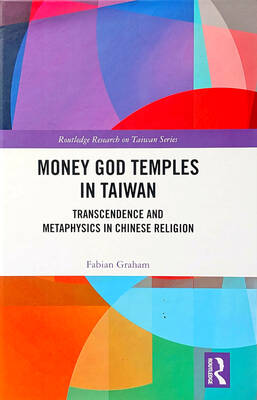
As someone who normally steers clear of books with “transcendence” or “metaphysics” in their subtitles, this reviewer — a casual observer of local belief systems since the 1990s — found Fabian Graham’s Money God Temples in Taiwan a challenging read. Those who’ve only dipped their toes into temple culture will likely need to parse several sections with special care if they’re to keep up with the author, a British ethnographic researcher whose previous books have investigated religious practices among ethnic Chinese in Southeast Asia. This scholarly volume examines a facet of Taiwan’s religious landscape that didn’t exist a century ago, and


 RSS
RSS