


Facing former Oriole Jeremy Guthrie, Greater Kaohsiung native Chen Wei-yin (陳偉殷) started for the Baltimore Orioles in the critical third game of the American League Championship Series (ALCS) yesterday.
In front of 40,000-plus fans in Kansas City, the Orioles starter pitched a solid 5 1/3 innings, giving up two earned runs.
Though Chen, 29, ended up on the losing end and putting the Orioles down zero games to three in the best-of-seven series, his pitching prowess had helped the team advance to the ALCS for the first time since 1997.

Photo: AFP
Chen also finished the regular season with an MLB career-low 3.54 ERA and led the team with 16 wins — the most wins for a left-handed Orioles pitcher since Jeff Ballard won 18 games in 1989.
A CAREER in TWO CITIES
Before joining the Baltimore Orioles, Chen pitched for the Chunichi Dragons in the Nippon Professional Baseball League.

Photo: AFP
He signed with the Chunichi Dragons in 2004 and relocated to Nagoya, Japan, where he picked up fluent Japanese. Despite his language skills, he found it difficult to adapt to baseball and life there.
He said that in Nagoya, he needed to consider the views of everyone — his peers, coaches, elders, and juniors — and the social interactions felt rigidly hierarchical.
It has been easier to mesh with his teammates in Baltimore, Chen said, because they don’t care about his age, or how long he has been playing.
In 2012, Chen signed a three-year, US$11.3 million contract with the Orioles and moved to Baltimore. He now spends 11 months out of the year there.
“I have been able to integrate with the team and the city and that has made me feel happy,” Chen said in Mandarin at ALCS Media day in Baltimore at Oriole Park at Camden Yards.
His transition to the US was smoother also because he had already experienced culture shock before and knew to do some reconnaissance.
“The only worrying thing I heard from others before I came [to the US] was about the food. But actually, for me, food isn’t that important because I’m not a picky eater,” Chen said.
FAMILIES AND COACHES
There are, however, challenges to living in the US, Chen said, remarking that he misses Taiwan.
“The thing I miss the most is my family,” he said.
And with most overseas Chinese speakers preferring to use Mandarin Chinese, he also longs for more opportunities to speak Hoklo (commonly known as Taiwanese). Chen said his Hoklo has regressed since leaving Taiwan.
Outside of baseball, Chen enjoys the relative ease with which he can play golf. Compared with Asia, golf courses in the US are relatively inexpensive and more accessible. Chen said he’s a fan of other sports such as American football and ice hockey, though he doesn’t fully understand the rules.
On the diamond, Chen has needed to readjust his mindset. In Japan, baseball technique was most important. In the Major Leagues, there is a different priority.
“In the US, all they want to do is win,” Chen said.
POSITIVE EXPERIENCES
His experiences with US coaches have been relatively positive. He said that in Japan and other parts of Asia, baseball managers have a tendency to focus on a player’s weaknesses in the hope of improving those aspects.
Not being able to speak English fluently does create challenges, though. He said he can learn a lot from the Orioles manager, Buck Showalter.
However, he added that he does not always fully understand Showalter’s tactics.
“In the US, they can inspire you by pointing out the good aspects of your play. The culture is different so my feeling is different.”
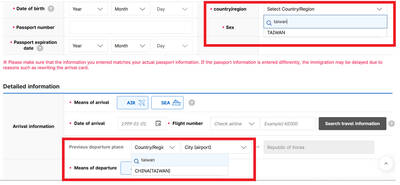
Jason Han says that the e-arrival card spat between South Korea and Taiwan shows that Seoul is signaling adherence to its “one-China” policy, while Taiwan’s response reflects a reciprocal approach. “Attempts to alter the diplomatic status quo often lead to tit-for-tat responses,” the analyst on international affairs tells the Taipei Times, adding that Taiwan may become more cautious in its dealings with South Korea going forward. Taipei has called on Seoul to correct its electronic entry system, which currently lists Taiwan as “China (Taiwan),” warning that reciprocal measures may follow if the wording is not changed before March 31. As of yesterday,

The Portuguese never established a presence on Taiwan, but they must have traded with the indigenous people because later traders reported that the locals referred to parts of deer using Portuguese words. What goods might the Portuguese have offered their indigenous trade partners? Among them must have been slaves, for the Portuguese dealt slaves across Asia. Though we often speak of “Portuguese” ships, imagining them as picturesque vessels manned by pointy-bearded Iberians, in Asia Portuguese shipping between local destinations was crewed by Asian seamen, with a handful of white or Eurasian officers. “Even the great carracks of 1,000-2,000 tons which plied

It’s only half the size of its more famous counterpart in Taipei, but the Botanical Garden of the National Museum of Nature Science (NMNS, 國立自然科學博物館植物園) is surely one of urban Taiwan’s most inviting green spaces. Covering 4.5 hectares immediately northeast of the government-run museum in Taichung’s North District (北區), the garden features more than 700 plant species, many of which are labeled in Chinese but not in English. Since its establishment in 1999, the site’s managers have done their best to replicate a number of native ecosystems, dividing the site into eight areas. The name of the Coral Atoll Zone might
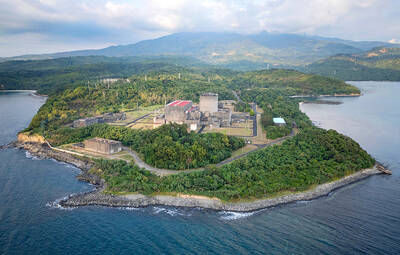
Nuclear power is getting a second look in Southeast Asia as countries prepare to meet surging energy demand as they vie for artificial intelligence-focused data centers. Several Southeast Asian nations are reviving mothballed nuclear plans and setting ambitious targets and nearly half of the region could, if they pursue those goals, have nuclear energy in the 2030s. Even countries without current plans have signaled their interest. Southeast Asia has never produced a single watt of nuclear energy, despite long-held atomic ambitions. But that may soon change as pressure mounts to reduce emissions that contribute to climate change, while meeting growing power needs. The


 RSS
RSS