


A new generation of Japanese architects believes the world has fallen out of love with the 20th century steel and concrete skyscraper. They are pushing a human-friendly alternative that some say has roots in the elegant simplicity of the traditional Japanese tea house. Instead of pursuing monuments that cry out with a message of economic power, these Pritzker Prize-winning architects are scoring success with a uniquely Japanese reinterpretation of the past.
Unlike their predecessors, who modernized Japan with Western-style edifices, they talk of fluidly defining space with screens and sliding doors, innovatively blending with nature, taking advantage of earthy materials and incorporating natural light, all trademarks of Japanese design.
Their sensibility is also a hit abroad, said Erez Golani Solomon, professor of architecture at Waseda University in Tokyo.
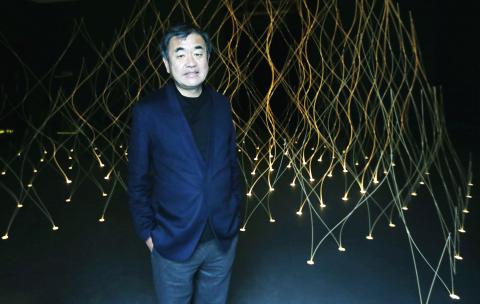
Photo: Reuters
“Food and architecture,” said Solomon, stressing how the two are Japan’s most potent brands. “They are powerful — Japan’s strongest cultural identity.”
JAPANESE SIMPLICITY
Kengo Kuma, one of the star architects, finds he is in demand not only in Japan and in the West but also in places such as China, which has tempestuous relations with Tokyo but now boasts a growing fan base for Kuma’s works.
Among the major China projects for Kuma are the recent Xinjin Zhi Museum, whose sloping angles and repeated tile motifs are characteristically Kuma, and the Yunnan Sales Center, a sprawling complex of shops, housing and a theater, where wooden lattice decorates the main structure overlooking a pond.
He also designs private homes for affluent Chinese who admire Zen philosophy and want to incorporate that stark aesthetic into their daily lives, he said.
Kuma, an admirer of Frank Lloyd Wright, a pioneering American architect known for cherishing nature and people in his designs, at times uses interlocking wooden frames, defining a building’s shape with a collage of angles that seem to change organically. Natural wood is everywhere, in screens, doors and furniture.
Japanese architecture offers warmth and kindness as it is adept in the use of natural light and artisanal craftsmanship, such as bamboo and paper. It is “working together like music,” Kuma said, to create a comfortable and luxurious spot even in a cramped space. That’s the basic principle of a Japanese tea house, he said.
“It’s part of our genetic makeup,” Kuma told AP, sitting in his Tokyo studio among elegant chairs designed by himself and others by Ludwig Mies van der Rohe, and pointing with disgust at the vaulting skyscrapers visible from his window.
The older generation of Japanese may have embraced the superiority of the Western lifestyle, including construction he feels is merely based on stacking blocks on top of each other, but not architects of his generation, said Kuma.
“People all over the world are sick and tired of modern monuments,” he said. “The desire for the human and the gentle is a backlash to the globalization that brought all these monster skyscrapers.”
No other place illustrates Kuma’s Japanese sense of blending with the surroundings than his Nezu Museum in Tokyo. Its sloping roofs evoke temples, and one side is all glass, facing a Henri Rousseau-evoking garden spilling with plants, Buddhist statues and a pond with irises.
BOUNDLESS ARCHITECTURE
Also erasing boundaries with the outside is the architecture of Sou Fujimoto, another rising star.
Fujimoto’s house of glass, and it is literally just that, sits in a residential area in Tokyo, stunning in how it quietly asserts itself, despite its transparency, turning stereotypes of housing on their heads.
Instead of seeking shelter from the environment, residents experience the passage of time, seeing the sun and the stars above; watching and being watched by neighbors and passers-by. No room is defined by walls, as we know them, although drapes can be drawn for privacy.
Inhabitants move from one area to another within a borderless box. At night, the home glows like a luminescent jewel.
Like Kuma, Fujimoto is busy, working all over the world, including Germany, the U.S., France and China. Eighty percent of his work is from outside Japan, and half of his staff is non-Japanese.
His works have a striking look. His beachside cultural center in Serbia is a giant spiral, while a bungalow in southern Japan is a cube of wooden blocks. His Serpentine Pavilion in London of metal lattice has been compared to a cloud. In Montpellier, France, construction begins next year for a housing complex he has designed with balconies sprouting precariously at all angles from a tower.
Fujimoto, who admires modern architecture pioneer Le Corbusier, sees the jumbled, kitsch Tokyo city landscape as connected with the forests he grew up with in the rural northernmost island of Hokkaido.
“This understanding of the connection between nature and the man-made is Japanese. The Japanese garden utilizes nature while also being finely crafted. You go back and forth between those two points,” Fujimoto said. “I like this co-existence of the convoluted with simplicity, being not just minimalist and simple but also energetic and complex.”
PRITZKER NOD
In a telling sign of their rising stature, four of the winners of the prestigious Pritzker Architecture Prize in the last six years have been Japanese: Kazuyo Sejima, Ryue Nishizawa, Toyo Ito and Shigeru Ban.
In the past, the winners were few and far between. Kenzo Tange, known for his statuesque, curvaceous Tokyo Olympic stadium, won the Chicago-based Pritzker in 1987; Fumihiko Maki, who infused an Eastern sensibility into his floating forms of glass, metal and concrete, won in 1993; and the self-taught and idiosyncratic Tadao Ando was the third Japanese to win, nine years after Tange.
More recently, Japanese have also been recognized with the gold medal by The American Institute of Architects. Maki won in 2011 and Ando in 2002. Ito won the Royal Gold Medal from the Royal Institute of British Architects in 2006. A win by a non-Westerner for such awards had long been rare.
Sejima, who works with Nishizawa, is coveted for her trademark ethereally white designs, often using glass, such as the Louvre Lens in France, the Christian Dior building in Tokyo and the Zollverein School in Germany.
Ban carved out his career by using recycled paper tubes as construction material, and his housing ideas have been widely praised for their use as temporary housing after disasters.
When people were crammed in a gym after the 2011 tsunami in northeastern Japan, his idea of hanging cloth as partitions on paper-tubing frames delivered privacy and a sense of mental peace.
Ban also created housing out of shipping containers, placed on top of each other, proving that a little artistry could add beauty as well as comfort to disaster housing.
Ban denies anything “Japanese” about his designs, scoffing at the often made suggestion that he is inspired by “shoji” paper screens, stressing he uses paper as construction materials.
“I hate to use Japanese tradition consciously as a style,” he said, while conceding that his idea of connecting the inside with the outside may be Japanese, but noting with a laugh the influence can be seen with American architects as well.
“Nationality is not that important,” he said.
Ban is no exception in being in great demand outside Japan, such as his villa in Sri Lanka that blends with the ocean on one side and a forest on the other, and the Cardboard Cathedral in Christchurch, New Zealand, which was built of paper and glass to replace the cathedral damaged in the 2011 quake.
INSIDE OUTSIDE
Fuji Kindergarten in Tachikawa, outside Tokyo, by Takaharu and Yui Tezuka, also illustrates the idea of fusing the outside with the inside.
The walls of the doughnut-shaped building are glass, and they open as sliding doors into a courtyard. The spherical roof works as a playground, for the children to run around and around.
The couple often uses the roof for living space, and they swear sitting side by side on a sloped surface, like a riverbank, as opposed to facing each other across a table, is good for human relations.
With Japanese architecture, a slight change of approach transforms a roof into something more than just a roof, in the same way the artistry with which a chef cuts and presents raw fish transforms it into sashimi, Takaharu Tezuka said.
The Tezukas also utilize the Japanese “engawa,” or porch, to blur the distinction between inside and outside for a “wall-less” effect.
“One of the most important qualities of Japanese architecture is its openness,” said Takaharu Tezuka. “Some European and American architects say it’s important to have intermediate space, between inside and outside. But our approach is different. Everything is intermediate.”
It’s also clear the Tezukas have also made family a central theme in their designs.
Seeing that children climb into closet-like niches, they created hideaway spots in their buildings. Their work proposes a move away from the stereotypical Japanese workaholic lifestyle toward an enjoyment of quality in daily life.
The 1987 Pritzker winner “Kenzo Tange was dealing with Japanese architecture as a symbol,” said Takaharu Tezuka, who always wears blue. “But now we are referring to lifestyle.”
Takaharu’s wife and collaborator Yui wears red. Everything they share, such as their car, is yellow and their daughter dresses in yellow. Their son wears green.
“Architecture is a tool, and it holds the possibility for changing your life,” she said. “Life will become fun.”

Jason Han says that the e-arrival card spat between South Korea and Taiwan shows that Seoul is signaling adherence to its “one-China” policy, while Taiwan’s response reflects a reciprocal approach. “Attempts to alter the diplomatic status quo often lead to tit-for-tat responses,” the analyst on international affairs tells the Taipei Times, adding that Taiwan may become more cautious in its dealings with South Korea going forward. Taipei has called on Seoul to correct its electronic entry system, which currently lists Taiwan as “China (Taiwan),” warning that reciprocal measures may follow if the wording is not changed before March 31. As of yesterday,

The Portuguese never established a presence on Taiwan, but they must have traded with the indigenous people because later traders reported that the locals referred to parts of deer using Portuguese words. What goods might the Portuguese have offered their indigenous trade partners? Among them must have been slaves, for the Portuguese dealt slaves across Asia. Though we often speak of “Portuguese” ships, imagining them as picturesque vessels manned by pointy-bearded Iberians, in Asia Portuguese shipping between local destinations was crewed by Asian seamen, with a handful of white or Eurasian officers. “Even the great carracks of 1,000-2,000 tons which plied
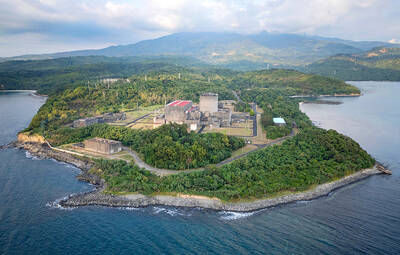
Nuclear power is getting a second look in Southeast Asia as countries prepare to meet surging energy demand as they vie for artificial intelligence-focused data centers. Several Southeast Asian nations are reviving mothballed nuclear plans and setting ambitious targets and nearly half of the region could, if they pursue those goals, have nuclear energy in the 2030s. Even countries without current plans have signaled their interest. Southeast Asia has never produced a single watt of nuclear energy, despite long-held atomic ambitions. But that may soon change as pressure mounts to reduce emissions that contribute to climate change, while meeting growing power needs. The
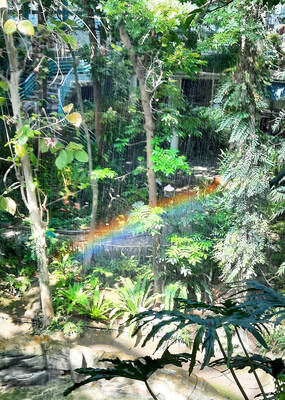
It’s only half the size of its more famous counterpart in Taipei, but the Botanical Garden of the National Museum of Nature Science (NMNS, 國立自然科學博物館植物園) is surely one of urban Taiwan’s most inviting green spaces. Covering 4.5 hectares immediately northeast of the government-run museum in Taichung’s North District (北區), the garden features more than 700 plant species, many of which are labeled in Chinese but not in English. Since its establishment in 1999, the site’s managers have done their best to replicate a number of native ecosystems, dividing the site into eight areas. The name of the Coral Atoll Zone might


 RSS
RSS