


Art collectors sued Keith Haring’s foundation Friday, saying it has cost them at least US$40 million by publicly labeling about 90 paintings by the late artist as “counterfeit” and “fake” as it refuses to fully evaluate them.
The lawsuit in US District Court in Manhattan portrayed the Keith Haring Foundation Inc’s approach to authentication as irrational and irresponsible, saying its authentication committee operated for many years “in secret, with little or no explanation, and often without ever physically inspecting the works.”
It said the foundation Haring started shortly before he died of AIDS in 1990 disbanded the committee in 2012 to shield itself from litigation over its decisions but continued to obstruct the emergence of new Haring works through “malicious and wrongful tactics,” including shutting down the display of Haring art at a Miami show in March.
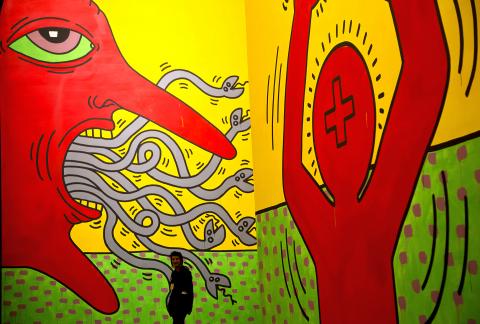
Photo: EPA
The foundation last year sued organizers of the “Haring Miami” show, saying it was intended to defraud the public by exhibiting 200 purported works of art by Haring that were mostly fakes. The foundation said the paintings, mostly acrylic on canvas, would be worth about US$40 million if they were authentic.
“Putting all these cheap Haring fakes into the market will depress the market and irreparably destroy the value of the authentic art and the reputation of the artist and the artwork,” foundation lawyers wrote. In legal papers, they said a foundation director who visited the Miami show was “shocked at the blatant fraud involved” and saw only about eight authentic Haring works there.
Attorneys for the Haring foundation did not immediately comment on the New York lawsuit.
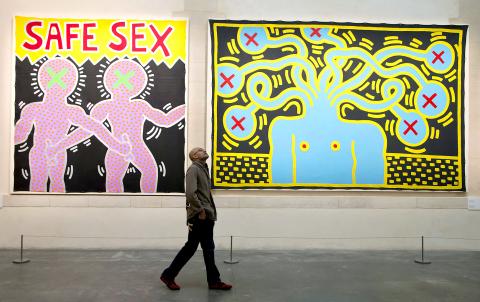
Photo: EPA
Nine art collectors maintained in their lawsuit Friday that the foundation was motivated to restrict the discovery of new Haring art in part to boost the value of paintings already on the market, including some pieces that the foundation itself sold between 2008 and 2011 for US$4.6 million, the lawsuit said.
The lawsuit said a certificate of authenticity greatly increases the value of a piece of art, making it available for sale through major auction houses as well as through private buyers.
The lawsuit was brought by collectors who it said began buying works in 2007 from two of Haring’s friends. One of them was Haring’s former lover, a DJ who was introduced to Haring in 1982 and says the prolific artist gave him numerous pieces in the 1980s. The others were obtained from a graffiti artist, Delta Cortez.
Pictures of the artwork, attached to the lawsuit as an exhibit, had titles such as Blue Baby, Baseball Mitt, Angel Winged TV and Green Man Holding Red Baby. All were in Haring’s cartoonish sketching style.
Because many buyers wanted paperwork certifying the art as authentic, Cortez sometime after 1999 contacted the foundation, the lawsuit said. A representative initially expressed strong interest and asked for pictures and descriptions of the art, but the foundation eventually told him it would authenticate one or two of the pieces if he gave the foundation 10 pieces, according to the lawsuit.
Cortez again contacted the foundation in 2006 but was told that the foundation was not certifying artworks like the ones he wished to submit at that time and further conversations and inquiries “proved fruitless,” the lawsuit said.
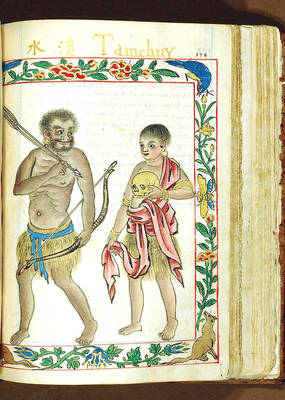
The Portuguese never established a presence on Taiwan, but they must have traded with the indigenous people because later traders reported that the locals referred to parts of deer using Portuguese words. What goods might the Portuguese have offered their indigenous trade partners? Among them must have been slaves, for the Portuguese dealt slaves across Asia. Though we often speak of “Portuguese” ships, imagining them as picturesque vessels manned by pointy-bearded Iberians, in Asia Portuguese shipping between local destinations was crewed by Asian seamen, with a handful of white or Eurasian officers. “Even the great carracks of 1,000-2,000 tons which plied
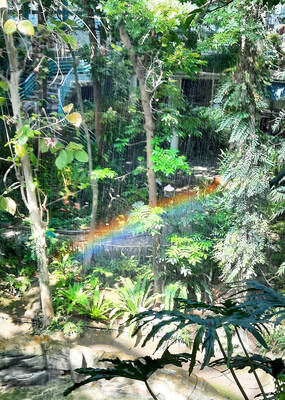
It’s only half the size of its more famous counterpart in Taipei, but the Botanical Garden of the National Museum of Nature Science (NMNS, 國立自然科學博物館植物園) is surely one of urban Taiwan’s most inviting green spaces. Covering 4.5 hectares immediately northeast of the government-run museum in Taichung’s North District (北區), the garden features more than 700 plant species, many of which are labeled in Chinese but not in English. Since its establishment in 1999, the site’s managers have done their best to replicate a number of native ecosystems, dividing the site into eight areas. The name of the Coral Atoll Zone might
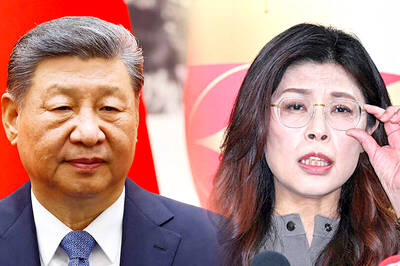
On Monday morning, in quick succession, the Chinese Communist Party (CCP) and the Chinese Nationalist Party (KMT) released statements announcing “that the Central Committee of the Communist Party of China and General Secretary Xi Jinping (習近平) have invited KMT Chairwoman Cheng Li-wun (鄭麗文) to lead a delegation on a visit to the mainland” as the KMT’s press release worded it. The KMT’s press release added “Chairwoman Cheng expressed her gratitude for the invitation and has gladly accepted it.” Beijing’s official Xinhua news release described Song Tao (宋濤), head of the Taiwan Work Office of the CCP Central Committee, as
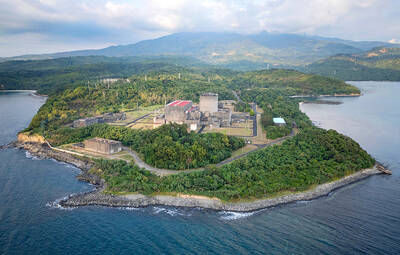
Nuclear power is getting a second look in Southeast Asia as countries prepare to meet surging energy demand as they vie for artificial intelligence-focused data centers. Several Southeast Asian nations are reviving mothballed nuclear plans and setting ambitious targets and nearly half of the region could, if they pursue those goals, have nuclear energy in the 2030s. Even countries without current plans have signaled their interest. Southeast Asia has never produced a single watt of nuclear energy, despite long-held atomic ambitions. But that may soon change as pressure mounts to reduce emissions that contribute to climate change, while meeting growing power needs. The


 RSS
RSS