


The Tamsui Historical Museum (淡水古蹟博物館) is hosting a retrospective on William Morris, a 19th-century polymath most famous for his wallpapers. Morris sought to bring art to every home via handmade nature-inspired wallpaper such as Trellis — based on a rose trellis by his home in Kent — and Pomegranate, which featured stylized yet subdued versions of the fruit. Everlasting Vision of William Morris (不朽的追求), a yearlong show, presents his most enduring designs for wallpapers, as well as works in other media. One gallery focuses on his innovations with furniture; another introduces his campaigns to preserve historical buildings. There’s a showcase dedicated to Kelmscott Press, his publishing house in London. Morris prized workmanship and oversaw each step from bookbinding to paper selection to the design of typography, hand-pressing just 53 titles between 1891 and 1989. For more information, visit www.arthappening.org/williammorris/
■ Tamsui Historical Museum at Fort San Domingo (淡水紅毛城), 1, Ln 28, Zhongzheng Rd, New Taipei City (新北市中正路28巷1號), tel: (02) 2623-1001. Open Mondays to Fridays from 9:30am to 5pm, Saturdays and Sundays from 9:30am to 6pm, closed the first Monday of every month, free admission
■ Until Oct. 31
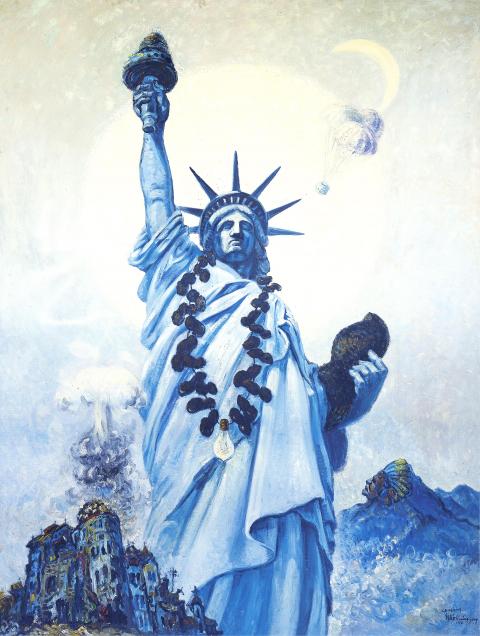
Photo courtesy of NTMOFA
The Form and Color of Fire (火的形與色) features ceramics by five major artists: Hans Hartung, Manfredo Borsi, Kim En Joong and Wu A-sun (吳炫三) and Pablo Picasso, who had a little-known love for ceramics. Picasso preferred ceramic materials that were atypical for his time, such as white earthenware that he left unglazed. Unlike his paintings, which are often dark and foreboding, his ceramics are impish depictions of happy times, goats, owls and other creatures. For more information, visit www.exhibition.ceramics.ntpc.gov.tw/theformandcoloroffire
■ Yingge Ceramics Museum (鶯歌陶瓷博物館), 200 Wenhua Rd, New Taipei City (新北市文化路200號), tel: (02) 8677-2727, open Mondays to Fridays from 9:30am to 5pm, Saturdays and Sundays from 9:30am to 6pm, closed first Monday of the month
■ Until April 20
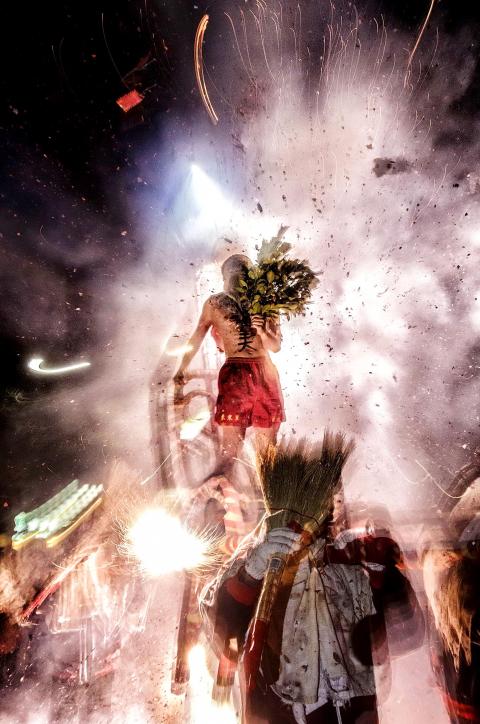
Photo courtesy of National Taitung Living Arts Center
Spotlight on Taitung (看見臺東) brings together prizewinning photos of Formosa Press Magazine’s photo contest themed on Taitung County. Now in its third year, the contest received 3,002 entries from photographers across 20 cities and counties. Top honors this year went to Kao Hsing-tsung (高信宗) for his image of exploding fireworks shrouding a man at the iconic Lord Handan (寒單爺) festival.
■ National Taitung Living Arts Center (國立臺東生活美學館 ), 254 Datung Rd, Taitung City (臺東市大同路254號), tel: (089) 322-248, open daily from 8:30am to 5pm
■ Until March 5
Chen Yun’s (陳云) One Piece Room is about the imaginary friends of her childhood, a lonely period marked by her mother’s death when she was nine. Chen’s father, an installation artist, had stored joss paper, photos, antiques and other curios in the house, and she developed friendships with the people she believed lived inside in the objects — unhappy people who had reasons to end their own lives. The concept of Chen’s exhibition is a memorial: Tiny dolls are housed in clear boxes shaped like a greenhouse, each with a marker that clinically explains the reasons and ways they committed suicide. Chen’s collection of dead dolls, who are mostly children, act as emblem of a young person’s pain that’s only slowly being shed on the path to adulthood.
■ Kuandu Museum of Fine Arts (關渡美術館), 1 Xueyuan Rd, Taipei City (台北市學園路1號), tel: (02) 2893-8870. Open Tuesdays to Sundays from 10am to 5pm
■ Until April 27
The Changing World (世界在變) is a solo show about Fifth Moon Group (五月畫會) cofounder Kuo Tong-jong (郭東榮). Born in 1927, Kuo studied art at the National Taiwan Normal University and went on to found Taiwan’s main modern art society of the 1960s. On canvas, he has treated current events like the Hiroshima bombing, the US Space Shuttle Challenger disaster and domestic affairs including urban renewal. The exhibition assembles Kuo’s representative paintings, as well as private manuscripts that document his creative process.
■ National Taiwan Museum of Fine Arts (NTMOFA, 國立臺灣美術館), 2, Wuquan W Rd Sec 1, Greater Taichung (台中市西區五權西路一段2號) tel: (04) 2372-3552, open Tuesdays to Fridays from 9am to 5pm, Saturdays and Sundays from 9am to 6pm
■ Until May 18
Contemporary artist Noritoshi Hirakawa thinks of man as two beings, one private and one public, with the former constantly censoring the expression of the latter. At the solo exhibition Infinite Dance, he is showing Lei Lenka — Yuriko, a video work that directs attention to the meaningless gestures and unspoken desires that inhabit that all private selves have in common. He also brings his S series: photos of beautiful landscapes in Switzerland that are also the sites of grotesque news-making suicide.
■ Chi-Wen Gallery (其玟畫廊), 3F, 19, Ln 252, Dunhua S Rd Sec 1, Taipei City (台北市敦化南路一段252巷19號3樓), tel: (02) 8771-3372. Open Tuesdays through Sundays from 11am to 7pm
■ Until March 29
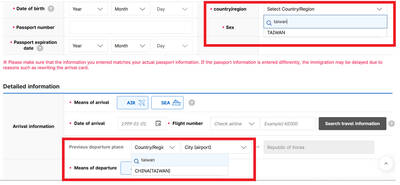
Jason Han says that the e-arrival card spat between South Korea and Taiwan shows that Seoul is signaling adherence to its “one-China” policy, while Taiwan’s response reflects a reciprocal approach. “Attempts to alter the diplomatic status quo often lead to tit-for-tat responses,” the analyst on international affairs tells the Taipei Times, adding that Taiwan may become more cautious in its dealings with South Korea going forward. Taipei has called on Seoul to correct its electronic entry system, which currently lists Taiwan as “China (Taiwan),” warning that reciprocal measures may follow if the wording is not changed before March 31. As of yesterday,
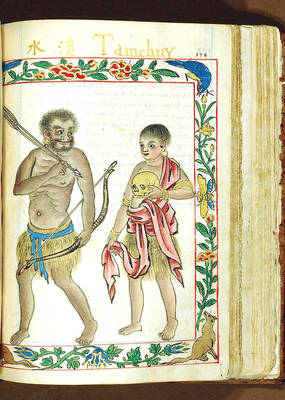
The Portuguese never established a presence on Taiwan, but they must have traded with the indigenous people because later traders reported that the locals referred to parts of deer using Portuguese words. What goods might the Portuguese have offered their indigenous trade partners? Among them must have been slaves, for the Portuguese dealt slaves across Asia. Though we often speak of “Portuguese” ships, imagining them as picturesque vessels manned by pointy-bearded Iberians, in Asia Portuguese shipping between local destinations was crewed by Asian seamen, with a handful of white or Eurasian officers. “Even the great carracks of 1,000-2,000 tons which plied
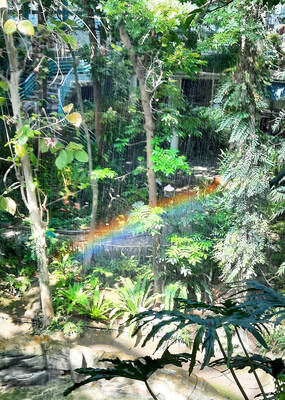
It’s only half the size of its more famous counterpart in Taipei, but the Botanical Garden of the National Museum of Nature Science (NMNS, 國立自然科學博物館植物園) is surely one of urban Taiwan’s most inviting green spaces. Covering 4.5 hectares immediately northeast of the government-run museum in Taichung’s North District (北區), the garden features more than 700 plant species, many of which are labeled in Chinese but not in English. Since its establishment in 1999, the site’s managers have done their best to replicate a number of native ecosystems, dividing the site into eight areas. The name of the Coral Atoll Zone might
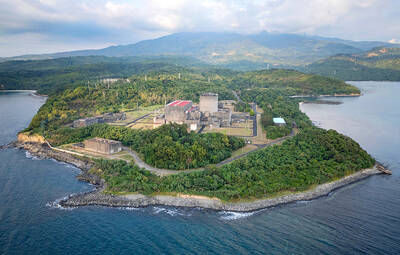
Nuclear power is getting a second look in Southeast Asia as countries prepare to meet surging energy demand as they vie for artificial intelligence-focused data centers. Several Southeast Asian nations are reviving mothballed nuclear plans and setting ambitious targets and nearly half of the region could, if they pursue those goals, have nuclear energy in the 2030s. Even countries without current plans have signaled their interest. Southeast Asia has never produced a single watt of nuclear energy, despite long-held atomic ambitions. But that may soon change as pressure mounts to reduce emissions that contribute to climate change, while meeting growing power needs. The


 RSS
RSS