


When Time magazine humor columnist Joel Stein wrote a recent piece titled “My Favorite Martians” about “a group of surprisingly social people whose goal in life is to move to Mars,” one of the people he was writing about was a 34-year-old Taiwanese-American woman named Sue Ann Pien (邊思恩).
By September of last year, close to 3,000 people from around the world had filled out the application, which included a video and paid a fee to a Dutch nonprofit organization called Mars One. The applicants are hoping to be one of four chosen to make a one-way trip to Mars in 2024, a process that will be documented in a reality television show.
Pien told the Taipei Times that she has wanted to go into space since she was a child.

Photo courtesy of Sue Ann Pien
“I was fascinated about an entire world above and beyond our Earth,” she says.
Pien, the oldest child of a Taiwanese couple working in the aerospace industry, was born in California and now works as a customer service representative for an educational Web site. She’s not shy around cameras and TV sets as she has done some part-time modeling and film work in the past, and her stage presence no doubt played a big part in her making the first cut. Two more selection processes will narrow the field down to 40 and then 24. Training for the Mars trip is set to begin in 2018, with the blast-off date projected for 2024.
Growing up in California in the 1980s in a family involved in the booming aerospace industry, Pien said that both her parents inspired her in different ways.
“My mom is more of a social butterfly, but my dad is an eccentric intellectual with the skills to back up his fancy ideas,” she said.
Whether or not Pien will make it to Mars, she says she is ready for the TV reality show to take shape and plans to give it her best shot. She also hopes to visit Taiwan during her next vacation and spend some time doing interviews with Taiwanese media as a kind of Mars One ambassador.
It turns out that there’s a bit of show business in Pien’s family, too.
“When my previous TV agent needed an Asian character for a show and asked if my mother would go out on an audition as a favor, she ended up going and booking the first casting she ever went to,” Pien said. “I guess my mother’s side of the family is more dramatic. She has a cousin who is a famous Hong Kong film star from the 1960s, and I grew up hearing about him from her.”
Her message to young Taiwanese who are also looking to the stars is simple and succinct: “I want to encourage Taiwanese youngsters and people all over the world who have brave dreams about the future to just go for it,” Pien says. “You were born to fulfill a destiny that only you can achieve.”
Pien says that the most important theme for the TV show, which is the brainchild of a Dutch entrepreneur, will be “teamwork.”
“For those of us who get chosen to go to Mars, you’re pretty much entering a lifelong marriage with your teammates,” she says.
With two more cuts scheduled over the next few years, Pien says she is staying busy with her day job and chatting online with fellow Mars One candidates.
“My potential teammates and I have been discussing important subjects online from terraforming Mars to oxygen production, radiation hazards, food and the physiology of humans in outer space,” she said.
“If I had the time, I would fill my entire day with learning about Mars right now. I want to visit Biosphere 2 in Arizona and possibly Robert Zubrin’s Mars outpost in Utah.”
When asked what she dreams about at night now, Pien quipped: “Dancing sheep, on Mars.”
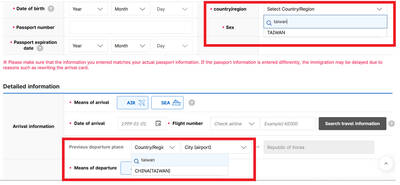
Jason Han says that the e-arrival card spat between South Korea and Taiwan shows that Seoul is signaling adherence to its “one-China” policy, while Taiwan’s response reflects a reciprocal approach. “Attempts to alter the diplomatic status quo often lead to tit-for-tat responses,” the analyst on international affairs tells the Taipei Times, adding that Taiwan may become more cautious in its dealings with South Korea going forward. Taipei has called on Seoul to correct its electronic entry system, which currently lists Taiwan as “China (Taiwan),” warning that reciprocal measures may follow if the wording is not changed before March 31. As of yesterday,

The Portuguese never established a presence on Taiwan, but they must have traded with the indigenous people because later traders reported that the locals referred to parts of deer using Portuguese words. What goods might the Portuguese have offered their indigenous trade partners? Among them must have been slaves, for the Portuguese dealt slaves across Asia. Though we often speak of “Portuguese” ships, imagining them as picturesque vessels manned by pointy-bearded Iberians, in Asia Portuguese shipping between local destinations was crewed by Asian seamen, with a handful of white or Eurasian officers. “Even the great carracks of 1,000-2,000 tons which plied

It’s only half the size of its more famous counterpart in Taipei, but the Botanical Garden of the National Museum of Nature Science (NMNS, 國立自然科學博物館植物園) is surely one of urban Taiwan’s most inviting green spaces. Covering 4.5 hectares immediately northeast of the government-run museum in Taichung’s North District (北區), the garden features more than 700 plant species, many of which are labeled in Chinese but not in English. Since its establishment in 1999, the site’s managers have done their best to replicate a number of native ecosystems, dividing the site into eight areas. The name of the Coral Atoll Zone might
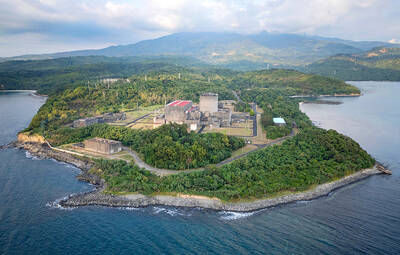
Nuclear power is getting a second look in Southeast Asia as countries prepare to meet surging energy demand as they vie for artificial intelligence-focused data centers. Several Southeast Asian nations are reviving mothballed nuclear plans and setting ambitious targets and nearly half of the region could, if they pursue those goals, have nuclear energy in the 2030s. Even countries without current plans have signaled their interest. Southeast Asia has never produced a single watt of nuclear energy, despite long-held atomic ambitions. But that may soon change as pressure mounts to reduce emissions that contribute to climate change, while meeting growing power needs. The


 RSS
RSS