


One of the pleasures of watching the Kaohsiung City Ballet’s (KCB, 高雄城市芭蕾舞團) annual Dance Shoe (點子鞋) programs has been seeing works by freelance choreographers or those moonlighting from their regular companies or schools — artists whose works might otherwise not make it to a big stage.
I did not have the opportunity to see the first few shows in the series — I did not catch up with them until the fourth production in 2007 — but since then it has been interesting to watch the development of some of the more frequent contributors.
KCB founder Chang Hsiu-ru (張秀如), who has nurtured scores of dancers since she founded her ballet school in 1976, obviously has a keen eye for talent.
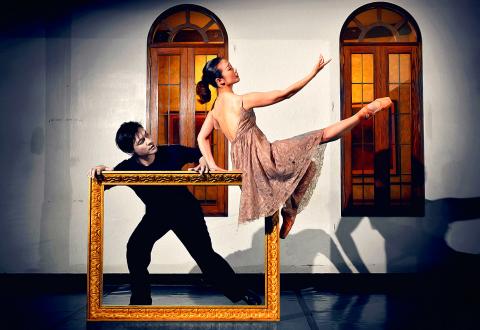
Photo Courtesy of Kaohsiung City Ballet
Having missed this year’s production when it was in Taipei earlier this month, I was able to catch Saturday night’s show in Greater Kaohsiung at Chang’s invitation. It was well worth the trip south.
The highlights were works by two of the more frequent contributors, Wang Kuo-chuen (王國權) and Tsai Po-chen (蔡博丞), which were also the longest works on the program. Both choreographers used the extra time to fully develop their themes.
Tsai’s Little Star (小小星辰), the third piece on the program, was a beautiful combination of solos for each of the dancers, Chang Yu (張瑀) and Chang Sheng-he (張聖和), and an extended pas de deux. Tsai once again chose a work by Max Richter for the score, pairing it with one by Sigure Ros.
Little Star did not begin auspiciously, with Chang walking across a stage — small circles of white light dotting the black floor — in an overly-exaggerated parody of a model’s runway strut, but once Chang Sheng-he appeared, things picked up.
He was a very supportive partner, making the many lifts and rollovers look very natural, as the black backdrop filled with dots of light to match the floor until the pair looked as if they were dancing through the universe. They were very much a pair, though she never looked directly at him, and absolutely lovely.
Then Chang Yu left, slowly walking off along the back of the stage, allowing her partner to finish the piece with a more melancholy solo as the dots of light gradually darkened.
Tsai was still a student when Chang Hsiu-ru first selected him to do a piece for the 2006 Dance Shoe production, though he had already won a choreography competition in Kaohsiung. Still in his twenties, he is maturing into a fine choreographer, with a good command of technique and stage setting.
Wang, 47, has decades more experience than Tsai and that time, training and polish were clearly evident in his piece, Hidden Beauty (藏美) — set to the aria Tornami A Vagheggiar from George Frideric Handel’s opera Alcina and four songs from Richard Strauss’ Vier Letzte Lieder — which closed the program.
Danced by Yeh Li-juan (葉麗娟), Lai Hong-zhong (賴翃中), Li Bo-wei (李博偉) and Wang himself, the well-structured Hidden Beauty is a gem, as elegant as the three large picture frames used as props.
Yeh has a solo to the aria, and then Wang, Lai and Li move the frames, sometimes with Yeh inside them, across the stage, each taking a turn to partner her. At one point she stands in an arabesque on one of the men’s stomach as he tightly grips her leg to slowly turn her around for one complete rotation. There are no flashy steps or spectacularly lifts, just well-thought-out moves and moments that give each dancer a chance to shine.
It was great to see Wang and Yeh, who is also in her late 40s, performing. Their technique, experience and professionalism hopefully inspired their colleagues in Hidden Beauty and the rest of the program’s cast.
I also enjoyed Dai Ting-ru’s (戴鼎如) classical pas de trois Lonely Feeling (寂寞溫度), performed by Lu Yu-ling (駱鈺菱), Li Bo-wei (李博偉) and Lin Ting-wei (林廷維), although the inclusion of a black and white video of city streets seemed unnecessary — and unnecessarily distracting.
The three other works on the program, Wang Wei-ming’s (王維銘) Two Beauties (美麗2), Chang Ching-an’s (張忠安) Heartbeat 2 (心跳(二) and Lin Yi-li’s (林怡利) A Flower for Myself (自己買花自己戴…), were less fully developed and less memorable, through the dancers in all three gave it their best.
If one asks Taiwanese why house prices are so high or why the nation is so built up or why certain policies cannot be carried out, one common answer is that “Taiwan is too small.” This is actually true, though not in the way people think. The National Property Administration (NPA), responsible for tracking and managing the government’s real estate assets, maintains statistics on how much land the government owns. As of the end of last year, land for official use constituted 293,655 hectares, for public use 1,732,513 hectares, for non-public use 216,972 hectares and for state enterprises 34 hectares, yielding

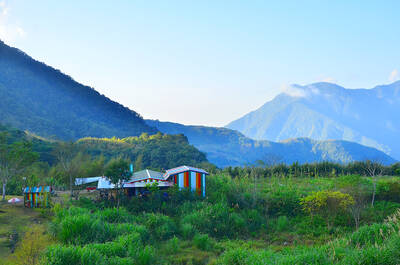
The small platform at Duoliang Train Station in Taitung County’s Taimali Township (太麻里) served villagers from 1992 to 2006, but was eventually shut down due to lack of use. Just 10 years later, the abandoned train station had become widely known as the most beautiful station in Taiwan, and visitors were so frequent that the village had to start restricting traffic. Nowadays, Duoliang Village (多良) is known as a bit of a tourist trap, with a mandatory, albeit modest, admission fee of NT$10 giving access to a crowded lane of vendors with a mediocre view of the ocean and the trains
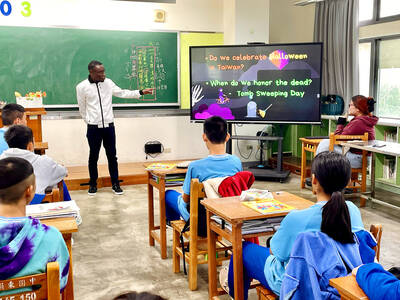
For many people, Bilingual Nation 2030 begins and ends in the classroom. Since the policy was launched in 2018, the debate has centered on students, teachers and the pressure placed on schools. Yet the policy was never solely about English education. The government’s official plan also calls for bilingualization in Taiwan’s government services, laws and regulations, and living environment. The goal is to make Taiwan more inclusive and accessible to international enterprises and talent and better prepared for global economic and trade conditions. After eight years, that grand vision is due for a pulse check. RULES THAT CAN BE READ For Harper Chen (陳虹宇), an adviser
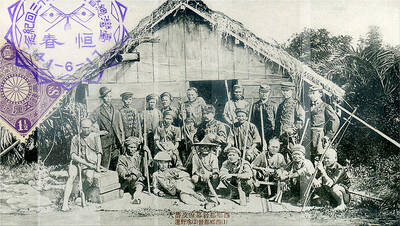
Traditionally, indigenous people in Taiwan’s mountains practice swidden cultivation, or “slash and burn” agriculture, a practice common in human history. According to a 2016 research article in the International Journal of Environmental Sustainability, among the Atayal people, this began with a search for suitable forested slopeland. The trees are burnt for fertilizer and the land cleared of stones. The stones and wood are then piled up to make fences, while both dead and standing trees are retained on the plot. The fences are used to grow climbing crops like squash and beans. The plot itself supports farming for three years.


 RSS
RSS