


Marlene Tseng Yu (虞曾富美) is exhibiting 50 years of her artwork at the Kaohsiung Museum of Fine Arts (KMFA). The exhibition of large-scale acrylic paintings titled Forces of Nature and Dream Series: Fifty Years of Creation by Marlene Tseng Yu runs until March 2.
The exhibition is part of a series, launched by KMFA in 2012, featuring Kaohsiung artists. Even though Yu was born in Hualien in 1937, her family home was in Meinong, in today’s Greater Kaohsiung. While her childhood was spent in the south of Taiwan, she moved to Taipei to study art at National Taiwan Normal University, becoming the first female from Meinong to go to university, which created quite a stir in her hometown as it was thought at the time that only boys should receive higher education. She moved to the US in the 1960s, attending graduate school at the University of Colorado and has been based in New York since 1969.
For her 50 year retrospective, Yu and the Museum had to choose from over 4,000 works of art, whittling it down to a small selection of approximately 50 paintings which is arranged thematically under four sections: Environmental Green Movement in Art; Beyond and Beneath; Forces of Nature and Dream Series.
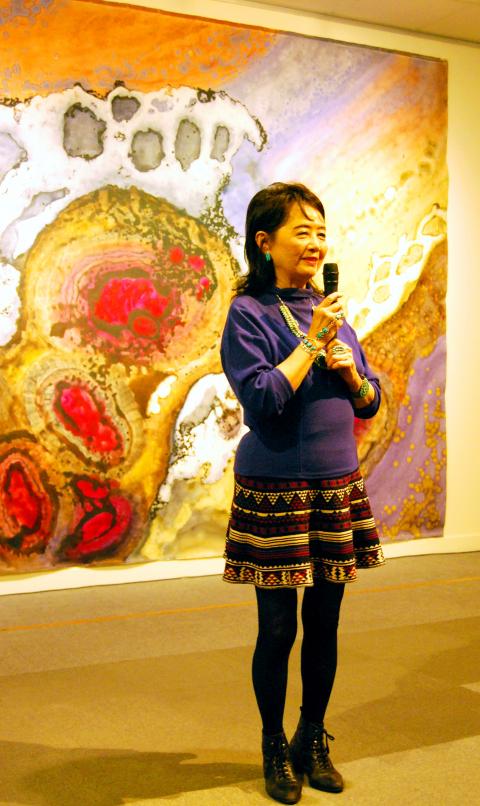
photo: susan kendzulak
Yu’s Dream Series of rotund headless female figures and mythological beasts tend to specifically provide answers rather than raise questions, much like how a book illustration fills in the story for the reader. Yu is at her best and most awe-inspiring with her large-scale abstract paintings which are filled with mystery and motion, rather than the explicit spell-everything-out figurative works.
Yu’s Glacier Melting Series (begun in 1965) best exemplify what she excels at, which is using the brush techniques of Chinese ink painting combined with the dynamic force and scale of Abstract Expressionist painting. In the long scroll-like painting Black and White Cracked Ice (305cm x 1128cm), Yu uses broad black outlines to delineate the shapes of a glacier, allowing splatters of black ink to create rhythmic skeletal-like patterns between the gray tonal washes and the flat white shapes. Her ease of handling wide areas of black and white in a flowing movement is on par with a Franz Kline painting. The sheer mural-sized scale of the painting evokes feelings of expanse and wonder, which is often triggered by standing in front of breathtaking natural environments such as mountains, canyons and waterfalls.
In works like Seaweed Floating, the overall patterning and built-up application of pigment makes it appear three-dimensional from a distance, and reveals the artist’s hand under closer inspection. Yu’s mastery is in the combination of the macro and the micro: the long-distance overview hints at a landscape or the cosmos, while the close-up creates more emotional and interior thoughts.

photo: susan kendzulak
Like the mid-19th century Hudson River School of painters, who were humbled by the immense force of the natural landscape, Yu too is overwhelmed by the vastness of nature and of the cosmos. As New York critic Donald Kuspit writes in her catalog for the exhibition: “Identifying with nature, Yu finds her own identity — comes into her own as an authentic self.”
Yu’s large paintings not only help her to self-identify, but also act as roadmaps for viewers to help find their way in the mind-boggling cosmos.
In addition to creating nature-inspired paintings, Yu has also established the Rainforest Art Foundation as a non-profit organization which raises funds and awareness to help protect the world’s rainforests.
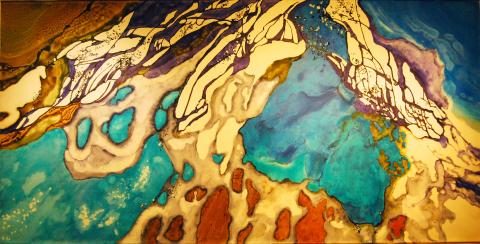
photo: susan kendzulak

Jason Han says that the e-arrival card spat between South Korea and Taiwan shows that Seoul is signaling adherence to its “one-China” policy, while Taiwan’s response reflects a reciprocal approach. “Attempts to alter the diplomatic status quo often lead to tit-for-tat responses,” the analyst on international affairs tells the Taipei Times, adding that Taiwan may become more cautious in its dealings with South Korea going forward. Taipei has called on Seoul to correct its electronic entry system, which currently lists Taiwan as “China (Taiwan),” warning that reciprocal measures may follow if the wording is not changed before March 31. As of yesterday,

The Portuguese never established a presence on Taiwan, but they must have traded with the indigenous people because later traders reported that the locals referred to parts of deer using Portuguese words. What goods might the Portuguese have offered their indigenous trade partners? Among them must have been slaves, for the Portuguese dealt slaves across Asia. Though we often speak of “Portuguese” ships, imagining them as picturesque vessels manned by pointy-bearded Iberians, in Asia Portuguese shipping between local destinations was crewed by Asian seamen, with a handful of white or Eurasian officers. “Even the great carracks of 1,000-2,000 tons which plied
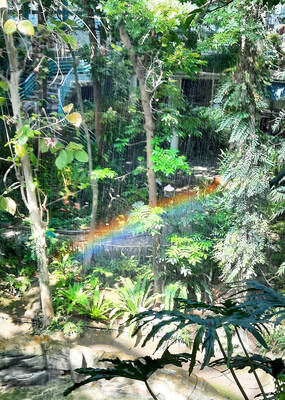
It’s only half the size of its more famous counterpart in Taipei, but the Botanical Garden of the National Museum of Nature Science (NMNS, 國立自然科學博物館植物園) is surely one of urban Taiwan’s most inviting green spaces. Covering 4.5 hectares immediately northeast of the government-run museum in Taichung’s North District (北區), the garden features more than 700 plant species, many of which are labeled in Chinese but not in English. Since its establishment in 1999, the site’s managers have done their best to replicate a number of native ecosystems, dividing the site into eight areas. The name of the Coral Atoll Zone might
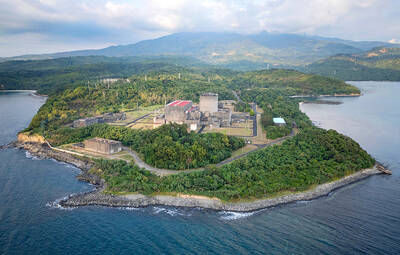
Nuclear power is getting a second look in Southeast Asia as countries prepare to meet surging energy demand as they vie for artificial intelligence-focused data centers. Several Southeast Asian nations are reviving mothballed nuclear plans and setting ambitious targets and nearly half of the region could, if they pursue those goals, have nuclear energy in the 2030s. Even countries without current plans have signaled their interest. Southeast Asia has never produced a single watt of nuclear energy, despite long-held atomic ambitions. But that may soon change as pressure mounts to reduce emissions that contribute to climate change, while meeting growing power needs. The


 RSS
RSS