


The Hong Kong Dance Company (HKDC, 香港舞蹈團) is appearing in Taipei as part of the Hong Kong Week events and will give its second performance of Spring Ritual · Eulogy (蘭亭‧祭姪) tonight at Novel Hall.
The production, which premiered last year, was choreographed by Chinese dancer/choreographer Yang Yuntao (楊雲濤), who first joined the company as a principal dancer in 2002. He moved over to the City Contemporary Dance Company in the territory in 2005, but returned to HKDC in 2007 as assistant artistic director and has been acting artistic director since April of this year.
Spring Ritual · Eulogy, which won the Outstanding Achievement in Production award at this year’s Hong Kong Dance Awards, pays homage to two of China’s most famous calligraphic works, Wang Hsi-chih’s (王羲之) Preface to the Orchid Pavilion (蘭亭集序) and Yen Chen-ching’s (顏真卿) Eulogy for a Nephew (祭姪文稿) — which is in the National Palace Museum’s collection.
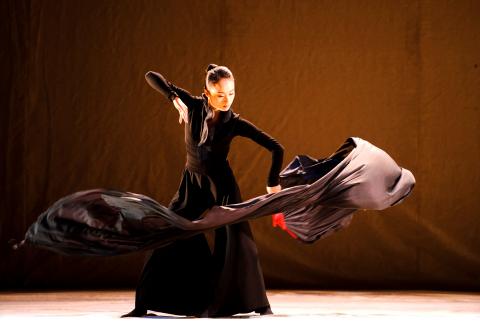
Photo Courtesy of Conrad Dy / HKDC
CALLIGRAPHY AND DANCE
Although the two pieces were created 400 years apart, they were both written in “running script” calligraphy, which is differentiated by the connections between the characters as well as their slightly abbreviated forms. Wang’s calligraphy is considered the best example of this style; Yan’s the second-best.
Wang wrote Preface to the Orchid Pavilion in 353AD, a year before he retired as governor of the then-Guiji area. He had invited 41 members of the literati to join him for a party to mark the Spring Purification Festival. As part of a contest, cups of wine were floated down a stream to the party and each person had to compose a poem before their cup arrived. Famously, a lot of wine was consumed. Wang gathered the poems and wrote a preface for the collection, which is famed for its rhythmic energy, liveliness and variations.
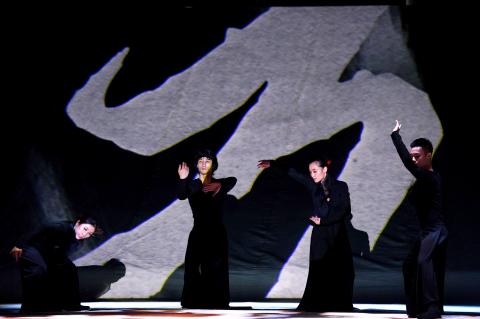
Photo Courtesy of Conrad Dy / HKDC
Yan’s 755AD Eulogy has a much darker subject matter. A rebel uprising in Hebei Province during the Tang Dynasty took the lives of more than 30 of his relatives. Yan wrote the poem after recovering the skull of his nephew.
In Spring Ritual · Eulogy, Yang examines the links between the abstract ideals of calligraphy and the history of the Chinese literati.
For the first half, Spring Ritual, Yang created fluid moves for the dancers, who are clad in flowing black robes, that sees them swirling in front of a white backdrop, often having to manipulate pieces of black material that float through the air. The movements, heavily influenced by classical Chinese dancing, are lyrical, even joyful, as befitting the images conjured up of a tipsy evening spent among friends.
It may be hard not to make comparisons between Yang’s abstract creation and Cloud Gate Dance Theatre (雲門舞集) founder Lin Hwai-min’s (林懷民) own Cursive (行草) trilogy, not only because of the subject matter, but because costume designer Lin Ching-ju (林璟如) frequently designs for Cloud Gate.
However, the second part of the evening’s program is more narrative than abstract. A dancer portraying Yan must depict both his rage and his grief over the loss of his family members. A sense of foreboding, violence and sorrow hangs over this section.
There will be a discussion session with Yang and some of the dancers after tonight’s show.
The Hong Kong Dance Company’s appearance is part of the second “Hong Kong Week” in Taipei, building on the success of last year’s program.
MORE THAN A WEEK
“Week” is rather misleading because some of the events opened on Nov. 29 and are continuing — in the case of the comic exhibition, through Feb. 9.
Two of the shows, held in Building 2B at the Huashan 1914 Creative Park, close tomorrow: the fashion exhibition Hong Kong Design — Styles and All Are Guests, an exhibition of video installations and paintings by three artists. The shows are open from 10am to 7pm and admission is free.
Staying around a bit longer is an exhibition on the cheongsam covering the changes in styles from the late Qing and early Republican periods to today, which is on at the Exhibition Hall on the 6th floor of the Eslite Xinyi store. It will be open until Dec. 29; hours are 11am to 10pm and admission is free.
A Parallel Tale: Taipei in the 80s x Hong Kong in 90s shows the work of five Taiwanese comic artists and five of their Hong Kong counterparts. The exhibition is at the FZ Fifteen Animation & Story Gallery, and runs through Feb. 9. Hours are 9am to 6pm daily except the first Monday of each month, New Year’s Eve and Lunar New Year.
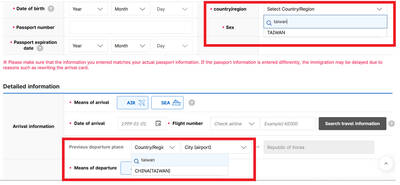
Jason Han says that the e-arrival card spat between South Korea and Taiwan shows that Seoul is signaling adherence to its “one-China” policy, while Taiwan’s response reflects a reciprocal approach. “Attempts to alter the diplomatic status quo often lead to tit-for-tat responses,” the analyst on international affairs tells the Taipei Times, adding that Taiwan may become more cautious in its dealings with South Korea going forward. Taipei has called on Seoul to correct its electronic entry system, which currently lists Taiwan as “China (Taiwan),” warning that reciprocal measures may follow if the wording is not changed before March 31. As of yesterday,
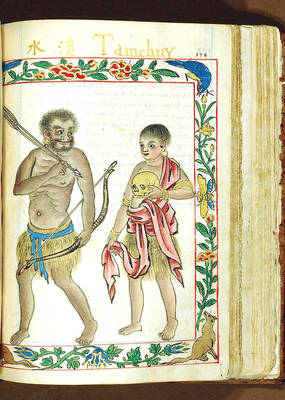
The Portuguese never established a presence on Taiwan, but they must have traded with the indigenous people because later traders reported that the locals referred to parts of deer using Portuguese words. What goods might the Portuguese have offered their indigenous trade partners? Among them must have been slaves, for the Portuguese dealt slaves across Asia. Though we often speak of “Portuguese” ships, imagining them as picturesque vessels manned by pointy-bearded Iberians, in Asia Portuguese shipping between local destinations was crewed by Asian seamen, with a handful of white or Eurasian officers. “Even the great carracks of 1,000-2,000 tons which plied
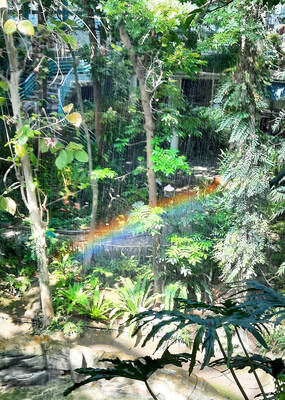
It’s only half the size of its more famous counterpart in Taipei, but the Botanical Garden of the National Museum of Nature Science (NMNS, 國立自然科學博物館植物園) is surely one of urban Taiwan’s most inviting green spaces. Covering 4.5 hectares immediately northeast of the government-run museum in Taichung’s North District (北區), the garden features more than 700 plant species, many of which are labeled in Chinese but not in English. Since its establishment in 1999, the site’s managers have done their best to replicate a number of native ecosystems, dividing the site into eight areas. The name of the Coral Atoll Zone might
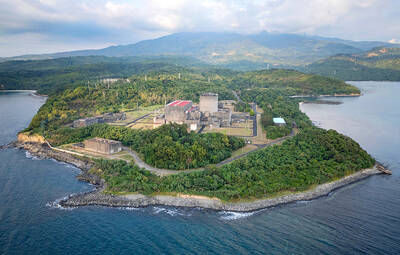
Nuclear power is getting a second look in Southeast Asia as countries prepare to meet surging energy demand as they vie for artificial intelligence-focused data centers. Several Southeast Asian nations are reviving mothballed nuclear plans and setting ambitious targets and nearly half of the region could, if they pursue those goals, have nuclear energy in the 2030s. Even countries without current plans have signaled their interest. Southeast Asia has never produced a single watt of nuclear energy, despite long-held atomic ambitions. But that may soon change as pressure mounts to reduce emissions that contribute to climate change, while meeting growing power needs. The


 RSS
RSS