


As a young teen growing up in the rural township of Tainan’s Houbi (後壁), Li Shiao-yu (李筱瑜) didn’t have much to do to keep herself entertained except sports. She went swimming every morning and evening, and jogged after dinner till it was bedtime. While others took the bus, Lee ran seven kilometers from home to school.
“I loved running because my body was light when I ran,” Li says.
Fast forward a few decades and Li has grown to become an athlete having many firsts — she is the first and so far the only female professional triathlete in Taiwan, and also the first athlete in the country to compete at the prestigious Ironman World Championship, where she won third place in her age group in 2010.
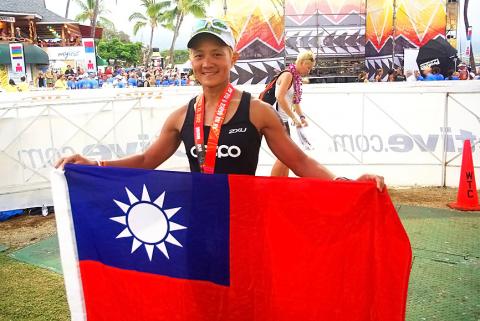
Photo courtesy of Jenny Li
Known as Taiwan’s Number One Sister (一姐) of triathlon, Li, however, hasn’t merely relied on her natural abilities to get where she is today.
SPORTS PRODIGY
Li first discovered her talent in fourth grade when she was selected to enter sports competitions on behalf of her school, and won first place at almost every game she played. She threw the discus, did the long jump, ran relay races and participated in everything forbidden by the school swim team because track-and-field athletics “stiffen muscles and make you sink in water,” Li says.
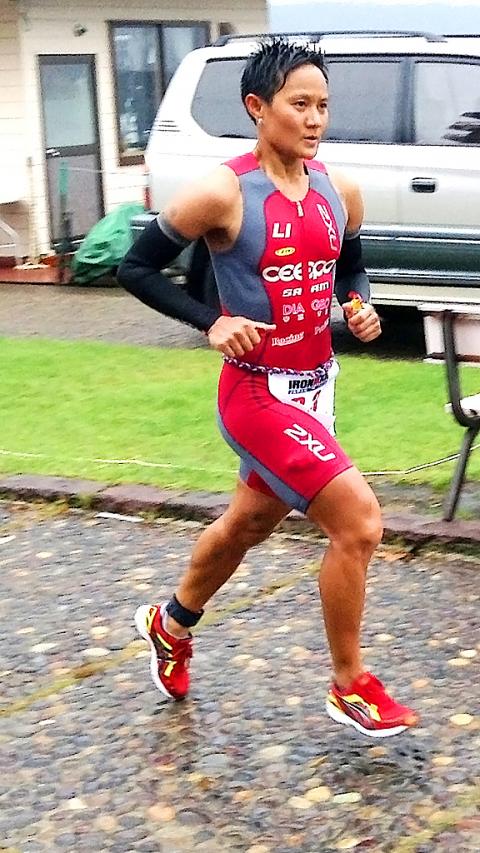
Photo courtesy of Jenny Li
She continued to run against the ban imposed by her swimming coach. Misfortune struck when a motorcycle hit Li during a jogging excursion from her high school in Tainan’s Sinying (新營) to Chiayi. She was left bedbound for two months, feeling excruciating pain on the left side of her body every time she tried to move her feet.
Unable to afford physical rehabilitation, the teenage athlete decided to devise and carry out therapy on her own.
“I was at home alone. At first I took tiny steps around the house. Then I was slowly able to walk up the stairs. I eventually made it outside for a run,” Li recalls.
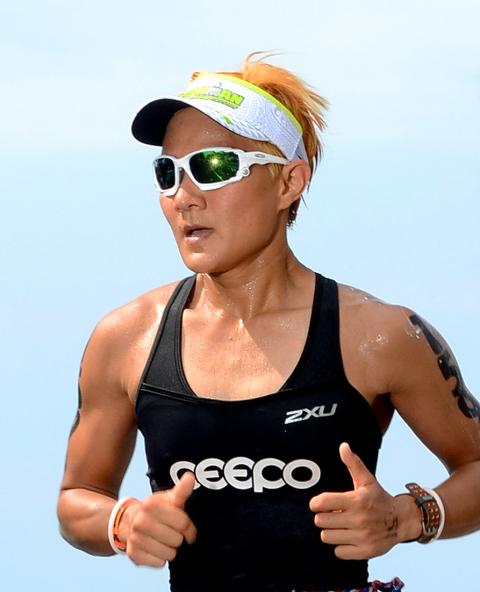
Photo courtesy of Jenny Li
Li’s left arm still tends to curl up when it gets cold in the winter. She has asthma too, likely resulting from the seven years of working and training at school swim teams where she inhaled the chlorine powder that was used to chlorinate swimming pools. The powder is known to cause lasting lung damage.
NEVER GIVE UP
Years of training may have enabled Li to become an outstanding sportswoman, but it is her determination that has carried her to the apex of long-distance triathlon. In college, Li worked odd jobs to fund her studies. After graduating, the young athlete took a job as a fitness instructor and has worked at gyms ever since.
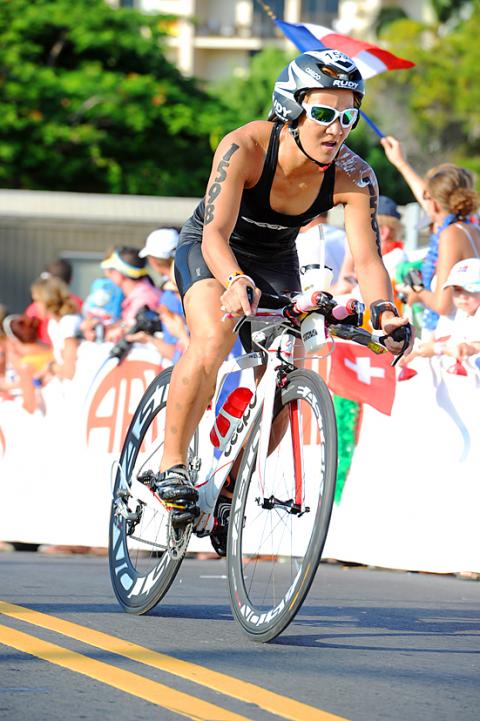
Photo courtesy of Jenny Li
Over the years, Li has grown increasingly dissatisfied with her work at gyms.
“I wanted to do an ultra-distance triathlon because I saw people who lost a leg or survive cancers dare to challenge themselves and push their limit at the races. I was thinking: ‘why can’t I take the challenge too?’” the 36-year-old says.
The grueling race, consisting of a 2.4 mile (3.86 km) swim, a 112 mile (180.25 km) bicycle ride and a marathon, intimidate even a seasoned athlete like Li, who spent years undergoing rigorous training routines while racing in national contests so as to win cash prizes to cover the costs of competing at international triathlon races.
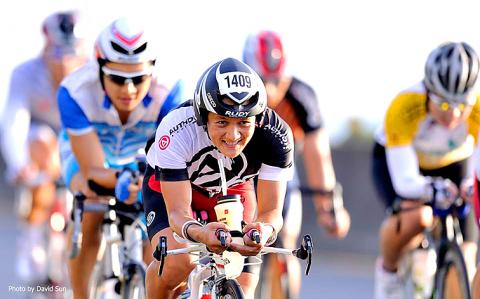
Photo courtesy of Jenny Li
In 2010, Lin entered her first Ironman Triathlon, the ultra-distance triathlon contests organized by the World Triathlon Corporation, on Hainan Island, China. She won first place in her age group and was ranked 30th in the world as a female triathlete the same year.
At the race on Hainan Island, Li was 30 minutes behind other contenders at the bike segment due to a flat tire. The only thing on her mind was to make up for lost time during the marathon segment, as Li recalls.
“I never thought of giving up. I just kept running, thinking I must catch up with the fastest one and win,” she says.
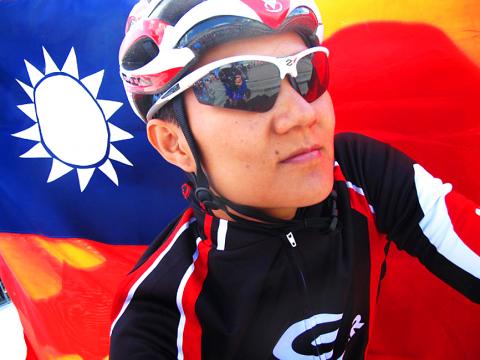
Photo courtesy of Jenny Li
After years of preparation, Li decided to turn professional in her career as a triathlete last October. She has since won first place at the Ironman Japan in Hokkaido, one of the qualifying races required to enter next year’s Ironman World Championship, which takes place in Kailua-Kona, Hawaii every October.
So far, the iron woman’s best result for the Ironman 70.3, which refers to the total distance in miles (113.0 km) covered in the race, is four hours and 29 minutes, and it is nine hours and 59 minutes for the Ironman Triathlon, rendering Li the first Taiwanese triathlete who completes the race within the 10-hour mark.
Li says that contrary to common belief, a triathlete’s best time doesn’t come in his or her twenties but between mid-thirties and early forties, as the triathlon requires a mature athlete excelling not only in physical strength and strategies but willpower.
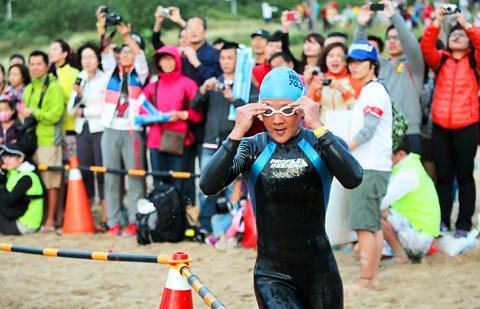
Photo courtesy of Jenny Li
To the athlete, the dedication required by the sport feels almost like a spiritual experience. In the training camp for professional triathletes she went this year in Thailand, for example, Lin says the daily routine consisted of a 5000m swim workout in the morning, followed by 90km to 150km of cycling and a two-hour long run in the afternoon. One didn’t have strength left to do much else except eating and sleeping, and some of her camp mates have led a lifestyle mostly like this for 20 years.
“You need to be very focused to be able to undergo the training… Being immersed in a sport is like meditating. Monks chant prayers. We pedal,” she muses.
As the country’s first and only female triathlete, Li is destined to walk a rough, lonely path where government funding is next to nothing, and corporate sponsorship is scarce. To support her Ironman triathlon races, Li works as an instructor for indoor cycling at gyms and sometimes races four marathons a month to earn funding. But the difficulties don’t stop the athlete.
“I will give it a try, hoping more and more people will notice [the sport],” Li says.
TRAGEDY STRIKES AGAIN
Shortly after our interview, Li was again hit by a motorbike during bicycle training last Saturday. The professional triathlete suffered a serious neck injury and will require at least three months to recover. Her agent Trisha Chen (陳惠君) says it is common for athletes to get injured in car accidents when training in Taiwan, calling on drivers to respect cyclists’ and pedestrians’ rights to use the road.
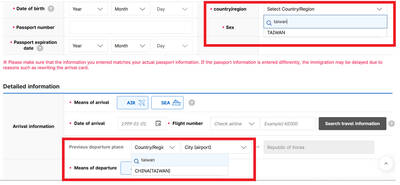
Jason Han says that the e-arrival card spat between South Korea and Taiwan shows that Seoul is signaling adherence to its “one-China” policy, while Taiwan’s response reflects a reciprocal approach. “Attempts to alter the diplomatic status quo often lead to tit-for-tat responses,” the analyst on international affairs tells the Taipei Times, adding that Taiwan may become more cautious in its dealings with South Korea going forward. Taipei has called on Seoul to correct its electronic entry system, which currently lists Taiwan as “China (Taiwan),” warning that reciprocal measures may follow if the wording is not changed before March 31. As of yesterday,

The Portuguese never established a presence on Taiwan, but they must have traded with the indigenous people because later traders reported that the locals referred to parts of deer using Portuguese words. What goods might the Portuguese have offered their indigenous trade partners? Among them must have been slaves, for the Portuguese dealt slaves across Asia. Though we often speak of “Portuguese” ships, imagining them as picturesque vessels manned by pointy-bearded Iberians, in Asia Portuguese shipping between local destinations was crewed by Asian seamen, with a handful of white or Eurasian officers. “Even the great carracks of 1,000-2,000 tons which plied
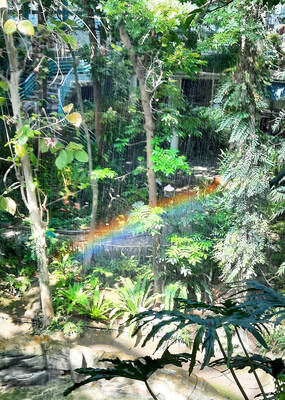
It’s only half the size of its more famous counterpart in Taipei, but the Botanical Garden of the National Museum of Nature Science (NMNS, 國立自然科學博物館植物園) is surely one of urban Taiwan’s most inviting green spaces. Covering 4.5 hectares immediately northeast of the government-run museum in Taichung’s North District (北區), the garden features more than 700 plant species, many of which are labeled in Chinese but not in English. Since its establishment in 1999, the site’s managers have done their best to replicate a number of native ecosystems, dividing the site into eight areas. The name of the Coral Atoll Zone might
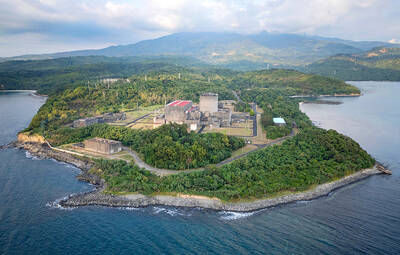
Nuclear power is getting a second look in Southeast Asia as countries prepare to meet surging energy demand as they vie for artificial intelligence-focused data centers. Several Southeast Asian nations are reviving mothballed nuclear plans and setting ambitious targets and nearly half of the region could, if they pursue those goals, have nuclear energy in the 2030s. Even countries without current plans have signaled their interest. Southeast Asia has never produced a single watt of nuclear energy, despite long-held atomic ambitions. But that may soon change as pressure mounts to reduce emissions that contribute to climate change, while meeting growing power needs. The


 RSS
RSS