


The focus of late in the Taiwanese music scene has been on large-scale events like the upcoming Twinkle Rock Festival (有象音樂季) and mega-concerts featuring the likes of superstars such as Linkin Park, who will appear at the Taipei Arena (臺北小巨蛋) tomorrow. But let’s swing things back in the other direction, shall we? All the way back towards the lowest-reaching roots of the vibrant, seething underground.
Back in the eighties in North America, underground hardcore and thrash bands didn’t have much interest in playing large clubs, and the clubs wanted little to do with them and their sometimes violent ilk as well. The clubs would put crowd barriers between the audience and the elevated stage. There was nothing punk rock or united about it. It was an elevation of the band, and a demotion of the fan. So, these bands started putting on shows anywhere and everywhere that they could. Veterans halls, skate parks, parking lots and even rehearsal studios suddenly became perfectly viable and egalitarian places to get a crowd of friends together and raise a collective middle finger towards the mainstream.
Tomorrow night, the local punk and metal scene will be getting back to those early days of the underground with a show at Jack’s Studio (杰克音樂) in Taipei. This rehearsal studio in Ximending (西門町) is run by the renowned godfather of extreme metal drumming in Taiwan, Jack Tung (董燿中). One of Tung’s larger rehearsal rooms will host three local bands of the loud, fast and angry variety, punk veterans No Order (無秩序), grinders Stench of Lust and thrash punks Bazooka. One of the show’s co-organizers, Bazooka vocalist Andrew Hsieh (謝宏安), says he and his co-conspirators are ready to get back to the old values of the underground.
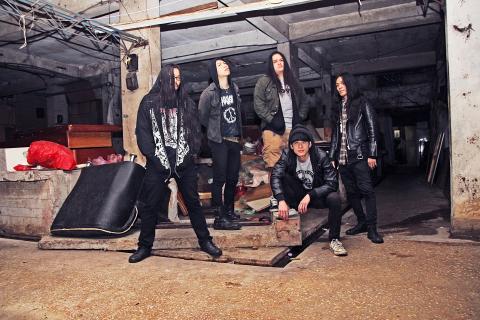
Photo courtesy of Bazooka
“We’d all seen these videos from the eighties, with bands playing in these small venues or studios, and were amazed at how raw and powerful these small shows were,” Hsieh says.
“I’ve participated, as part of the audience, in the few studio shows that Taipei has had over the past few years, and this has always been something that I wanted to do with my own band,” he says
Bazooka, No Order and Stench of Lust play tomorrow night at 7pm at Jack’s Studio (杰克音樂), B1, 76 Kunming St, Taipei City (台北市萬華區昆明街76號 B1). Tickets are NT$100 at the door.
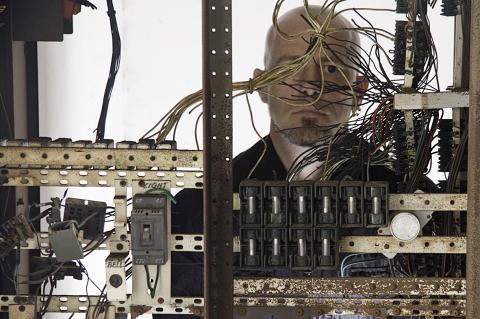
Photo courtesy of Roughhausen
■ On the same night, and just down the road in Ximending, industrial act Roughhausen will be hosting an album release party/video shoot at Xanadu. The video, for a song whose title is not quite fit for print in true Roughhausen fashion, will be released in support of the group’s latest record, The Medicated Generation, which came out just a few weeks ago on Labtoy Music. This CD has remixes of previously released Roughhausen tracks undertaken by producers hand-picked from around the world.
The producers were chosen by the man behind Roughhausen, Canadian expat J.S. Stoddard, a former member of seminal industrial band Front Line Assembly. Stoddard played guitar on Front Line Assembly’s breakthrough album Caustic Grip. He would later go on to join acts such as Will and Decree before relocating to Taiwan nearly a decade ago and dusting off his solo act, Roughhausen. Stoddard runs his own studio, Sanctuary Sound Labs, in the bucolic surroundings of Xinbeitou (新北投), where he twiddles the knobs doing mixing and mastering work for a list of international clients that run the gamut from industrial to punk, metal and pop. It’s also where he hunkers down to write all the material that winds up on each Roughhausen release, incorporating thick layers of dark electronics, disturbing samples, hooky guitar riffs and hard beats into his own brand of EBM he dubs electro-industrial punk rock.
Although Stoddard is the man who writes all the music, Roughhausen is no one-man show. For the live setting he has enlisted the considerable talents of bassist Peggy Lin (林沛吟), who cut her teeth in the now defunct metal act Power Overwhelming, and drummer extraordinaire Billy Su (蘇柏勳), who also pounds the skins for Taipei-based death metal band Revilement. With a stable lineup finally in place after a run of drummer issues, Stoddard is ready to get on the road again, with plans to hit the US, Europe, and select parts of Asia in the coming months.
As for the shoot tomorrow, best leave the description to Stoddard himself. In the course of touring Europe and North America multiple times during his career, there’s little he hasn’t seen or done, and shock is his stock-in-trade lyrically, visually and musically.
“Two midgets, free donkey rides and a night in jail,” Stoddard says of what he has in store, perhaps only slightly in jest before getting serious.
“We are fortunate to have a great place with a killer location lent to us by the lovely people at Xanadu for the evening, and we are just going to fill it up with freaks, fashionistas, fools and fabulous people. Our plan is to just let the evening go where it will and film the mayhem.”
Roughhausen’s The Medicated Generation album release party and video shoot takes place tomorrow at 7pm at Xanadu, 3, 2F, Ln 10, Chengdu Road, Taipei City (台北市萬華區成都路10巷3號2F). There is no cover charge, but punters are warned that they will be filmed.
If one asks Taiwanese why house prices are so high or why the nation is so built up or why certain policies cannot be carried out, one common answer is that “Taiwan is too small.” This is actually true, though not in the way people think. The National Property Administration (NPA), responsible for tracking and managing the government’s real estate assets, maintains statistics on how much land the government owns. As of the end of last year, land for official use constituted 293,655 hectares, for public use 1,732,513 hectares, for non-public use 216,972 hectares and for state enterprises 34 hectares, yielding

The small platform at Duoliang Train Station in Taitung County’s Taimali Township (太麻里) served villagers from 1992 to 2006, but was eventually shut down due to lack of use. Just 10 years later, the abandoned train station had become widely known as the most beautiful station in Taiwan, and visitors were so frequent that the village had to start restricting traffic. Nowadays, Duoliang Village (多良) is known as a bit of a tourist trap, with a mandatory, albeit modest, admission fee of NT$10 giving access to a crowded lane of vendors with a mediocre view of the ocean and the trains

For many people, Bilingual Nation 2030 begins and ends in the classroom. Since the policy was launched in 2018, the debate has centered on students, teachers and the pressure placed on schools. Yet the policy was never solely about English education. The government’s official plan also calls for bilingualization in Taiwan’s government services, laws and regulations, and living environment. The goal is to make Taiwan more inclusive and accessible to international enterprises and talent and better prepared for global economic and trade conditions. After eight years, that grand vision is due for a pulse check. RULES THAT CAN BE READ For Harper Chen (陳虹宇), an adviser

Traditionally, indigenous people in Taiwan’s mountains practice swidden cultivation, or “slash and burn” agriculture, a practice common in human history. According to a 2016 research article in the International Journal of Environmental Sustainability, among the Atayal people, this began with a search for suitable forested slopeland. The trees are burnt for fertilizer and the land cleared of stones. The stones and wood are then piled up to make fences, while both dead and standing trees are retained on the plot. The fences are used to grow climbing crops like squash and beans. The plot itself supports farming for three years.


 RSS
RSS