


Japanese photographer Yasuhiro Morikawa brings bleak images of Japan to After Party, a solo show of his work. Morikawa’s lens captures a variety of urban scenes that suggest both the presence and absence of the human subject, and the anonymity that comes from living in a heavily populated environment. Morikawa (b. 1984) is a Tokyo-based artist who won Japan’s Einstein Photo Competition last year.
■ 1839 Little Gallery (1839小藝廊), B1, 120 Yanji St, Taipei City (台北市延吉街120號B1), tel: (02) 2778-8458. Open Tuesdays to Sundays from 11am to 8pm
■ Opening reception tomorrow at 2:30pm. Until July 21
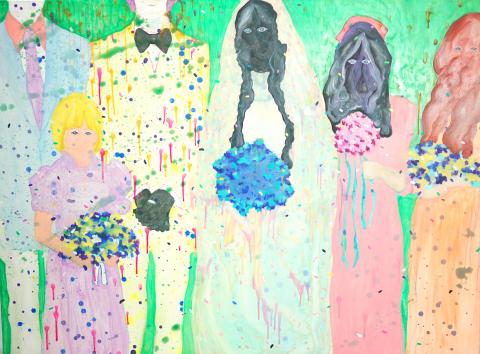
Photo courtesy of cafe showroom and TIVAC
At Flora — the Dazzling World (花花:世界), 14 Taiwanese artists interpret the flower with watercolor, ink, oil paint, photography, sculpture, installation and mixed media. Artists include Yan Ming-huei (嚴明惠), whose flowers are a code for femininity, and Wu Tien-chang (吳天章), who uses the flower as an eye patch over traumatized subjects.
■ Taipei Fine Arts Museum (TFAM, 台北市立美術館), 181, Zhongshan N Rd Sec 3, Taipei City (台北市中山北路三段181號), tel: (02) 2595-7656. Open Tuesdays to Sundays from 9:30am to 5:30pm and until 8:30pm on Saturdays
■ Until Aug. 25
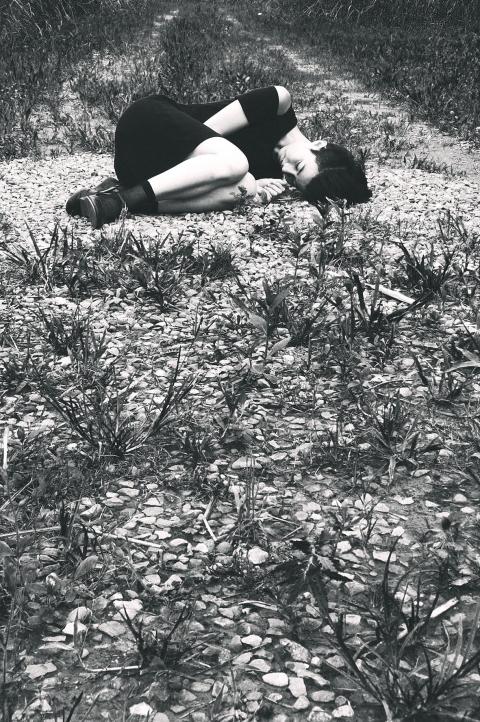
Photo courtesy of cafe showroom and TIVAC
Kao Ya-ting (高雅婷) is showing new sketches and oil paintings of humans clothed in swarms of bees at Honeycombs (蜂巢), a solo show named after a line in Walter Benjamin’s The Image of Proust. Benjamin, who was Marcel Proust’s German translator, once wrote that the latter’s thoughts are like bees that reshape the “honeycombs of memory.” Similarly, Kao’s bees give a new look to old faces and familiar human rites.
■ Cafe Showroom (場外空間), 462 Fujin St, Taipei City (台北市富錦街462號場外空間), tel: (02) 2760-1155. Open daily from 11am to 9pm
■ Opening reception tomorrow at 3pm. Until July 28
Origins and Developments of the Lingnan School of Painting (溯源與拓展─嶺南畫派特展) is a retrospective exhibition on a modern Chinese painting aesthetic that dates to the early 20th century. The Lingnan (嶺南) school is characterized by bright colors, receptiveness to Japanese techniques, realistic imitation of nature and a rejection of traditional Chinese art that emphasized imitating the ancients. Today, the aesthetic continues to have acolytes across Asia. The National Palace Museum is presenting 90 works in a survey that starts with Lingnan forerunner Ju Chao (居巢) and founders Gao Jianfu (高劍父), Gao Qifeng (高奇峰) and Chen Shuren (陳樹人). The show also includes second-generation artists such as Zhao Shao-ang (趙少昂), Guan Shanyue (關山月) and Yang Shanshen (楊善深).
■ National Palace Museum (國立故宮博物院), 221 Zhishan Rd Sec 2, Taipei City (台北市至善路二段221號), tel: (02) 2881-2021. Open daily from 9am to 5pm
■ Until Aug. 25
Winning photographs of the 2012 Golden Shot Award (巨像獎) are on display until Sunday. Open to undergraduates nationwide, last year’s contest invited submissions that show the intricate variations in contemporary Taiwan. First place went to Willy Yang’s (楊昇浩) Come and Go (離去,歸來), right, a series of four images that depict women seemingly between life and death.
■ Taiwan International Visual Arts Center (TIVAC, 台灣國際視覺藝術中心), 16, Alley 52, Ln 12, 16 Bade Rd Sec 3, Taipei City (台北市松山區八德路三段12巷52弄16號), tel: (02) 2577-1781. Open Tuesdays to Sundays from 11:30am to 7pm
■ Until Sunday
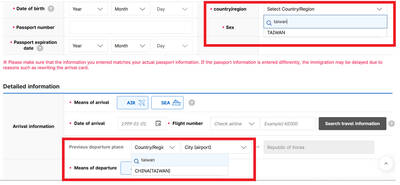
Jason Han says that the e-arrival card spat between South Korea and Taiwan shows that Seoul is signaling adherence to its “one-China” policy, while Taiwan’s response reflects a reciprocal approach. “Attempts to alter the diplomatic status quo often lead to tit-for-tat responses,” the analyst on international affairs tells the Taipei Times, adding that Taiwan may become more cautious in its dealings with South Korea going forward. Taipei has called on Seoul to correct its electronic entry system, which currently lists Taiwan as “China (Taiwan),” warning that reciprocal measures may follow if the wording is not changed before March 31. As of yesterday,
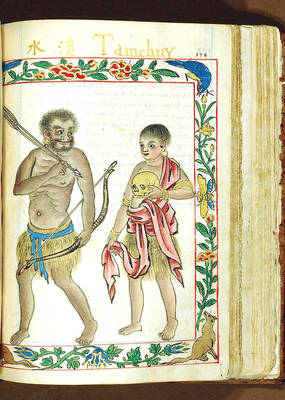
The Portuguese never established a presence on Taiwan, but they must have traded with the indigenous people because later traders reported that the locals referred to parts of deer using Portuguese words. What goods might the Portuguese have offered their indigenous trade partners? Among them must have been slaves, for the Portuguese dealt slaves across Asia. Though we often speak of “Portuguese” ships, imagining them as picturesque vessels manned by pointy-bearded Iberians, in Asia Portuguese shipping between local destinations was crewed by Asian seamen, with a handful of white or Eurasian officers. “Even the great carracks of 1,000-2,000 tons which plied
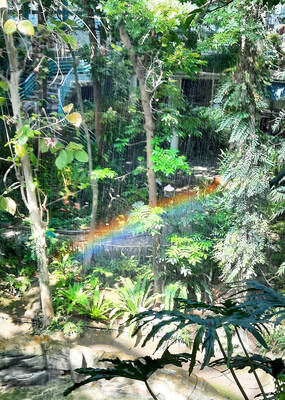
It’s only half the size of its more famous counterpart in Taipei, but the Botanical Garden of the National Museum of Nature Science (NMNS, 國立自然科學博物館植物園) is surely one of urban Taiwan’s most inviting green spaces. Covering 4.5 hectares immediately northeast of the government-run museum in Taichung’s North District (北區), the garden features more than 700 plant species, many of which are labeled in Chinese but not in English. Since its establishment in 1999, the site’s managers have done their best to replicate a number of native ecosystems, dividing the site into eight areas. The name of the Coral Atoll Zone might
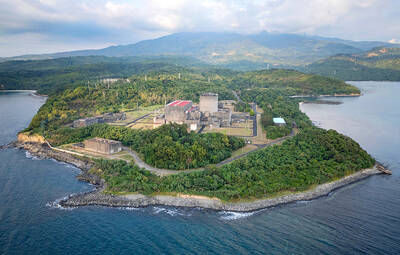
Nuclear power is getting a second look in Southeast Asia as countries prepare to meet surging energy demand as they vie for artificial intelligence-focused data centers. Several Southeast Asian nations are reviving mothballed nuclear plans and setting ambitious targets and nearly half of the region could, if they pursue those goals, have nuclear energy in the 2030s. Even countries without current plans have signaled their interest. Southeast Asia has never produced a single watt of nuclear energy, despite long-held atomic ambitions. But that may soon change as pressure mounts to reduce emissions that contribute to climate change, while meeting growing power needs. The


 RSS
RSS