


Director Ang Lee (李安) wanted to offer filmgoers an “immersive” experience with Life of Pi, his Oscar-nominated 3D fable about an Indian boy trapped on a boat with a tiger. Claudio Miranda helped him do it.
The Chilean-American cinematographer, a veteran of 3D film-making who himself is up for an Academy Award on Sunday, says bringing Yann Martel’s philosophical novel to the silver screen was no easy task.
“You just can’t put a boy and a tiger on a boat together, ever. You know that you’re going to be in the hands of visual effects to put the tiger in for you, and then just hope it doesn’t look like a cartoon,” Miranda told AFP.

Photo: AFP
The film is up for 11 Oscars, including best picture, best director, best adapted screenplay and best cinematography, earning the second highest number of nominations after Steven Spielberg’s presidential drama Lincoln.
To recreate the world of Pi, who is stranded on the boat with the Bengal tiger in the Pacific after a shipwreck, the crew had to build a huge water tank of 90 by 30 meters in Taiwan.
Miranda says that was the only way to control the light and decide how the waves would move in a film where the ocean is nearly a character itself.
“We just wanted to make it feel immersive. There’s something very different about water and 3D and how that feels,” said the 47-year-old Miranda, who previously did 3D camera work on TRON: Legacy.
“There was a big concern that they (the public) were going to be sick” due to the 3D movement of the water, he said. “There’s a lot of editing choices and horizon choices that make you feel less sick.”
The extra work paid off: even though Life of Pi earned mixed reviews from critics, reviewers were nearly unanimous in their praise of the film’s stunning visuals.
“Ang is very experimental,” Miranda said of the Taiwanese-born director, already a best director Oscar winner in 2006 for gay cowboy romance Brokeback Mountain.
“He wanted to find new ways for storytelling. He felt like really exploring 3D.”
Miranda said the success of his cinematography was due in part to his decision to break with some of the rules most follow when shooting in 3D.
“There are a lot of rules on things on 3D and I looked at them and I said well, maybe, and maybe not. Some people think that you need everything sharp and I don’t agree,” he explained.
For a scene near the film’s end, “everything falls out of focus naturally. If you’re bored with the story and you start looking around the screen, and you see something soft, your eyes are going to feel comfortable,” he said.
Among the most memorable scenes in the film is a religious ceremony in India twinkling with 50,000 candles — lit by 2,000 crew members — and a whale jumping in phosphorescent waters.
The whale scene was in part inspired by a real-life experience, Miranda said. One night during filming, he and Lee went to go swimming at night and quickly found themselves surrounded by phosphorescent plankton.
They loved the effect and decided to recreate it in what may be one of the film’s most beautiful scenes.
Miranda, already nominated for an Oscar in 2009 for The Curious Case of Benjamin Button, says he’s thrilled about the 11 nominations Life of Pi has received, but regrets that young actor Suraj Sharma was not among them.
“What makes me really sad is that the boy, Suraj, didn’t get anything,” he said.
“This is a boy that is carrying the whole movie, acting with someone who is not there. Eighty percent of the movie is just one actor. He carries the whole ocean, he carries everything.”

Jason Han says that the e-arrival card spat between South Korea and Taiwan shows that Seoul is signaling adherence to its “one-China” policy, while Taiwan’s response reflects a reciprocal approach. “Attempts to alter the diplomatic status quo often lead to tit-for-tat responses,” the analyst on international affairs tells the Taipei Times, adding that Taiwan may become more cautious in its dealings with South Korea going forward. Taipei has called on Seoul to correct its electronic entry system, which currently lists Taiwan as “China (Taiwan),” warning that reciprocal measures may follow if the wording is not changed before March 31. As of yesterday,

The Portuguese never established a presence on Taiwan, but they must have traded with the indigenous people because later traders reported that the locals referred to parts of deer using Portuguese words. What goods might the Portuguese have offered their indigenous trade partners? Among them must have been slaves, for the Portuguese dealt slaves across Asia. Though we often speak of “Portuguese” ships, imagining them as picturesque vessels manned by pointy-bearded Iberians, in Asia Portuguese shipping between local destinations was crewed by Asian seamen, with a handful of white or Eurasian officers. “Even the great carracks of 1,000-2,000 tons which plied
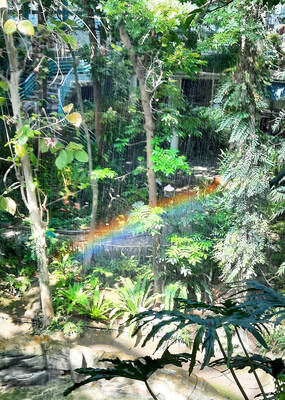
It’s only half the size of its more famous counterpart in Taipei, but the Botanical Garden of the National Museum of Nature Science (NMNS, 國立自然科學博物館植物園) is surely one of urban Taiwan’s most inviting green spaces. Covering 4.5 hectares immediately northeast of the government-run museum in Taichung’s North District (北區), the garden features more than 700 plant species, many of which are labeled in Chinese but not in English. Since its establishment in 1999, the site’s managers have done their best to replicate a number of native ecosystems, dividing the site into eight areas. The name of the Coral Atoll Zone might
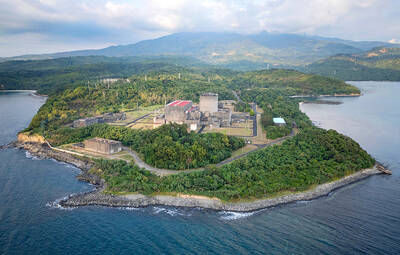
Nuclear power is getting a second look in Southeast Asia as countries prepare to meet surging energy demand as they vie for artificial intelligence-focused data centers. Several Southeast Asian nations are reviving mothballed nuclear plans and setting ambitious targets and nearly half of the region could, if they pursue those goals, have nuclear energy in the 2030s. Even countries without current plans have signaled their interest. Southeast Asia has never produced a single watt of nuclear energy, despite long-held atomic ambitions. But that may soon change as pressure mounts to reduce emissions that contribute to climate change, while meeting growing power needs. The


 RSS
RSS