


The musical Notre-Dame de Paris has returned to Taipei after a seven years absence, but this time, the originally French musical will be performed in its English version, which had its international debut in 2000. The show opens in Taipei on Jan 18 and will stay until Jan 27 for a total of 12 shows.
Notre-Dame de Paris was a French-Canadian production that debuted in 1998 based upon the novel The Hunchback of Notre-Dame by the novelist Victor Hugo. It has had an enviable track record in performance, for according to the Guinness Book of Records, it had the most successful first year of any musical ever. The premiere of its English version in London ran for 17 months.
It should be mentioned at the outset for those not familiar with the globe conquering sensation, that Notre-Dame de Paris is a rock opera — or more correctly, a power pop opera. In its English version, the lyrics are by Will Jennings, the multi-award winning songwriter who created such notable hits has My Heart Will Go On, the theme for the film Titanic. Songs from the original, such as Belle and Le temps des Cathedrales, have long since established themselves as international hits.
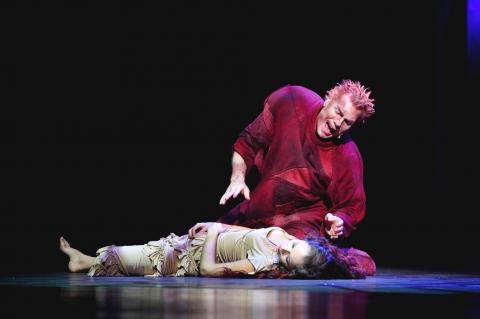
Photo courtesy of United Daily Group
For all the emotional pop ballads, it also should be noted that Notre-Dame de Paris is, unlike a Broadway musical, completely sung through, without spoken dialogue. This poses considerable challenges for the creation of engaging verbal drama.
Judging from Internet comment, many local fans are delighted that the English lyrics will give greater accessibility for those not proficient in French. However, a review in the British newspaper The Telegraph described the lyrics as largely inaudible and when heard, mostly trite.
Nevertheless, there is plenty of musical power and it should be pointed out that this isn’t some second or third string touring company, as performers from the original Canadian cast will take the leading roles, notably Matt Laurent who plays Quasimodo and Richard Charest, who plays the poet Gringoire.
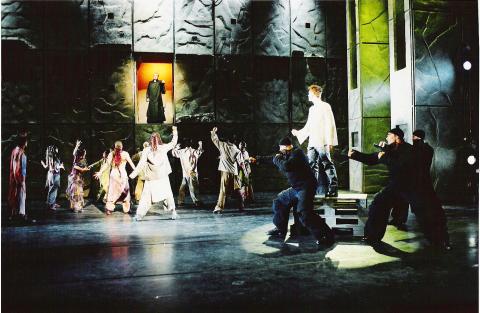
Photo courtesy of United Daily Group
The organizers have highlighted the post-modern stage design as a highlight of the show, with Notre-Dame Cathedral represented by Brutalist mobile blocks that move around on stage. These are used to facilitate some lively acrobatic choreography, and with the combination of sophisticated lighting, the stage looks quite spectacular. While Notre-Dame de Paris might not get to the heart of Hugo’s massive work, it has proved its ability to entertain time and time again.
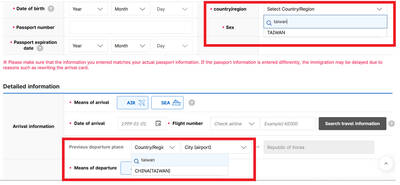
Jason Han says that the e-arrival card spat between South Korea and Taiwan shows that Seoul is signaling adherence to its “one-China” policy, while Taiwan’s response reflects a reciprocal approach. “Attempts to alter the diplomatic status quo often lead to tit-for-tat responses,” the analyst on international affairs tells the Taipei Times, adding that Taiwan may become more cautious in its dealings with South Korea going forward. Taipei has called on Seoul to correct its electronic entry system, which currently lists Taiwan as “China (Taiwan),” warning that reciprocal measures may follow if the wording is not changed before March 31. As of yesterday,

The Portuguese never established a presence on Taiwan, but they must have traded with the indigenous people because later traders reported that the locals referred to parts of deer using Portuguese words. What goods might the Portuguese have offered their indigenous trade partners? Among them must have been slaves, for the Portuguese dealt slaves across Asia. Though we often speak of “Portuguese” ships, imagining them as picturesque vessels manned by pointy-bearded Iberians, in Asia Portuguese shipping between local destinations was crewed by Asian seamen, with a handful of white or Eurasian officers. “Even the great carracks of 1,000-2,000 tons which plied
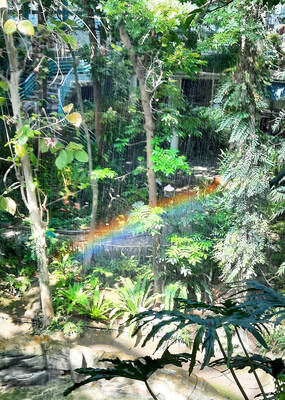
It’s only half the size of its more famous counterpart in Taipei, but the Botanical Garden of the National Museum of Nature Science (NMNS, 國立自然科學博物館植物園) is surely one of urban Taiwan’s most inviting green spaces. Covering 4.5 hectares immediately northeast of the government-run museum in Taichung’s North District (北區), the garden features more than 700 plant species, many of which are labeled in Chinese but not in English. Since its establishment in 1999, the site’s managers have done their best to replicate a number of native ecosystems, dividing the site into eight areas. The name of the Coral Atoll Zone might
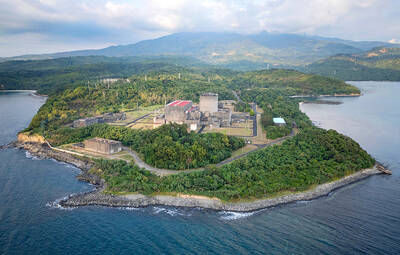
Nuclear power is getting a second look in Southeast Asia as countries prepare to meet surging energy demand as they vie for artificial intelligence-focused data centers. Several Southeast Asian nations are reviving mothballed nuclear plans and setting ambitious targets and nearly half of the region could, if they pursue those goals, have nuclear energy in the 2030s. Even countries without current plans have signaled their interest. Southeast Asia has never produced a single watt of nuclear energy, despite long-held atomic ambitions. But that may soon change as pressure mounts to reduce emissions that contribute to climate change, while meeting growing power needs. The


 RSS
RSS