


Hong Kong is calling, and in full artistic force. Today marks the beginning of Hong Kong Week 2012 — Culture and Creativity@Taipei (香港周2012 — 文化創意@台北), which is a program of shows from dozens of musicians, actors, dancers and filmmakers from the former British colony. Performances and shows take place at venues across Taipei until Dec. 2.
The event was created by the Hong Kong-Taiwan Cultural Co-operation Committee, a group devoted to promoting arts and culture exchanges between Hong Kong and Taiwan.
The purpose of this first edition of Hong Kong Week is “to show Taiwanese audiences what Hong Kong is doing in terms of cultural and creative development,” said Heidi Liu (廖珮賢) of the Hong Kong Economic, Trade and Cultural Office in Taipei, one of the event co-organizers.
Photos courtesy of Hong Kong Economic, Trade and Cultural Office
In other words, the event is a chance for Hong Kongophiles to get their fill.
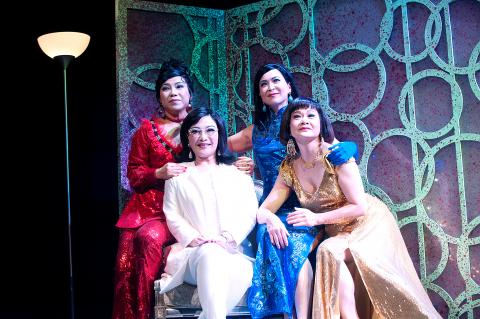
The opening program kicks off tonight with the Hong Kong Repertory Theatre’s I Have a Date with Autumn (我和秋天有個約會). The production is a follow-up to the theatre’s popular and award-winning play I Have a Date with Spring (我和春天有個約會), which is about an unknown nightclub singer who, by a twist of fate, is propelled to stardom in the late 1960s. The show, in Cantonese with Mandarin subtitles takes place tonight, tomorrow and Sunday at Novel Hall for Performing Arts.
Modern multimedia comes together with ancient Chinese history in 1587, A Year of No Significance (萬曆十 五年), a play performed by experimental theatre group Zuni Icosahedron. The play, set in 1587, is based on a book on the decline of the Ming Dynasty by the historian Ray Huang (黃仁宇). The show, in Cantonese with Mandarin subtitles, takes place at the Taiwan Cement Building’s Cement Hall (台泥士敏廳) tonight, tomorrow and Sunday.
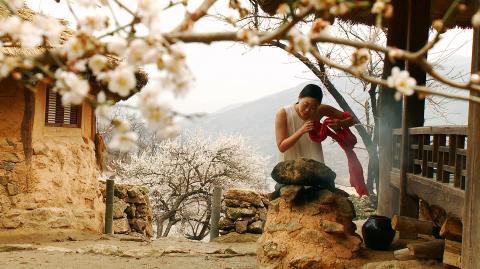
Photo courtesy of Hong Kong Economic, Trade and Cultural Office
Music plays prominently in the program — the closing show on Dec. 2 is a performance by the well-reputed Hong Kong Chinese Orchestra at Zhongshan Hall (中山堂). Fans of jazz and world music might be interested in Collision, which features jazz fusion band SIU2, which uses traditional Chinese instruments along with conventional jazz instruments, and will be joined by another HKCO4U, the youth branch of the Hong Kong Chinese Orchestra. They perform at Legacy tonight and tomorrow.
Taiwanese artists are also part of Hong Kong Week. Let’s Swing Taipei sees two jazz orchestras, one from Hong Kong, the other from Taipei, performing together (see Live Wire, Page 11). Two star Taiwanese pop figures, Waa Wei (魏如萱) and Wu Bai (伍佰) will make guest appearances as part of Gen S, a showcase of both up-and-coming and well-known singer-songwriters, including Hong Kong rock musician and guitar maven Paul Wong (黃貫中) and his band The Postman. These shows take place at Legacy on Monday and Tuesday (See Contemporary Listings, page 11, for details).
Modern dance enthusiasts have the Hong Kong-Taipei Dance Exchange, with some 50 dancers and choreographers teaming up for an interactive, “environmental” performance at the Tsai Jui-yueh Dance Research Institute/Rose Historic Site (蔡瑞月舞蹈社). This event takes place on Dec. 1. Jumping Frames is modern dance in video form, with screenings taking place at Eslite Bookstore’s Xinyi Branch (誠品信義店) on Dec. 1 and Dec. 2.
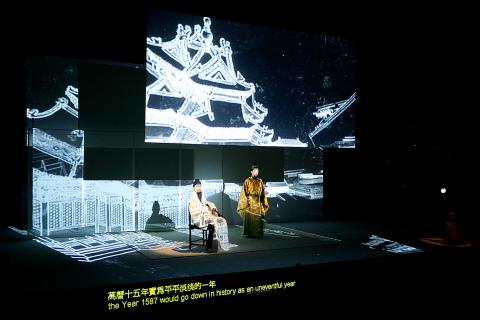
Photo courtesy of Hong Kong Economic, Trade and Cultural Office
For film buffs, there’s the Hong Kong Contemporary Film Showcase, which takes place from Nov. 28 to Dec. 1 at Cinema 7 (絕色影城) in Ximending. And comics fans might be interested to see Kaleidoscope — History of Hong Kong Comics Exhibition, which features animation shorts and panel discussions between Hong Kong and Taiwanese artists. The exhibition is on at Chung Shan Creative Hub (中山創意基地URS21) from today until Dec. 8.
For more information and a full schedule with times and ticket prices is available at www.hongkongweek2012taipei.hk. A downloadable PDF program in English is available under the “Programmes” page.
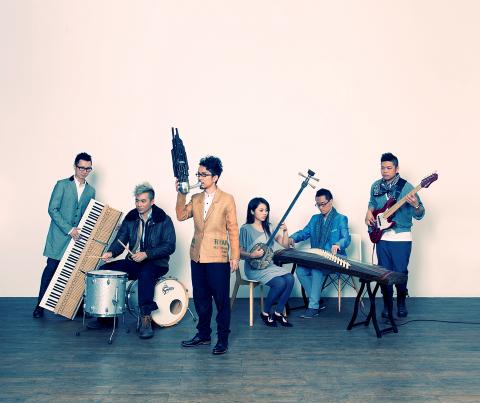
Photo courtesy of Hong Kong Economic, Trade and Cultural Office
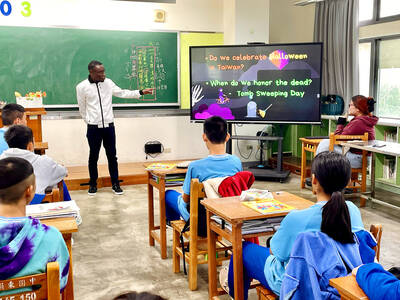
For many people, Bilingual Nation 2030 begins and ends in the classroom. Since the policy was launched in 2018, the debate has centered on students, teachers and the pressure placed on schools. Yet the policy was never solely about English education. The government’s official plan also calls for bilingualization in Taiwan’s government services, laws and regulations, and living environment. The goal is to make Taiwan more inclusive and accessible to international enterprises and talent and better prepared for global economic and trade conditions. After eight years, that grand vision is due for a pulse check. RULES THAT CAN BE READ For Harper Chen (陳虹宇), an adviser
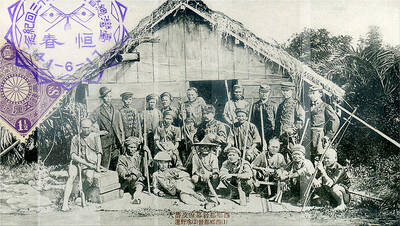
Traditionally, indigenous people in Taiwan’s mountains practice swidden cultivation, or “slash and burn” agriculture, a practice common in human history. According to a 2016 research article in the International Journal of Environmental Sustainability, among the Atayal people, this began with a search for suitable forested slopeland. The trees are burnt for fertilizer and the land cleared of stones. The stones and wood are then piled up to make fences, while both dead and standing trees are retained on the plot. The fences are used to grow climbing crops like squash and beans. The plot itself supports farming for three years.

The breakwater stretches out to sea from the sprawling Kaohsiung port in southern Taiwan. Normally, it’s crowded with massive tankers ferrying liquefied natural gas from Qatar to be stored in the bulbous white tanks that dot the shoreline. These are not normal times, though, and not a single shipment from Qatar has docked at the Yongan terminal since early March after the Strait of Hormuz was shuttered. The suspension has provided a realistic preview of a potential Chinese blockade, a move that would throttle an economy anchored by the world’s most advanced and power-hungry semiconductor industry. It is a stark reminder of
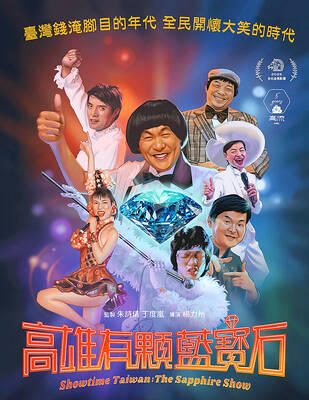
May 4 to May 10 It was once said that if you hadn’t performed at the Sapphire Grand Cabaret (藍寶石大歌廳), you couldn’t truly be considered a star. Taking the stage at the legendary Kaohsiung club was more than just a concert. Performers were expected to entertain in every sense, wearing outlandish or revealing costumes and staying quick on their feet as sharp-tongued, over-the-top hosts asked questions and delivered jokes that would be seen as vulgar, even offensive, by today’s standards. Opening in May 1967 during a period of strict political and social control, Sapphire offered a rare outlet for audiences in


 RSS
RSS