


Acclaimed Aboriginal singer/songwriter Suming (舒米恩), will perform at The Wall (這牆) on July 5, July 6 and July 7 to promote his second solo album Amis (阿米斯), which will be released on June 30.
Born Suming Rupi in Taitung County as a member of the Amis tribe (阿美族), the indie icon is the former frontman of Totem Band (圖騰樂團), which received a Golden Melody Best Band Award nomination in 2007. His breakthrough came when his role in the indie film Hopscotch (跳格子) won him a Golden Horse Best Newcomer Award in 2008. Last year, Suming’s solo debut album won the Golden Melody Best Aboriginal Album Award.
“My debut solo was eponymously titled because it was about establishing myself,” the charismatic crooner told the Taipei Times last week. “This new album is titled Amis because I broadened the scope to include my tribe’s concerns, its people and its music.”

Photo courtesy of Wonder Music
The ambitious 11-track album includes one Mandarin track, one Japanese track, with the rest sung in the Amis language. Its diverse musical styles run the gamut of folk, pop, electronica, tango, Brit-style rock and classical. With love as the central theme, the 11 tracks converge into a pop opus about one’s passion about life, romance, homeland and dreams. The all-around pop personality also serves as producer, songwriter and singer on all the tracks.
“My mission is to bring Aboriginal vocals into pop music. It’s not an ambition for me to create Aboriginal pop. It’s simply that I see many Aboriginal youths who can’t relate to the sentiments in Mando-pop. I want to create music for them.”
The lead single, Don’t Be Quick to Say You Love Me When You Are in Dulan (別在都蘭的土地上輕易的說著你愛我), is a Mandarin track that sees Suming crooning against a laid-back bossa nova groove. The song’s music video, which premiered on YouTube last night, pairs Suming with Taiwan supermodel Sonia Sui (隋棠) of the hit TV drama Fierce Wife (犀利人妻) for a riveting love story between an Aboriginal youth and the Dulan land goddess.
The second single, John Suming (約翰淑敏) is a mid-tempo tango number in which Suming declares his love for his homeland and protests against the commercialization of Dulan.
“Because many of my songs have a social message, I want to use riveting melody and ambiance to pull the audiences in,” he said. “If they enjoy the song, maybe they will listen to the lyrics closely and see the message.”
For the upcoming concert, Suming will sing songs mostly in the Amis language, with Chinese-language captions. Because of the eclectic music styles featured on the new album, three different teams of musicians are required: an orchestra, a DJ and a pianist, and then Suming himself with a guitar.
“I hope my music is a crossover genre that Mando-pop audiences will like too,” he said. “If audiences are willing to listen to English songs with little understanding of the lyrics, why can’t they enjoy Aboriginal pop music?”

Taiwan’s English education system is being pulled apart by three opposing forces. Bilingual Nation 2030 pulls students toward English and global communication. Artificial Intelligence (AI) readiness pulls them toward digital judgment, verification and AI-mediated work. But Taiwan’s old exam culture pulls them back toward memorization, grammar drills, timed reading and correct answers. If the education system keeps using old exams to define success, it risks producing graduates who are neither genuinely bilingual nor genuinely AI-ready, but trained for tasks machines can already perform. The first force is Bilingual Nation 2030. Launched in 2018, the policy aimed to “help Taiwan’s workforce connect
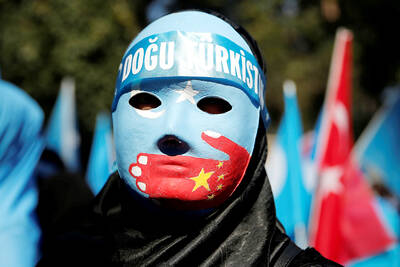
It seems every few days one bumps into one of those “real man” comments in which Taiwan is urged to “face reality” or similar, and “make a deal,” with the speaker implying that soon it will be too late. “Deal” advocates always present themselves as having a superior grip on reality, and the manly ability to make the “hard choice.” Their testosterone-laden language often echoes that of Taiwan sellout advocates. Note that such commentary always specifies a process (“make a deal, work with, make progress”), never the end state of what occupation by a violent authoritarian colonialist state will entail. In

“Taiwan’s Opposition Leader Comes to US With a Message Straight Out of Beijing” read a May 31 headline in the Wall Street Journal. Top US administration officials and members of Congress almost certainly read the WSJ, and if there was a bullet point takeaway that people in Washington should absorb ahead of Chinese Nationalist Party (KMT) Chair Cheng Li-wun’s (鄭麗文) arrival in DC on June 9, that headline is it. The last few columns have discussed this very topic, and the timing is not coincidental. While those top officials likely do not read the Taipei Times, judging by the number
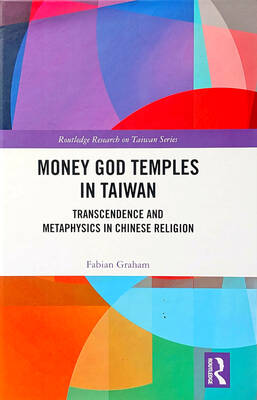
As someone who normally steers clear of books with “transcendence” or “metaphysics” in their subtitles, this reviewer — a casual observer of local belief systems since the 1990s — found Fabian Graham’s Money God Temples in Taiwan a challenging read. Those who’ve only dipped their toes into temple culture will likely need to parse several sections with special care if they’re to keep up with the author, a British ethnographic researcher whose previous books have investigated religious practices among ethnic Chinese in Southeast Asia. This scholarly volume examines a facet of Taiwan’s religious landscape that didn’t exist a century ago, and


 RSS
RSS