


Woodland and Beyond brings together three series of photographs, titled Woodlands, Trees of Tel Aviv, and Landscapes, by German photographer Mat Hennek, who is equally well known for his psychologically complex images of classical musicians. The works on display at 1839 offer an almost painterly vision of forests and trees, which allows the viewer to feel as much as see their natural beauty.
■ 1839 Contemporary Gallery (當代藝廊), B1, 120 Yanji St, Taipei City (台北市延吉街120號B1), tel: (02) 2778-8458. Open Tuesdays to Sundays from 11am to 8pm
■ Opening reception on Saturday at 2:30pm. Until May 13
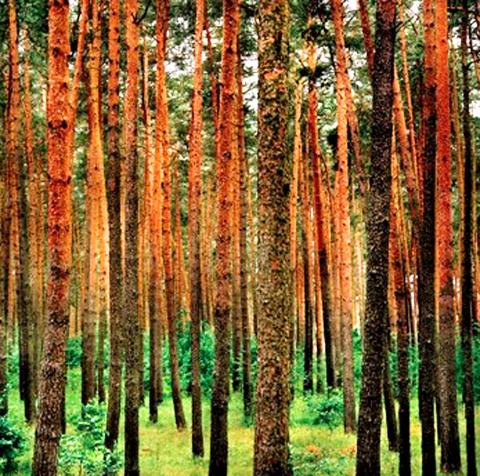
Photo courtesy of 1839 Contemporary Gallery
Can unfamiliar environments awaken memories? This is the underlying idea explored in Chu Yin-hua’s (朱盈樺) Once Upon a City (沒有地圖的城市), for which he uses a mise en scene style of photography to explore a state wherein, according to his artist statement, “perceptions of the physical environment are overlaid with memories.”
■ Barry Room, Taipei Artist Village (台北國際藝術村百里廳), 7 Beiping E Rd, Taipei City (台北市北平東路7號), tel: (02) 3393-7377. Open Tuesdays to Sundays from 11am to 9pm
■ Opening reception on Saturday at 2pm. Until April 28
Venezuela From Below presents the work of Austrian documentary filmmakers Oliver Ressler and Dario Azzellini. The exhibit is part of TheCube Project Spaces’ Re-envisioning Society (重見/建社會) series, which reflects on the characteristics of and changes in contemporary life. The screened films examine the popularity of Venezuelan President Hugo Chavez, the “Bolivian Revolution” that he initiated and his attempts to purge the country of neo-liberal policies. According to TheCube’s press release, “the films meticulously portray how the development of a democratic socialism, participatory democracy and autonomy of workers that emerged over the past decade have changed the Venezuelans’ envisioning of politics and the social structure.”
■ TheCube Project Space (立方計畫空間), 2F, 13, Alley 1, Ln 136, Roosevelt Rd Sec 4, Taipei City (台北市羅斯福路四段136巷1弄13號2樓), tel: (02) 2368-9418. Open Tuesdays through Sundays from 12pm to 7pm
■ Opening reception on Saturday at 3pm. Until April 29
Floating in the Roche Lobe Boundary (洛希瓣邊界的漂浮) is a new series of abstract paintings by Chen Hung-chun (陳宏群) that ponders, both philosophically and aesthetically, the teardrop-shaped region of space around a star, known as the Roche lobe, in which material is bound to the star by gravity. For Chen, this serves as a metaphor for the attraction between terrestrial bodies, each brushstroke a symbol of time’s flux and our emotional ups and downs.
■ A Gallery (一畫廊), 22, Alley 36, Ln 147, Xinyi Rd Sec 3, Taipei City (台北市信義路三段147巷36弄22號), tel: (02) 2702-3327. Open Mondays to Saturdays from 1pm to 9pm
■ Until April 15
Correction
The photo credit in last Wednesday’s Art Journal story headlined “Pictures worth a thousand words” incorrectly identified the photographer as staff reporter Noah Buchan. The correct credit should have been “courtesy of Eslite Gallery.” The Taipei Times regrets the error.
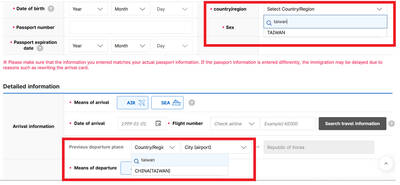
Jason Han says that the e-arrival card spat between South Korea and Taiwan shows that Seoul is signaling adherence to its “one-China” policy, while Taiwan’s response reflects a reciprocal approach. “Attempts to alter the diplomatic status quo often lead to tit-for-tat responses,” the analyst on international affairs tells the Taipei Times, adding that Taiwan may become more cautious in its dealings with South Korea going forward. Taipei has called on Seoul to correct its electronic entry system, which currently lists Taiwan as “China (Taiwan),” warning that reciprocal measures may follow if the wording is not changed before March 31. As of yesterday,
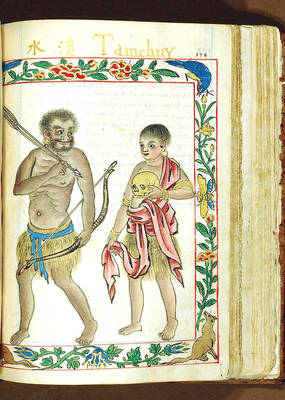
The Portuguese never established a presence on Taiwan, but they must have traded with the indigenous people because later traders reported that the locals referred to parts of deer using Portuguese words. What goods might the Portuguese have offered their indigenous trade partners? Among them must have been slaves, for the Portuguese dealt slaves across Asia. Though we often speak of “Portuguese” ships, imagining them as picturesque vessels manned by pointy-bearded Iberians, in Asia Portuguese shipping between local destinations was crewed by Asian seamen, with a handful of white or Eurasian officers. “Even the great carracks of 1,000-2,000 tons which plied
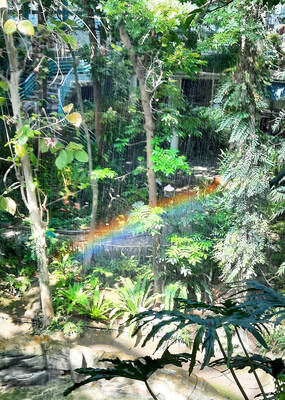
It’s only half the size of its more famous counterpart in Taipei, but the Botanical Garden of the National Museum of Nature Science (NMNS, 國立自然科學博物館植物園) is surely one of urban Taiwan’s most inviting green spaces. Covering 4.5 hectares immediately northeast of the government-run museum in Taichung’s North District (北區), the garden features more than 700 plant species, many of which are labeled in Chinese but not in English. Since its establishment in 1999, the site’s managers have done their best to replicate a number of native ecosystems, dividing the site into eight areas. The name of the Coral Atoll Zone might
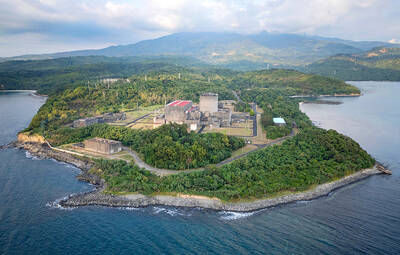
Nuclear power is getting a second look in Southeast Asia as countries prepare to meet surging energy demand as they vie for artificial intelligence-focused data centers. Several Southeast Asian nations are reviving mothballed nuclear plans and setting ambitious targets and nearly half of the region could, if they pursue those goals, have nuclear energy in the 2030s. Even countries without current plans have signaled their interest. Southeast Asia has never produced a single watt of nuclear energy, despite long-held atomic ambitions. But that may soon change as pressure mounts to reduce emissions that contribute to climate change, while meeting growing power needs. The


 RSS
RSS