


Each year, Taiwan Friends of Tibet (台灣圖博之友會) arranges two guided group tours of Dharamshala, India, home of the Dalai Lama and the Tibetan government-in-exile, to foster cross-cultural exchanges. Poet and theater director Hung Hung (鴻鴻) went on one such trip in April last year, and on returning home decided to mount a festival to introduce local audiences to Tibetan performance arts.
The result is Free Tibet Festival (2012圖博文化節), a collaboration between Dark Eyes Performance Lab (黑眼睛跨劇團), of which Hung Hung is the artistic director, and Taiwan Friends of Tibet.
“Tibetan culture [in China] has been seriously undermined under the Chinese occupation over the past 50 years ... But it is well preserved by the Tibetan exiles,” Taiwan Friends of Tibet president Chow Mei-li (周美里) said. “The Dalai Lama says that one of his missions is to preserve Tibetan culture because he believes that education and culture are essential to a nation’s survival.”
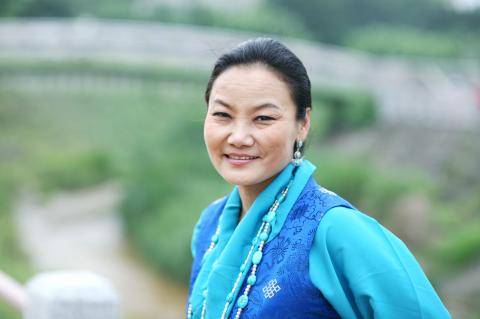
Photo Courtesy of Dark Eyes Performance Lab
The festival boasts a diverse lineup of dance, music and theatrical performances, a photographic exhibition, film screenings and speeches by more than 40 artists, musicians and activists, most of whom come from the Tibetan community in Dharamshala.
Established in 1959, shortly after the Dalai Lama fled to India after a failed uprising, the Tibetan Institute of Performing Arts aims to keep the traditions of Tibetan performance arts alive. For their only show in Taipei, the institute’s performers will present a series of ritual and folk dances and music including shanak, a masked spiritual dance, and ngonpai don, a ritual performance of purification.
World-renowned Tibetan folk singer Kelsang Chukie Tethong will take to the stage on March 3 with a performance of traditional Tibetan folk music.
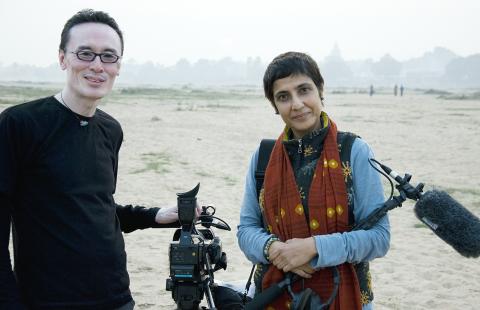
Photo Courtesy of Dark Eyes Performance Lab
Born and raised in exile, the three brothers who make up protest rock band JJI Exile Brothers will play at The Wall (這牆) on Feb. 29, joined on the bill by Taiwanese Aboriginal folk icon Panai (巴奈) and rapper Chang Jui-chuan (張睿銓).
In light of the recent wave of self-immolations by Buddhist monks and nuns calling for Tibet’s liberation and the return of the Dalai Lama, the festival organizers hope the cultural event will draw public attention to the grim situation that many Tibetans face under China’s repressive rule.
“The festival offers Taiwanese people a chance to think about the atrocities committed by China’s communist regime,” Chow said. “Since exchanges between Taiwan and China have become increasingly frequent, we really should get to know our next-door neighbor better and recognise its true totalitarian face.”

Photo Courtesy of Dark Eyes Performance Lab
As part of the festival, SPOT — Taipei Film House (光點台北) will screen 16 fictional and documentary works by Tibetan directors as well as filmmakers from Taiwan, India, Europe and the US.
A prominent theme of the mini film festival is ecological destruction on the Tibetan Plateau.
The Free Tibet Festival opens today with a photo exhibition at Cafe Philo (慕哲咖啡), located at 3 Shaoxing N St, Taipei City (台北市紹興北街3號). The exhibition offers visitors a glimpse of Tibetan life before China took over the country in 1959. Most of the photographs on display come from the family album of Chow’s husband Khedroob Thondup, a nephew of the Dalai Lama.
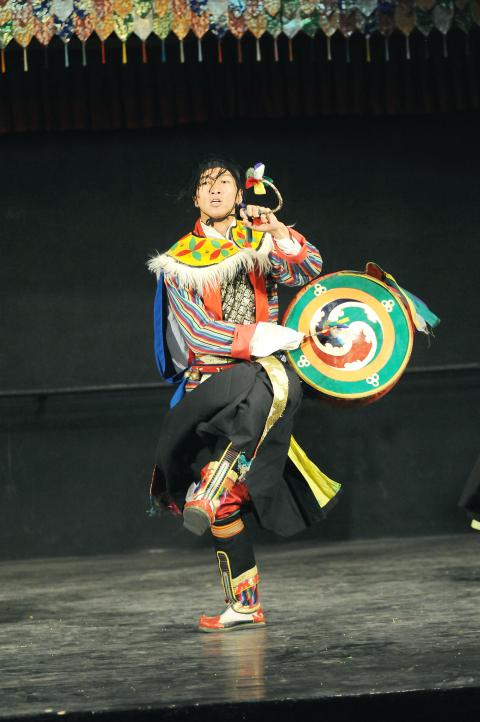
Photo Courtesy of Dark Eyes Performance Lab
In junction with the photo exhibit, a series of lectures will be given by guest speakers including Tenzin Tsundue, an award-winning poet and writer known for his one-man protests that involved him holding a banner that read “Free Tibet: China, Get Out” when former premier of China Zhu Rongji (朱鎔基) and Premier Wen Jiabao (溫家寶) visited India in 2002 and 2005, respectively.
For more information about the festival, call (02) 2389-3625 or visit freetibet2012.blogspot.com. For details on Taiwan Friends of Tibet’s group tours, visit blog.yam.com/taiwanfortibet.
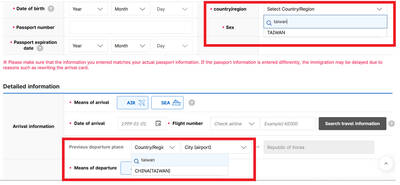
Jason Han says that the e-arrival card spat between South Korea and Taiwan shows that Seoul is signaling adherence to its “one-China” policy, while Taiwan’s response reflects a reciprocal approach. “Attempts to alter the diplomatic status quo often lead to tit-for-tat responses,” the analyst on international affairs tells the Taipei Times, adding that Taiwan may become more cautious in its dealings with South Korea going forward. Taipei has called on Seoul to correct its electronic entry system, which currently lists Taiwan as “China (Taiwan),” warning that reciprocal measures may follow if the wording is not changed before March 31. As of yesterday,

The Portuguese never established a presence on Taiwan, but they must have traded with the indigenous people because later traders reported that the locals referred to parts of deer using Portuguese words. What goods might the Portuguese have offered their indigenous trade partners? Among them must have been slaves, for the Portuguese dealt slaves across Asia. Though we often speak of “Portuguese” ships, imagining them as picturesque vessels manned by pointy-bearded Iberians, in Asia Portuguese shipping between local destinations was crewed by Asian seamen, with a handful of white or Eurasian officers. “Even the great carracks of 1,000-2,000 tons which plied
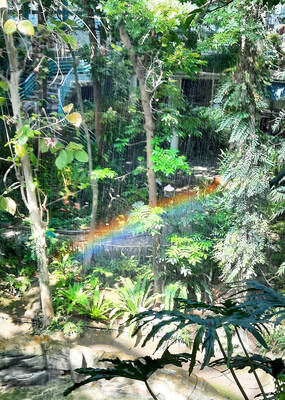
It’s only half the size of its more famous counterpart in Taipei, but the Botanical Garden of the National Museum of Nature Science (NMNS, 國立自然科學博物館植物園) is surely one of urban Taiwan’s most inviting green spaces. Covering 4.5 hectares immediately northeast of the government-run museum in Taichung’s North District (北區), the garden features more than 700 plant species, many of which are labeled in Chinese but not in English. Since its establishment in 1999, the site’s managers have done their best to replicate a number of native ecosystems, dividing the site into eight areas. The name of the Coral Atoll Zone might
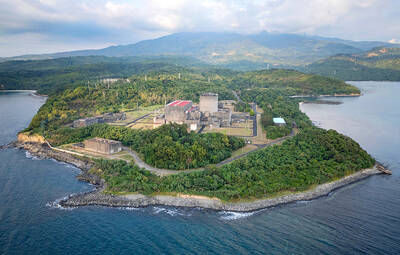
Nuclear power is getting a second look in Southeast Asia as countries prepare to meet surging energy demand as they vie for artificial intelligence-focused data centers. Several Southeast Asian nations are reviving mothballed nuclear plans and setting ambitious targets and nearly half of the region could, if they pursue those goals, have nuclear energy in the 2030s. Even countries without current plans have signaled their interest. Southeast Asia has never produced a single watt of nuclear energy, despite long-held atomic ambitions. But that may soon change as pressure mounts to reduce emissions that contribute to climate change, while meeting growing power needs. The


 RSS
RSS