


I’ve visited Namaste Curry, located on the second floor of a building in an alley across the street from the main gate of National Taiwan University, a number of times since it opened a few years back, and I’m always amazed by the disparity between its strengths and weaknesses.
This is immediately apparent in the decor. The restaurant’s pleasing front section is large, bright, and uncluttered. Patrons remove their shoes to sit at one of four tables on a raised wooden platform, each of which is located at the corner of a large rug. Several windows provide natural lighting and accentuate a mural of a Buddhist temple.
The rear seating area looks like an entirely different restaurant. Though the walls are tastefully painted
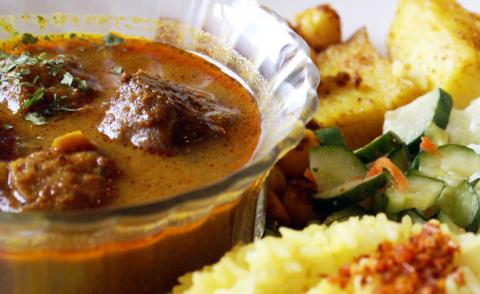
Photo: Noah Buchan, Taipei Times
terra-cotta and the ceilings are yellow, the space is narrow, dark and somewhat stuffy. Kitschy bric-a-brac (a tapestry of deities, ceramic bowls, etc) seems to be an afterthought.
Foodwise, Namaste tends toward the simple and nutritious, with an emphasis on catering to local tastes. Each of the menu’s eight dishes comes with a side of curried rice (NT$100 a la carte), coriander chickpeas, pickled cucumbers and seasoned potatoes.
I’ve never been to Nepal, so I’m not very sure what authentic Nepalese cuisine is supposed to taste like, but Namaste’s owner says his curries are made from scratch and contain varying amounts (depending on the curry ordered) of coriander, turmeric, green cardamom, cumin, cloves, anise, chilies, cinnamon and lemon grass. The sauce of the curry with beef balls (NT$150) has a rich and complex flavor with a spicy finish. The meatballs, however, are tasteless and have a bizarre, rubbery texture. Chunks of beef would greatly improve this dish.
The spicy chicken masala curry (NT$150) stands out for its texture and hearty flavor. Made with mashed red lentils, it has a distinctive, slightly sweet, cardamom flavor that I found very appealing. It is great with the chicken or, as I’ve done on a few occasions, eaten alone as a soup.
As with the decor, Namaste’s dishes are a mix of good and bad. The curried rice is said to contain turmeric and coconut milk; I found it somewhat bland. The mushroom and corn chowder (NT$50) tastes as though it comes from a packet and dessert consists of “Nepal pancake” (NT$50), a greasy, naan-style flatbread topped with large granules of white sugar.
Namaste has a lot going for it: delicious homemade curries served with nutritious sides in a space that, in one section at least, is relaxing and tastefully decorated. In other respects, though, it can’t seem to decide if it is a night market stall with walls, or a restaurant serving up wholesome Nepalese-style fare.
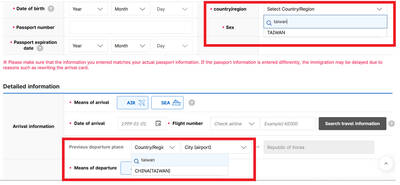
Jason Han says that the e-arrival card spat between South Korea and Taiwan shows that Seoul is signaling adherence to its “one-China” policy, while Taiwan’s response reflects a reciprocal approach. “Attempts to alter the diplomatic status quo often lead to tit-for-tat responses,” the analyst on international affairs tells the Taipei Times, adding that Taiwan may become more cautious in its dealings with South Korea going forward. Taipei has called on Seoul to correct its electronic entry system, which currently lists Taiwan as “China (Taiwan),” warning that reciprocal measures may follow if the wording is not changed before March 31. As of yesterday,

The Portuguese never established a presence on Taiwan, but they must have traded with the indigenous people because later traders reported that the locals referred to parts of deer using Portuguese words. What goods might the Portuguese have offered their indigenous trade partners? Among them must have been slaves, for the Portuguese dealt slaves across Asia. Though we often speak of “Portuguese” ships, imagining them as picturesque vessels manned by pointy-bearded Iberians, in Asia Portuguese shipping between local destinations was crewed by Asian seamen, with a handful of white or Eurasian officers. “Even the great carracks of 1,000-2,000 tons which plied
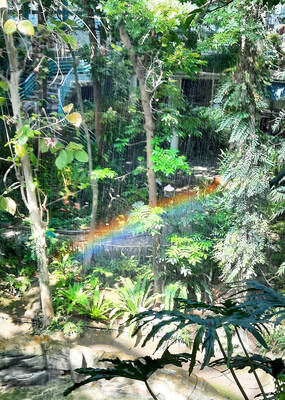
It’s only half the size of its more famous counterpart in Taipei, but the Botanical Garden of the National Museum of Nature Science (NMNS, 國立自然科學博物館植物園) is surely one of urban Taiwan’s most inviting green spaces. Covering 4.5 hectares immediately northeast of the government-run museum in Taichung’s North District (北區), the garden features more than 700 plant species, many of which are labeled in Chinese but not in English. Since its establishment in 1999, the site’s managers have done their best to replicate a number of native ecosystems, dividing the site into eight areas. The name of the Coral Atoll Zone might
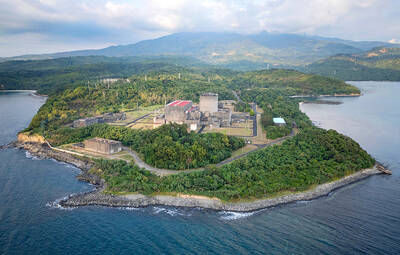
Nuclear power is getting a second look in Southeast Asia as countries prepare to meet surging energy demand as they vie for artificial intelligence-focused data centers. Several Southeast Asian nations are reviving mothballed nuclear plans and setting ambitious targets and nearly half of the region could, if they pursue those goals, have nuclear energy in the 2030s. Even countries without current plans have signaled their interest. Southeast Asia has never produced a single watt of nuclear energy, despite long-held atomic ambitions. But that may soon change as pressure mounts to reduce emissions that contribute to climate change, while meeting growing power needs. The


 RSS
RSS