


A slick black head breaks the surface, drawing delighted shrieks from whale watchers in a growing, and lucrative, activity that some say should replace Iceland’s controversial whale hunt.
Since their meager beginning in the 1990s, whale safaris in this island state have grown to attract tens of thousands of visitors each summer. But its proponents tensed up when Iceland reintroduced commercial whaling in 2006, and the two sides remain uneasy bedfellows.
“Whaling is bad for our business,” lamented Hoerdur Sigurbjarnarson, 58, of the family-run North Sailing tour company based in the tiny northern fishing village of Husavik.
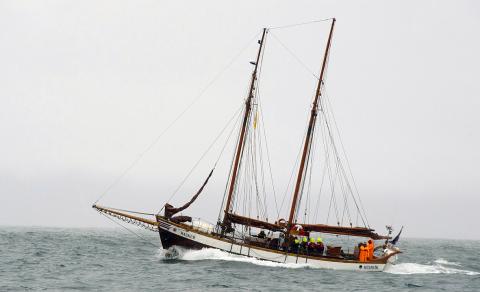
Photo: AFP
“And it’s useless,” he exclaimed, hunched over a long wooden table in the galley of one of six large oak boats his company uses for whale-watching tours.
He insists “there’s no market for whale meat,” a stance that Iceland’s Whale Commissioner heartily disputes.
Watching and hunting whales “work perfectly together” in a look-and-cook combo
of tourism and gastronomy, Thomas Heider
said last week on the sidelines of the International Whaling Commission forum on
the British Channel Island of Jersey. He said many tourists “go to restaurants afterwards to taste the whale meat.”
But Arni Gunnarsson, the chairman of the Icelandic Travel Industry Association, feels like Sigurbjarnarson that whaling only stigmatizes
the country and contributes little to its crisis-
hit economy.
Iceland and Norway are the only two countries in the world that authorize commercial whaling, under a much-criticized exemption within International Whaling Commission rules. Japan officially hunts whales for “scientific purposes,” though the whale meat is sold for consumption.
“It’s simple: you get more revenues out of watching the whales than out of hunting them,” said Gunnarsson, stressing that with no international market, the hunts bring in little to no foreign revenue.
Icelandic whalers insist their financials are sound, but admit they are serving a tiny market comprising only a fraction of the country’s 320,000 inhabitants as well as some customers in Japan.
And this sole export market collapsed after Japan was struck by multiple disasters in March.
“Demand has really shrunk [but] it will pick up,” said Kristjan Loftsson, the 68-year-old head of Iceland’s largest whale-hunting company, Hvalur.
Sigurbjarnarson, meanwhile, says whale-watching is booming. And foreigners account for more than 90 percent of the 30,000 clients his company takes out each year from April to October, when whales migrate to Icelandic waters.
Typical was a recent day when 20 tourists, including nationals from Austria, France, Germany, Italy and the Netherlands, braved freezing rain, towering waves and bad visibility to board one of North Sailing’s five daily rides into the whale-rich Skjalfandi Bay.
All shouted with joy when a slick humpback suddenly showed its head then dove back in, slamming its massive tail on the stormy surface. It was followed by two more humpbacks and a school of dolphins during the three-hour tour.
“It was worth it, I think,” said green-faced French national Katia Groh, 29, despite a bout of seasickness on the lurching vessel.
Whale safaris are also booming elsewhere, from New Zealand to Canada, the US and Mexico. A study published last year in the peer-reviewed journal Marine Policy said whale tourism worldwide topped US$2 billion in 2009 and was set to grow 10 percent a year.
An advantage in Iceland is the success rate, according to Sigurbjarnarson who says 98 percent of his own tours actually sight whales. And that, he contends, is largely because there is no whale hunting in Skjalfandi Bay.
Hunter Loftsson, like the government, insists that North Atlantic whale populations are abundant and rejects anti-whaling arguments that whalers are depleting what environmentalists say is a dwindling resource.
Estimates, Loftsson said, show Icelandic waters in the summer hold around 20,000 fin whales and some 40,000 minke whales. “So if we take 150 a year, that’s nothing,” he said, referring to Iceland’s annual quota for fin whales.
Sigurbjarnarson, however, says such estimates are “highly questionable.” “Whales migrate. They are hard to count and they shouldn’t be hunted,” he said.
A few whale watching companies straddle the issue, taking tourists — as Heider told the International Whaling Commission forum — to see whales then taste them back at port.
The anti-whaling International Fund for Animal Welfare insists that such tastings account for a large portion of Iceland’s domestic whale market, saying 40 percent of tourists try whale thinking it’s a traditional Icelandic dish whereas only five percent of Icelanders regularly eat whale.
Their slogan “Meet Us Don’t Eat Us” was briefly displayed at Iceland’s Keflavik international airport before, according to the International Fund for Animal Welfare, the powerful whaler lobby — who defend hunting as part of national heritage — pressured for its removal last month.
“We want the tourists to realize they can be part of the problem or the solution,” said the International Fund for Animal Welfare ‘s Sigursteinn Masson.

For many people, Bilingual Nation 2030 begins and ends in the classroom. Since the policy was launched in 2018, the debate has centered on students, teachers and the pressure placed on schools. Yet the policy was never solely about English education. The government’s official plan also calls for bilingualization in Taiwan’s government services, laws and regulations, and living environment. The goal is to make Taiwan more inclusive and accessible to international enterprises and talent and better prepared for global economic and trade conditions. After eight years, that grand vision is due for a pulse check. RULES THAT CAN BE READ For Harper Chen (陳虹宇), an adviser
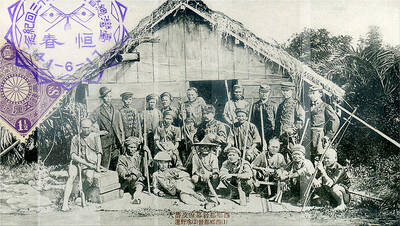
Traditionally, indigenous people in Taiwan’s mountains practice swidden cultivation, or “slash and burn” agriculture, a practice common in human history. According to a 2016 research article in the International Journal of Environmental Sustainability, among the Atayal people, this began with a search for suitable forested slopeland. The trees are burnt for fertilizer and the land cleared of stones. The stones and wood are then piled up to make fences, while both dead and standing trees are retained on the plot. The fences are used to grow climbing crops like squash and beans. The plot itself supports farming for three years.
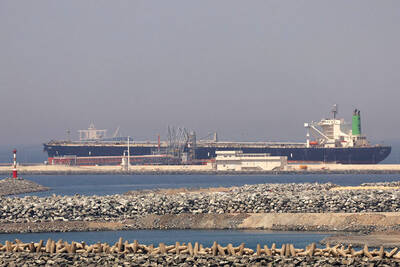
The breakwater stretches out to sea from the sprawling Kaohsiung port in southern Taiwan. Normally, it’s crowded with massive tankers ferrying liquefied natural gas from Qatar to be stored in the bulbous white tanks that dot the shoreline. These are not normal times, though, and not a single shipment from Qatar has docked at the Yongan terminal since early March after the Strait of Hormuz was shuttered. The suspension has provided a realistic preview of a potential Chinese blockade, a move that would throttle an economy anchored by the world’s most advanced and power-hungry semiconductor industry. It is a stark reminder of

May 4 to May 10 It was once said that if you hadn’t performed at the Sapphire Grand Cabaret (藍寶石大歌廳), you couldn’t truly be considered a star. Taking the stage at the legendary Kaohsiung club was more than just a concert. Performers were expected to entertain in every sense, wearing outlandish or revealing costumes and staying quick on their feet as sharp-tongued, over-the-top hosts asked questions and delivered jokes that would be seen as vulgar, even offensive, by today’s standards. Opening in May 1967 during a period of strict political and social control, Sapphire offered a rare outlet for audiences in


 RSS
RSS