


Vincent Cassel, 44, and Mathieu Amalric, 45, lead the way, godfathers to a generation of French actors. Both have broken out internationally, Cassel in the Ocean’s series with George Clooney and recently in Black Swan. Prolific actor Amalric, who also won best director at Cannes in 2010 for Tournee, featured as Bond villain Dominic Greene in Quantum of Solace.
In the same age group as Duris is Guillaume Canet, 38, who starred opposite Leonardo di Caprio in The Beach and is now achieving bigger success as a director, with hits such as the thriller Tell No One and Little White Lies, featuring his partner, Marion Cotillard.
A fast-rising French star is former TV comedian Jean Dujardin, 39, who won best actor at Cannes earlier this year for his role in The Artist, a silent movie sure to bring him international recognition. He showed a more serious side, briefly, in Canet’s Little White Lies.
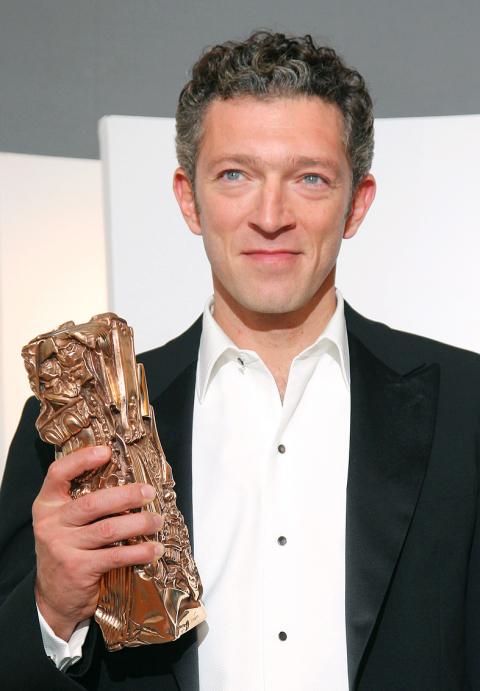
Photo: AFP
Striking, tall Gaspard Ulliel, 26, has built a strong career, including key roles in A Very Long Engagement and Bertrand Tavernier’s current release The Princess of Montpensier, although he’s most famous for playing a young Hannibal Lecter in Hannibal Rising.
Louis Garrel, 28, is a softer lead, cornering romantic, tortured roles after his breakthrough as Eva Green’s brother in Bernardo Bertolucci’s The Dreamers.
Melvil Poupaud, 38, has starred in a great number of films for directors including Raoul Ruiz, Erich Rohmer and James Ivory, and he collaborated with Francois Ozon in Time to Leave and Le Refuge.

Photo: EPA
Gilles Lelouche, 39, is the current French man of action, featuring in current hit Point Blank.
Tahar Rahim, 30, broke through as the prisoner Malik in Jacques Audiard’s A Prophet and has starred in British film The Eagle.

Photo: EPA
Photo: AFP
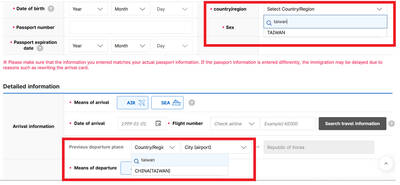
Jason Han says that the e-arrival card spat between South Korea and Taiwan shows that Seoul is signaling adherence to its “one-China” policy, while Taiwan’s response reflects a reciprocal approach. “Attempts to alter the diplomatic status quo often lead to tit-for-tat responses,” the analyst on international affairs tells the Taipei Times, adding that Taiwan may become more cautious in its dealings with South Korea going forward. Taipei has called on Seoul to correct its electronic entry system, which currently lists Taiwan as “China (Taiwan),” warning that reciprocal measures may follow if the wording is not changed before March 31. As of yesterday,

The Portuguese never established a presence on Taiwan, but they must have traded with the indigenous people because later traders reported that the locals referred to parts of deer using Portuguese words. What goods might the Portuguese have offered their indigenous trade partners? Among them must have been slaves, for the Portuguese dealt slaves across Asia. Though we often speak of “Portuguese” ships, imagining them as picturesque vessels manned by pointy-bearded Iberians, in Asia Portuguese shipping between local destinations was crewed by Asian seamen, with a handful of white or Eurasian officers. “Even the great carracks of 1,000-2,000 tons which plied
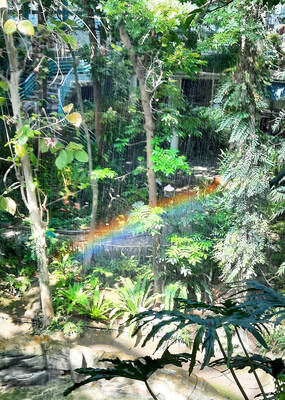
It’s only half the size of its more famous counterpart in Taipei, but the Botanical Garden of the National Museum of Nature Science (NMNS, 國立自然科學博物館植物園) is surely one of urban Taiwan’s most inviting green spaces. Covering 4.5 hectares immediately northeast of the government-run museum in Taichung’s North District (北區), the garden features more than 700 plant species, many of which are labeled in Chinese but not in English. Since its establishment in 1999, the site’s managers have done their best to replicate a number of native ecosystems, dividing the site into eight areas. The name of the Coral Atoll Zone might
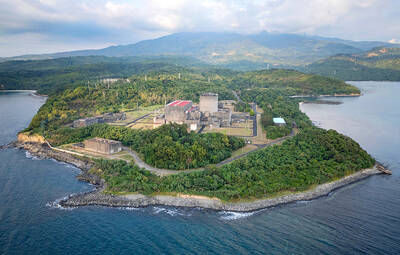
Nuclear power is getting a second look in Southeast Asia as countries prepare to meet surging energy demand as they vie for artificial intelligence-focused data centers. Several Southeast Asian nations are reviving mothballed nuclear plans and setting ambitious targets and nearly half of the region could, if they pursue those goals, have nuclear energy in the 2030s. Even countries without current plans have signaled their interest. Southeast Asia has never produced a single watt of nuclear energy, despite long-held atomic ambitions. But that may soon change as pressure mounts to reduce emissions that contribute to climate change, while meeting growing power needs. The


 RSS
RSS