


For nearly half a century, Shanghsing Old Lumber Company (上興舊木料行) has given new life to wood salvaged from demolished structures. Lai Yung-hsiang (賴永祥), who is the third generation of his family to work at Shanghsing, uses the timber to build simple but eye-catching furniture that shows off the beauty of the wood’s grain and texture.
Located near Xinhai MRT Station (辛亥捷運站), Shanghsing was founded by Lai’s grandfather. As a child, Lai would tag along with his father to job sites, but he did not think about entering the family business until university. Though he studied electrical engineering, Lai began to contemplate a career in furniture design while helping out at the store during his spare time. He joined Shanghsing a year ago after completing his military service.
“If you grow up in this environment, it just becomes a part of your life,” Lai says.
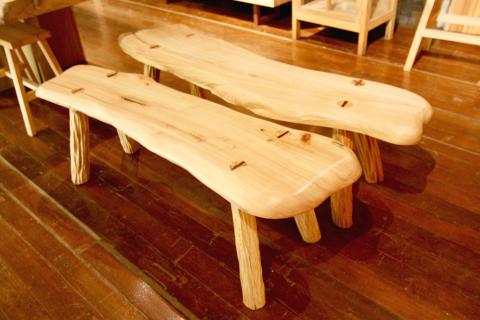
Photo: Catherine Shu, Taipei Times
Shanghsing’s signature timber is Japanese cypress, which is also commonly referred to by its Japanese name hinoki. Strong and fragrant, the wood is stable and does not warp easily, making it an ideal material for furniture. While showing off a bureau made from the wood, Lai pulled out a drawer, allowing a warm, spicy fragrance to waft out.
“That’s why Japanese cypress is so popular even though it can be expensive,” Lai says. (Shanghsing’s prices for custom furniture vary on the size and complexity of the project, but Japanese cypress tables usually start from around NT$20,000.)
Other types of wood in the store include cunninghamia, an evergreen conifer frequently used in the roofs of Japanese-style timber frame houses, willow, which was originally imported from Southeast Asia, and chinaberry, prized for the beauty of the soft, undulating striations in its grain. Shanghsing also carries slabs of Taiwan acacia. Purchased from a supplier in Miaoli, the wood was originally meant for cultivating mushrooms.
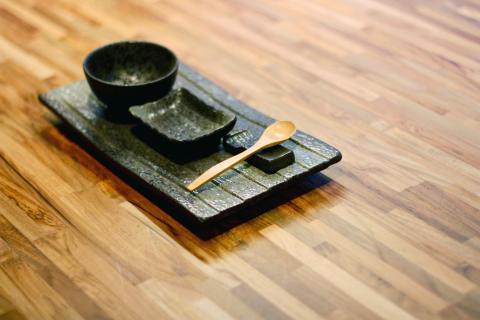
Photo: Catherine Shu, Taipei Times
Much of the lumber sold at Shanghsing and used in its furniture was originally part of Japanese colonial era wooden structures in Taipei City and New Taipei City. The number of job sites the company visits varies widely from month to month, depending on the economy. Sometimes lumber is salvaged from up to 40 sites; other months, only a few. Lai says Shanghsing has sold wood to clients, many of whom are interior designers, in Singapore, Hong Kong and Japan.
Shanghsing’s showroom was renovated last year by Lai and features a roof salvaged from a Japanese-style building and reassembled in the store beam by beam.
He focuses on creating furniture that is not only sturdy and practical, but also showcases the unique beauty of each type of wood. Lai’s design inspirations include heavy carved furniture from the Qing Dynasty and Scandinavian mid-20th century modern pieces.
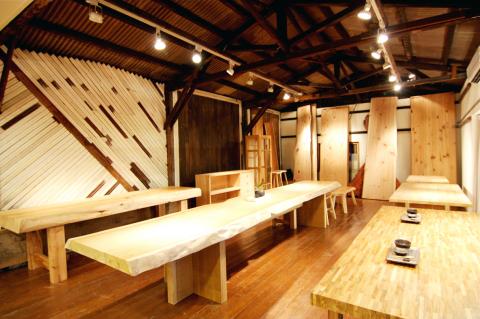
Photo: Catherine Shu, Taipei Times
Many of Shanghsing’s creations have wide planes and clean lines that spotlight the timber’s natural texture and grain. Some are made to showcase different kinds of woodworking joints, while cabinets are frequently built around old window frames or doors. One bureau in the store was based on apothecary chests used in traditional Chinese pharmacies and features 32 small drawers. It took about a month to build, Lai says.
Even the smallest scraps of lumber can be repurposed. Designers sometimes order planks with different finishes, paints or bits of wallpaper left on them to create a shabby chic patchwork effect, a look popularized by Dutch designer Piet Hein Eek.
One tabletop was assembled from many tiny pieces of wood that were once part of floorboards. Lai carefully cut them into even blocks, pieced them together and sanded the surface until it was even and lustrous.
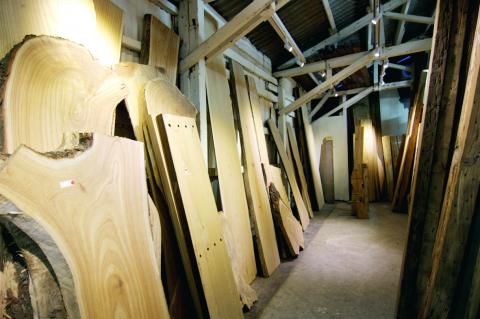
Photo: Catherine Shu, Taipei Times
“I never studied furniture design formally, but I grew up around it,” Lai says. “I always watched craftsmen create things like window frames and doors. That’s how I learned everything.”
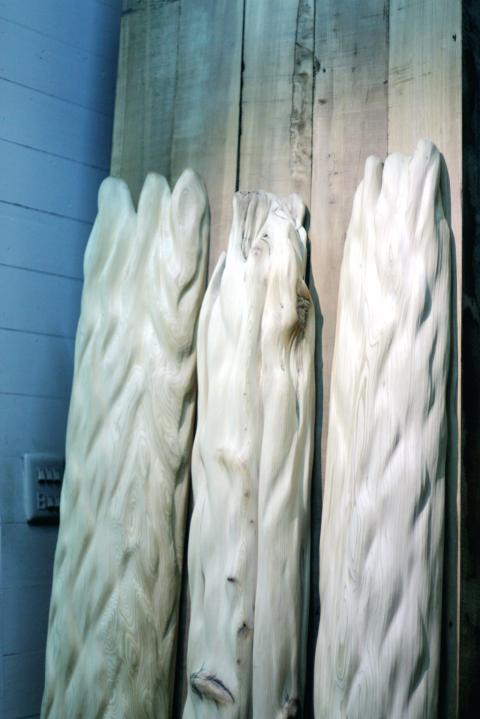
Photo: Catherine Shu, Taipei Times
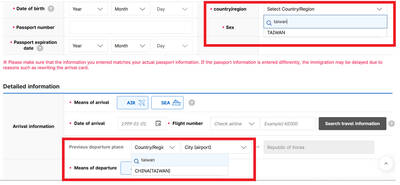
Jason Han says that the e-arrival card spat between South Korea and Taiwan shows that Seoul is signaling adherence to its “one-China” policy, while Taiwan’s response reflects a reciprocal approach. “Attempts to alter the diplomatic status quo often lead to tit-for-tat responses,” the analyst on international affairs tells the Taipei Times, adding that Taiwan may become more cautious in its dealings with South Korea going forward. Taipei has called on Seoul to correct its electronic entry system, which currently lists Taiwan as “China (Taiwan),” warning that reciprocal measures may follow if the wording is not changed before March 31. As of yesterday,

The Portuguese never established a presence on Taiwan, but they must have traded with the indigenous people because later traders reported that the locals referred to parts of deer using Portuguese words. What goods might the Portuguese have offered their indigenous trade partners? Among them must have been slaves, for the Portuguese dealt slaves across Asia. Though we often speak of “Portuguese” ships, imagining them as picturesque vessels manned by pointy-bearded Iberians, in Asia Portuguese shipping between local destinations was crewed by Asian seamen, with a handful of white or Eurasian officers. “Even the great carracks of 1,000-2,000 tons which plied
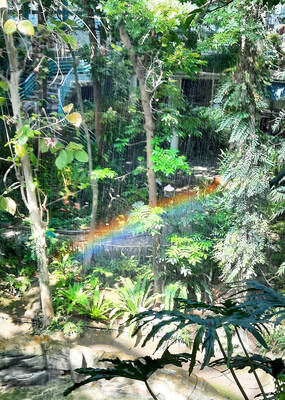
It’s only half the size of its more famous counterpart in Taipei, but the Botanical Garden of the National Museum of Nature Science (NMNS, 國立自然科學博物館植物園) is surely one of urban Taiwan’s most inviting green spaces. Covering 4.5 hectares immediately northeast of the government-run museum in Taichung’s North District (北區), the garden features more than 700 plant species, many of which are labeled in Chinese but not in English. Since its establishment in 1999, the site’s managers have done their best to replicate a number of native ecosystems, dividing the site into eight areas. The name of the Coral Atoll Zone might
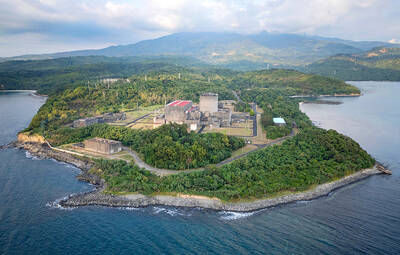
Nuclear power is getting a second look in Southeast Asia as countries prepare to meet surging energy demand as they vie for artificial intelligence-focused data centers. Several Southeast Asian nations are reviving mothballed nuclear plans and setting ambitious targets and nearly half of the region could, if they pursue those goals, have nuclear energy in the 2030s. Even countries without current plans have signaled their interest. Southeast Asia has never produced a single watt of nuclear energy, despite long-held atomic ambitions. But that may soon change as pressure mounts to reduce emissions that contribute to climate change, while meeting growing power needs. The


 RSS
RSS