


Titled A Moment of Eternity (短暫即是永恆), the newest installment of the regular POP Cinema mini-festival treats local audiences to a rare selection of short films from Europe and Taiwan. Experimental filmmaking is highlighted in two Crossing Borders programs that feature fictional, non-fictional and animated works from countries including Germany, Italy, Spain, Poland, Lithuania and Ireland. Films in the European Short sections were selected by the influential film magazine Cahiers du Cinema, or Notebooks on Cinema.
The lineup also includes rarely seen shorts by film masters such as Alain Resnais and Jean-Luc Godard as well as programs focusing on the themes of love, loneliness, memory and music, horror and womanhood.
The festival opens today at SPOT — Taipei Film House (台北光點), 18, Zhongshan N Rd Sec 2, Taipei City (台北市中山北路二段18號), and runs until June 17. Tickets are NT$150 (NT$90 for SPOT members and NT$100 for students) each, and books of 10 tickets are available for NT$1,000 (NT$800 for SPOT members and NT$900 for students). Tickets can be bought at SPOT, through NTCH ticketing outlets or online at www.artsticket.com.tw. Full program details are available at www.twfilm.org/eternity.

Photo courtesy of SPOT

The Portuguese never established a presence on Taiwan, but they must have traded with the indigenous people because later traders reported that the locals referred to parts of deer using Portuguese words. What goods might the Portuguese have offered their indigenous trade partners? Among them must have been slaves, for the Portuguese dealt slaves across Asia. Though we often speak of “Portuguese” ships, imagining them as picturesque vessels manned by pointy-bearded Iberians, in Asia Portuguese shipping between local destinations was crewed by Asian seamen, with a handful of white or Eurasian officers. “Even the great carracks of 1,000-2,000 tons which plied
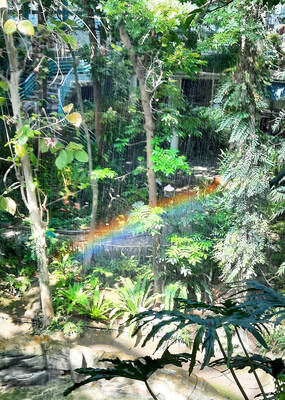
It’s only half the size of its more famous counterpart in Taipei, but the Botanical Garden of the National Museum of Nature Science (NMNS, 國立自然科學博物館植物園) is surely one of urban Taiwan’s most inviting green spaces. Covering 4.5 hectares immediately northeast of the government-run museum in Taichung’s North District (北區), the garden features more than 700 plant species, many of which are labeled in Chinese but not in English. Since its establishment in 1999, the site’s managers have done their best to replicate a number of native ecosystems, dividing the site into eight areas. The name of the Coral Atoll Zone might
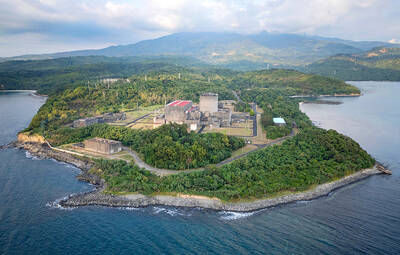
Nuclear power is getting a second look in Southeast Asia as countries prepare to meet surging energy demand as they vie for artificial intelligence-focused data centers. Several Southeast Asian nations are reviving mothballed nuclear plans and setting ambitious targets and nearly half of the region could, if they pursue those goals, have nuclear energy in the 2030s. Even countries without current plans have signaled their interest. Southeast Asia has never produced a single watt of nuclear energy, despite long-held atomic ambitions. But that may soon change as pressure mounts to reduce emissions that contribute to climate change, while meeting growing power needs. The

On Monday morning, in quick succession, the Chinese Communist Party (CCP) and the Chinese Nationalist Party (KMT) released statements announcing “that the Central Committee of the Communist Party of China and General Secretary Xi Jinping (習近平) have invited KMT Chairwoman Cheng Li-wun (鄭麗文) to lead a delegation on a visit to the mainland” as the KMT’s press release worded it. The KMT’s press release added “Chairwoman Cheng expressed her gratitude for the invitation and has gladly accepted it.” Beijing’s official Xinhua news release described Song Tao (宋濤), head of the Taiwan Work Office of the CCP Central Committee, as


 RSS
RSS