


Fiction often trails some distance behind the traumatic events of the present. It took a decade before there was a substantial fictional response to the slaughter of the World War I, while the narrative of the Holocaust is still being explored. Responses to the AIDS epidemic of the 1980s were, however, rapid. In 1982, a complex series of illnesses were first identified as Aids and “Silence equals Death” soon became a popular slogan for gay activists campaigning for better recognition and treatment for AIDS. Gay writers in the 1980s felt a moral and political imperative to respond quickly to the crisis.
Fiction of the past 20 years has dealt less confidently with the aftermath of AIDS in the West. The contemporary issues are more subtle and complex: We have had the arrival of an effective combination therapy, the continuing lives of a generation who (like me) had assumed they faced certain death, and the “bug chasers” who actively look to be infected with the HIV virus and “barebackers” who enjoy the thrill of unprotected sex.
So Tristan Garcia’s Hate: A Romance (first published in France in 2008 as La meilleure part des hommes) is a welcome and a rare novel. Its ambitious narrative begins in the 1980s. The story — four young characters coming of age as a city embraces a thriving gay culture which is also starting to recognize the threat of AIDS — is familiar territory from 1980s fiction. But while the first wave of AIDS fiction was overwhelmingly American, Hate: A Romance is a very French story. Garcia’s characters are university-educated Parisians, the direct descendants of Jean-Luc Godard’s “children of Karl Marx and Coca Cola”. The reader senses that Garcia, like Godard, shares a complex relationship with his characters: He is sympathetic to young people who are guided more by their reading of Foucault and Spinoza than they are by common sense (this is Garcia’s first novel, but he is a published philosopher), while laughing with us at their more pretentious thoughts and poses.
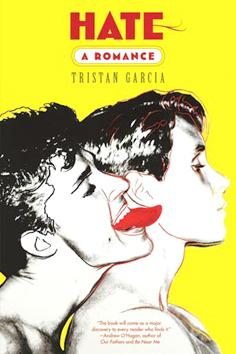
Something of the freshness of Garcia’s perspective can also be explained by his age. Born in 1981, he is writing a historical novel, a vivid imagining of the Paris gay scene of the 1980s and 1990s and of the feuds conducted by gay activists in the French media of the period. This can sometimes make for disconcerting reading if — as I was — you were there at the time. Garcia’s imagined past doesn’t always quite match up with my remembered one. But the opening chapters of the book capture a mood that I found instantly recognizable: the excitement of being young, intellectually arrogant, sexually adventurous and bewildered by the arrival of the AIDS epidemic.
As his narrative charts events leading up to the present day, Garcia is able to explore new territory for AIDS fiction. His characters barely acknowledge the arrival of combination therapy in 1996 and the promise that it brings of turning AIDS from a terminal disease into a chronic condition. By then they are too consumed by the feud that provides the central thread of the novel, that between the gay activist Dominique Rossi, who moves ever closer to the center of the French political establishment, and the radical William Miller, who rejects safer sex as a heterosexual constraint and promotes barebacking as a political act of defiance. There’s also an equally bitter rift between Miller and the media philosopher Leibowitz, as Miller moves from a pro-Palestinian stance to a paranoid anti-Semitism.
Garcia — and his narrator, the journalist Elizabeth Levallois, who is Leibowitz’s lover — seem increasingly drawn to Miller, the most obviously colorful character in the novel. But as the pettiness of Miller’s feuding becomes reductive and repetitious, the novel threatens to grind to a halt. Perhaps French readers, aware of the similar and very public real-life feud between gay activists Didier Lestrade and Guillame Dustan, would have been carried through some of these duller passages by the jeu d’esprit of a roman a clef.
But just when it seems that the novel has got itself trapped in a corner, Garcia steers the narrative forward: the last hundred pages achieve a depth of insight and compassion that is previously lacking. In this final section, he captures brilliantly the impossible choice facing the radical intellectual in an unsympathetic society: between becoming marginalized to the point of self-destruction and moving into the safer ground of the mainstream. It’s ironic that Garcia, who is just 30 himself, only really seems able to look his characters fully in the eye once they are in their 40s and making the sad, sober choices of middle age.
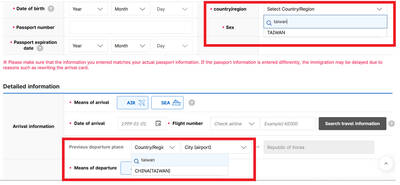
Jason Han says that the e-arrival card spat between South Korea and Taiwan shows that Seoul is signaling adherence to its “one-China” policy, while Taiwan’s response reflects a reciprocal approach. “Attempts to alter the diplomatic status quo often lead to tit-for-tat responses,” the analyst on international affairs tells the Taipei Times, adding that Taiwan may become more cautious in its dealings with South Korea going forward. Taipei has called on Seoul to correct its electronic entry system, which currently lists Taiwan as “China (Taiwan),” warning that reciprocal measures may follow if the wording is not changed before March 31. As of yesterday,
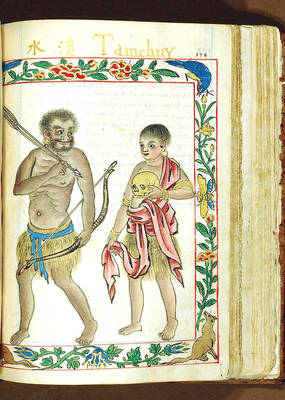
The Portuguese never established a presence on Taiwan, but they must have traded with the indigenous people because later traders reported that the locals referred to parts of deer using Portuguese words. What goods might the Portuguese have offered their indigenous trade partners? Among them must have been slaves, for the Portuguese dealt slaves across Asia. Though we often speak of “Portuguese” ships, imagining them as picturesque vessels manned by pointy-bearded Iberians, in Asia Portuguese shipping between local destinations was crewed by Asian seamen, with a handful of white or Eurasian officers. “Even the great carracks of 1,000-2,000 tons which plied
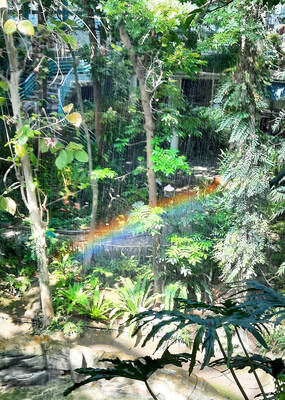
It’s only half the size of its more famous counterpart in Taipei, but the Botanical Garden of the National Museum of Nature Science (NMNS, 國立自然科學博物館植物園) is surely one of urban Taiwan’s most inviting green spaces. Covering 4.5 hectares immediately northeast of the government-run museum in Taichung’s North District (北區), the garden features more than 700 plant species, many of which are labeled in Chinese but not in English. Since its establishment in 1999, the site’s managers have done their best to replicate a number of native ecosystems, dividing the site into eight areas. The name of the Coral Atoll Zone might
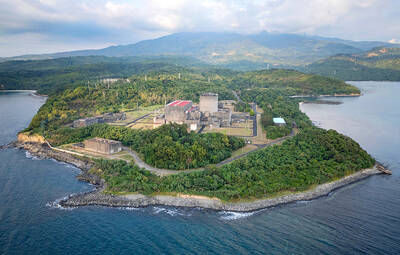
Nuclear power is getting a second look in Southeast Asia as countries prepare to meet surging energy demand as they vie for artificial intelligence-focused data centers. Several Southeast Asian nations are reviving mothballed nuclear plans and setting ambitious targets and nearly half of the region could, if they pursue those goals, have nuclear energy in the 2030s. Even countries without current plans have signaled their interest. Southeast Asia has never produced a single watt of nuclear energy, despite long-held atomic ambitions. But that may soon change as pressure mounts to reduce emissions that contribute to climate change, while meeting growing power needs. The


 RSS
RSS