


This Halloween, turn Ximending into your dress-up box. The area boosts two blocks lined with costume rental shops, as well as one of Taiwan’s top stage and special effects makeup suppliers.
Run by the same family for three generations, Hdco. Ltd (花莉) at 40, Hankou St Sec 2 (漢口街二段40號), tel: (02) 2381-3220 (call 0963-007-211 for English service) has supplied Taiwan’s movie and TV industry with makeup since the 1970s. The company began offering special effects makeup services last year. Hdco. Ltd’s artists recently worked on Z-108, a zombie movie that is being filmed in Ximending, and will host workshops at the Kaohsiung Movie Festival (高雄電影節) demonstrating, among other things, how they recreated the Pale Man character from Pan’s Labyrinth with a hand-sculpted silicone mask and body prosthetics.
Hdco. Ltd also offers plenty of options for revelers. For Halloween, the store will provide makeup services on Oct. 29, Oct. 30 and Oct. 31 (reservations are not required but suggested). Hour-long sessions start at NT$1,000. Popular requests include gory, realistic injuries built with latex and oozing with stage blood and pus. Fantasy characters from popular movies are also available: You can transform into a member of the Navi tribe from Avatar, with facial makeup starting at NT$500 (nose and ear prosthetics are extra) and full body makeup applied with an airbrush at NT$3,600. If you would prefer to be an elf or hobbit from Lord of the Rings (or Spock from Star Trek), a pair of readymade pointy latex ears are NT$500. Other supplies include the full range of Ben Nye stage makeup.
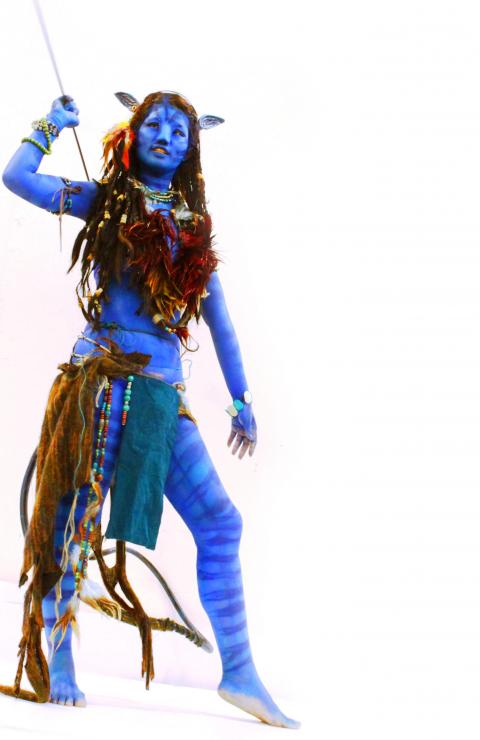
Photo courtesy of Hdco. Ltd
For the rest of your Halloween gear, walk a few blocks over to Hanzhong Street (漢中街) between Chengdu Road (成都路) and Changsha Street (長沙街). The neighborhood’s shops stock a wide selection of costumes, dancewear and accessories. Costume rental prices vary little in the neighborhood and are reasonable — most outfits are between NT$300 to NT$800 per day.
Two of the biggest stores are Quanguo (全國) at 168 Hanzhong St (漢中街168號), tel: (02) 2388-7198, and Qinglong (青龍) at 137 Hanzhong St (漢中街137號), tel: (02) 2331-4989, across the street. Both stores have plastic binders filled with photos of their offerings if you don’t feel like digging through their well-stocked racks. Quanguo’s staff is friendly, and the outfits themselves are clean and well maintained. Standouts include a section filled with kimonos made of shimmery, luxurious brocades and traditional Chinese robes covered in lush embroidery. Cartoon character costumes are also available, including Mickey Mouse and Doraemon outfits.
Qinglong’s costume selection is similar, but its stock of tight, sequined mini-dresses (perfect for re-enacting South Korean pop group Wonder Girl’s hit music video for Nobody) and costume weaponry stands out. There are also plenty of sexy outfits for women — sexy police officer, sexy sailor, sexy nurse.
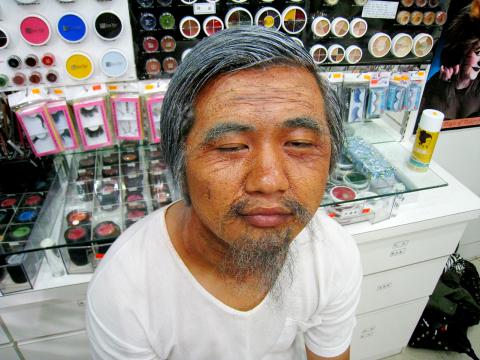
Photo courtesy of Hdco. Ltd
Xinfeng (薪豐) at 146 Hanzhong St (漢中街146號), tel: (02) 2389-4680, is pint-sized, but differentiates itself from its neighbors with beautiful traditional Asian clothing, including brightly colored Korean hanboks and elegant Chinese qipaos.
Yijibang (衣級棒) at 2F, 150 Hanzhong St (漢中街150號2F), tel: (02) 2375-8951 is up a frighteningly steep flight of stairs and as crowded as an overstuffed high school theater costume closet, but its selection is diverse and rental fees are lower than competitors. Costumes include rows of captain’s jackets with gilt braid and tuxedos, real uniforms from some of Taipei’s top high schools, white sequined suits (perfect for paying homage to Las Vegas’ recently closed Liberace Museum), Mighty Morphin Power Ranger unitards and many, many crinolines.
Bour Dance (寶琦華) at 130 Hanzhong St (漢中街130號), tel: (02) 2312-1910, stands out for its organized selection of dancewear. The spacious, well-appointed store sells high-quality leotards, tights, dance skirts and footwear for ballet, ballroom and flamenco dancers, as well as Chacott stage makeup. Ting Ting (婷婷) at 158 Hanzhong St (漢中街158號), tel: (02) 2388-2993 carries plenty of dance shoes, including character shoes, ballet slippers and soft-soled jazz shoes. Dance styles represented in Ting Ting’s range of practice gear and costumes includes sequined bras for belly dancing, long flamenco skirts with dramatic flounces and pastel tutus. Smaller dance stores on the block include Xinchao (欣潮) at 167 Hanzhong St (漢中街167號), tel: (02) 2382-5454 and its neighbor Youyang Shenghuo (有氧生活) at 169 Hanzhong St (漢中街169號), tel: (02) 2312-1123.
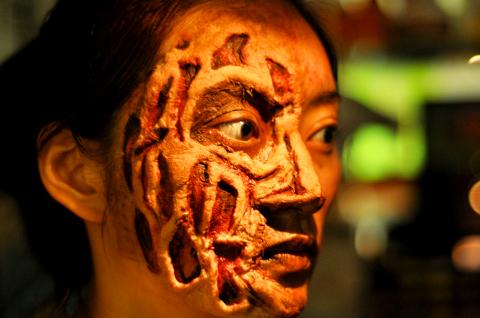
Photo courtesy of Hdco. Ltd
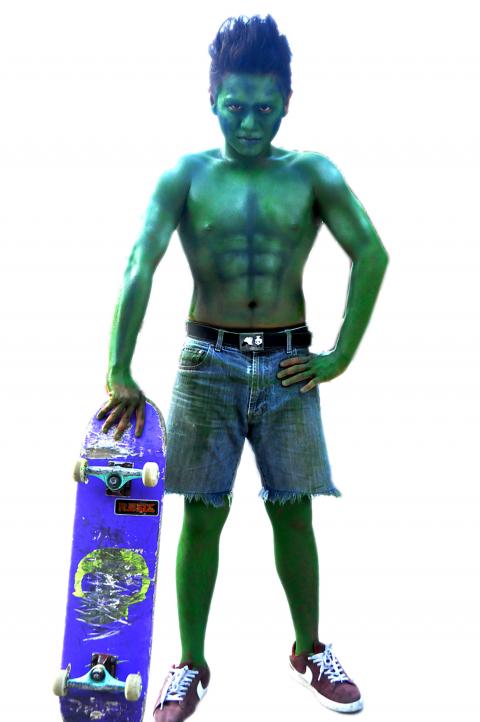
Photo courtesy of Hdco. Ltd
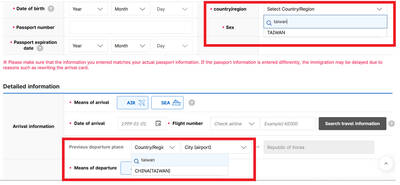
Jason Han says that the e-arrival card spat between South Korea and Taiwan shows that Seoul is signaling adherence to its “one-China” policy, while Taiwan’s response reflects a reciprocal approach. “Attempts to alter the diplomatic status quo often lead to tit-for-tat responses,” the analyst on international affairs tells the Taipei Times, adding that Taiwan may become more cautious in its dealings with South Korea going forward. Taipei has called on Seoul to correct its electronic entry system, which currently lists Taiwan as “China (Taiwan),” warning that reciprocal measures may follow if the wording is not changed before March 31. As of yesterday,
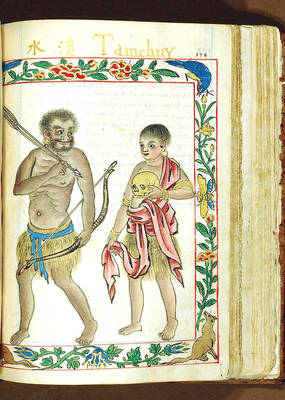
The Portuguese never established a presence on Taiwan, but they must have traded with the indigenous people because later traders reported that the locals referred to parts of deer using Portuguese words. What goods might the Portuguese have offered their indigenous trade partners? Among them must have been slaves, for the Portuguese dealt slaves across Asia. Though we often speak of “Portuguese” ships, imagining them as picturesque vessels manned by pointy-bearded Iberians, in Asia Portuguese shipping between local destinations was crewed by Asian seamen, with a handful of white or Eurasian officers. “Even the great carracks of 1,000-2,000 tons which plied
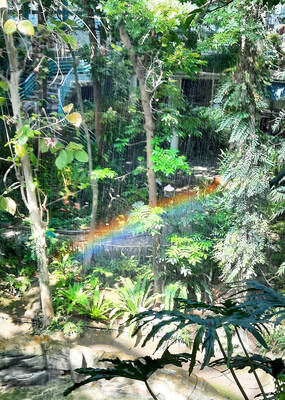
It’s only half the size of its more famous counterpart in Taipei, but the Botanical Garden of the National Museum of Nature Science (NMNS, 國立自然科學博物館植物園) is surely one of urban Taiwan’s most inviting green spaces. Covering 4.5 hectares immediately northeast of the government-run museum in Taichung’s North District (北區), the garden features more than 700 plant species, many of which are labeled in Chinese but not in English. Since its establishment in 1999, the site’s managers have done their best to replicate a number of native ecosystems, dividing the site into eight areas. The name of the Coral Atoll Zone might
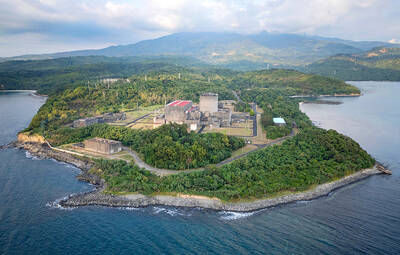
Nuclear power is getting a second look in Southeast Asia as countries prepare to meet surging energy demand as they vie for artificial intelligence-focused data centers. Several Southeast Asian nations are reviving mothballed nuclear plans and setting ambitious targets and nearly half of the region could, if they pursue those goals, have nuclear energy in the 2030s. Even countries without current plans have signaled their interest. Southeast Asia has never produced a single watt of nuclear energy, despite long-held atomic ambitions. But that may soon change as pressure mounts to reduce emissions that contribute to climate change, while meeting growing power needs. The


 RSS
RSS