


The media continues to take an active interest in the domestic life of Hon Hai Precision Industry Co (鴻海精密) chairman Terry Gou (郭台銘), who was recently photographed by the Apple Daily enjoying some much-earned domestic bliss after issues with Foxconn in China kept him away from Taiwan and his new family for several months.
He was back this week to celebrate his 60th birthday. After dodging rumors of romantic connections with some of the most recognized beauties of the Chinese-speaking world following the death of his first wife, Gou settled for relative unknown Delia Tseng (曾馨瑩), who gave birth to their daughter Niu Niu (妞妞) in April last year. The couple are expecting a second child later this year, giving rise to approving nods from gossip columnists, who are assured that the old man has still got it in him. In response to questions from NowNews.com, Gou refused to divulge the baby’s gender.
After leaving the entertainment industry as penance for a sex photo scandal two years ago that set the cat among the pigeons for a number of female celebrities, Edison Chen (陳冠希) has been working on a comeback.

PHOTO: TAIPEI TIMES
In an interview with Singapore media, Chen said the scandal that followed the posting of private photos on the Internet was a hellish experience, but that he is now preparing to release an album and will feature in a Hollywood film.
It is up to the public to see if he deserves a second chance, he said. It is all the more surprising then that when he visited Hong Kong early last week, he was seen in the company of Yasumasa Yonehara, a well-known erotica photographer.
So has Chen turned his hellish experience into a new opportunity? Perhaps he could pick up some photography tips from a master who is known for using massage to bring out the best in his models.
Earlier this week, Elva Hsiao (蕭亞軒) shared her philosophy of life with the world. Speaking with Citta Bella Nongnong Magazine, she said that she has learned to accept the result of her decisions, and to appreciate them for what they are. With her 11th album, Miss Elva (蕭灑小姐), hitting the top of all the main Taiwan music charts since its release two weeks ago, it should be relatively easy for her to live in the moment.
Hsiao was coy about a possible romance with a man identified as LS, telling the United Daily News that she wanted to break the boom-and-bust cycle between romance and career — when one is on, the other is off — that afflicts many female celebrities in Taiwan.
“I’m ready for a new romance,” she said. “I’m just waiting for my heart to flip the switch.”
Wilber Pan (潘瑋柏) is a celebrity who has kept very much to the straight and narrow in his decade-long career as an entertainer, and this is likely to hold him in good stead in his pursuit of the daughter of a construction magnate surnamed Yang, despite getting very hot and steamy with Sandrine Pinna, whose Chinese name is Chang Jung-jung (張榕容), in a new CTS television soap Endless Love (愛∞無限). While the gossip press has been eager to see if the on-screen love scenes would fuel jealous outbursts, both women failed to oblige.
Fortunately, such decorum isn’t all that common in celebrity land, and model Olivia Huang (黃百璐) has marked one up after being caught on CCTV stealing a wooden stool from a pub run by fellow model Gin Chang (張珈禎).
On a talk show, Huang claimed the theft of the stool was an accident. She had been drunk and didn’t know what she was doing, but hoped that now she had returned the stool, spent four hours in a police station and been given a dressing down by her father, she might escape without a criminal record. Chang said that Huang had initially been unwilling to admit any wrongdoing, on her Facebook page had said the whole thing was an accident, and had failed to offer any apology.
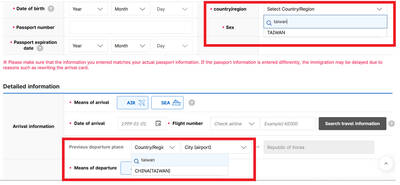
Jason Han says that the e-arrival card spat between South Korea and Taiwan shows that Seoul is signaling adherence to its “one-China” policy, while Taiwan’s response reflects a reciprocal approach. “Attempts to alter the diplomatic status quo often lead to tit-for-tat responses,” the analyst on international affairs tells the Taipei Times, adding that Taiwan may become more cautious in its dealings with South Korea going forward. Taipei has called on Seoul to correct its electronic entry system, which currently lists Taiwan as “China (Taiwan),” warning that reciprocal measures may follow if the wording is not changed before March 31. As of yesterday,

The Portuguese never established a presence on Taiwan, but they must have traded with the indigenous people because later traders reported that the locals referred to parts of deer using Portuguese words. What goods might the Portuguese have offered their indigenous trade partners? Among them must have been slaves, for the Portuguese dealt slaves across Asia. Though we often speak of “Portuguese” ships, imagining them as picturesque vessels manned by pointy-bearded Iberians, in Asia Portuguese shipping between local destinations was crewed by Asian seamen, with a handful of white or Eurasian officers. “Even the great carracks of 1,000-2,000 tons which plied
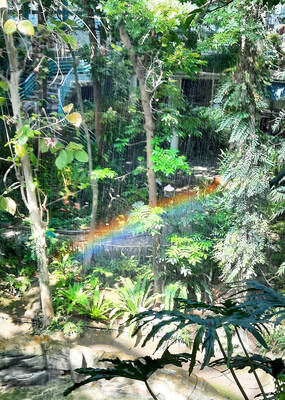
It’s only half the size of its more famous counterpart in Taipei, but the Botanical Garden of the National Museum of Nature Science (NMNS, 國立自然科學博物館植物園) is surely one of urban Taiwan’s most inviting green spaces. Covering 4.5 hectares immediately northeast of the government-run museum in Taichung’s North District (北區), the garden features more than 700 plant species, many of which are labeled in Chinese but not in English. Since its establishment in 1999, the site’s managers have done their best to replicate a number of native ecosystems, dividing the site into eight areas. The name of the Coral Atoll Zone might
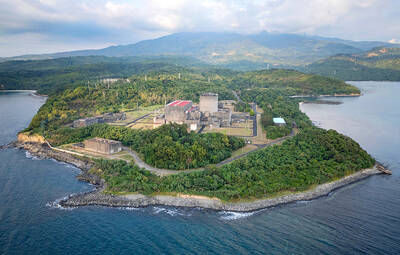
Nuclear power is getting a second look in Southeast Asia as countries prepare to meet surging energy demand as they vie for artificial intelligence-focused data centers. Several Southeast Asian nations are reviving mothballed nuclear plans and setting ambitious targets and nearly half of the region could, if they pursue those goals, have nuclear energy in the 2030s. Even countries without current plans have signaled their interest. Southeast Asia has never produced a single watt of nuclear energy, despite long-held atomic ambitions. But that may soon change as pressure mounts to reduce emissions that contribute to climate change, while meeting growing power needs. The


 RSS
RSS