


Swedish bureaucracy and middle-class hypocrisy come in for some gentle ribbing in Patriik 1.5, in which gay couple Goran and Sven apply to adopt a child and settle into a picture-perfect middle-class neighborhood. They don’t have an easy time of it, but surprisingly, director Ella Lemhagen has not had to resort to the considerable armory of hackneyed gay jokes to get laughs, nor does she find it necessary to get mired in the hot, sweaty passions which dominate the “gay interest” films that have such a large presence at alternative film festivals.
Goran and Sven are trying to establish themselves as a couple; properly married with kids, a garden, and maybe even a dog. They want to be open, even if this gives their straight neighbors something of a shock. Goran, a doctor, who refers to Sven as his “husband,” is a gentle soul who we gradually discover is the stronger of the two, even though he lacks Sven’s aggressive masculinity.
Lemhagen deals with the relationship between Goran and Sven with great sympathy, showing them first as a perfect couple in the face of uncertainty, gaucheness and sometimes outright hostility from those around them. Sven wants to share Goran’s dream, but as a former party animal with a barely suppressed addiction to cigarettes and whiskey, and a resentful ex-wife and angry teenage daughter, he finds the difficulties of the adoption process overwhelming, pushing him back towards his old habits.
The film flirts with social realism, but this is a bit of a tease, and Patrik 1.5 is essentially a feel-good movie in which all the characters, with only one exception, both gay and straight, are treated with sympathy. After a remarkably deft introduction to the gay couple and their new neighbors, Patrik 1.5 moves into more conventional comedy territory when the couple discovers that because of a typographical error, the child they are to adopt is not a cute one-and-a-half year old, but a 15-year-old social misfit who tells Sven proudly that he once kicked a gay man in the face.
But this homophobic sociopath is shown to be more fearful than frightening, even as he accuses Goran of being a pedophile and tells the social welfare services he worries he will be raped. It helps that Thomas Ljungman, who plays Patrik, is a dead ringer for an adolescent Jonathan Rhys Meyers, and his sullenness is able to morph into a wary smile of great charm. One of the straight neighbors, in a misguided attempt to make nice with Goran, talks about how he managed to leverage hiring a Polish maid into a summer of cheap sex, suggesting that his neighbors have hit on a pretty good deal themselves.
The script manages the tensions between Patrik and his foster parents well, as Goran and Sven feud over having Patrik in the house. Gustaf Skarsgard plays Goran with great feeling, capturing his vulnerability in the face of verbal barbs and emotional turmoil while still making him convincing as the stronger and more mature member of the relationship. The quality of the acting helps to move the story along at a good pace, providing plenty of emotional depth and making the film seem more substantial than it actually is.
That all will end happily is never really in doubt, for Lemhagen’s treatment is far too good natured to allow for a sudden turn into tragedy. Nevertheless, the emotional payoff at the end does not come too easily, and there is a sense of satisfaction when all works out in the end, even though we knew it always would.

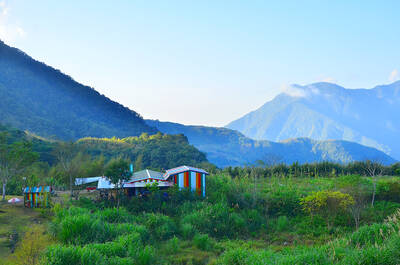
If one asks Taiwanese why house prices are so high or why the nation is so built up or why certain policies cannot be carried out, one common answer is that “Taiwan is too small.” This is actually true, though not in the way people think. The National Property Administration (NPA), responsible for tracking and managing the government’s real estate assets, maintains statistics on how much land the government owns. As of the end of last year, land for official use constituted 293,655 hectares, for public use 1,732,513 hectares, for non-public use 216,972 hectares and for state enterprises 34 hectares, yielding

The small platform at Duoliang Train Station in Taitung County’s Taimali Township (太麻里) served villagers from 1992 to 2006, but was eventually shut down due to lack of use. Just 10 years later, the abandoned train station had become widely known as the most beautiful station in Taiwan, and visitors were so frequent that the village had to start restricting traffic. Nowadays, Duoliang Village (多良) is known as a bit of a tourist trap, with a mandatory, albeit modest, admission fee of NT$10 giving access to a crowded lane of vendors with a mediocre view of the ocean and the trains
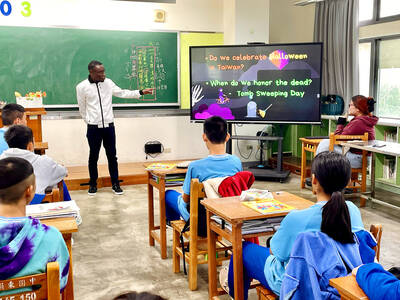
For many people, Bilingual Nation 2030 begins and ends in the classroom. Since the policy was launched in 2018, the debate has centered on students, teachers and the pressure placed on schools. Yet the policy was never solely about English education. The government’s official plan also calls for bilingualization in Taiwan’s government services, laws and regulations, and living environment. The goal is to make Taiwan more inclusive and accessible to international enterprises and talent and better prepared for global economic and trade conditions. After eight years, that grand vision is due for a pulse check. RULES THAT CAN BE READ For Harper Chen (陳虹宇), an adviser

Traditionally, indigenous people in Taiwan’s mountains practice swidden cultivation, or “slash and burn” agriculture, a practice common in human history. According to a 2016 research article in the International Journal of Environmental Sustainability, among the Atayal people, this began with a search for suitable forested slopeland. The trees are burnt for fertilizer and the land cleared of stones. The stones and wood are then piled up to make fences, while both dead and standing trees are retained on the plot. The fences are used to grow climbing crops like squash and beans. The plot itself supports farming for three years.


 RSS
RSS