


In City Cracks (城市隙縫), curator Sean Hu (胡朝聖) brings together 10 artists working in paint, digital photography and installation to ponder changes in the urban environment. Rather than exhibiting the works in a building, Hu created a temporary gallery that emphasizes the transitory flux between new and old.
■ Mobile Gallery, 5 Jinxi St, Taipei City (台北市錦西街5號)
■ Until Aug 15. Opening tomorrow at 6:30pm
In The Delicacy of Collage — Polar Region (拼湊的微處 — 極地), Chen Sung-chih (陳松志) employs metal, paper and mirrors to symbolize the distances people travel.
■ Project Fulfill Art Space (就在藝術中心), 2, Alley 45, Ln 147, Xinyi Rd Sec 3, Taipei City (台北市信義路三段147巷45弄2號). Open Tuesdays to Sundays from 1pm to 6pm. Tel: (02) 2707-6942
■ Until Aug. 15. Opening this Saturday at 3pm
Emerging artist Su Meng-heng (蘇孟鴻) presents 21 of his recent paintings, silkscreen prints, installations and sculptures in Manjusaka (彼岸花). Drawing on the Chinese tradition of flower (manjusaka means “heavenly flower” in Sanskrit) and bird painting developed during the late Qing Dynasty, Su’s vibrant, almost gaudy works, offer a satirical take on the refined styles prevalent during that era.
■ Tina Keng Gallery (大未來耿畫廊), 15, Ln 548, Ruiguang Rd, Taipei City (台北市瑞光路548巷15號). Open Tuesdays to Sundays from 10am to 7pm. Tel: (02) 2659-0798
■ Until Aug. 1
Form/No Sign: Works by Taiwan’s Established Ceramicists (形.無形 — 臺灣中堅輩陶藝家系列特展之一) offers an in-depth look at the artists and trends that have emerged in the local ceramics scene since the 1980s. The museum states that no understanding of contemporary ceramics would be complete without looking at what immediately preceded it because of the unprecedented opportunities to play with tradition and the influence of Western practices it afforded Taiwanese artists.
■ Yingge Ceramics Museum
(鶯歌陶瓷博物館), 200 Wenhua Rd, Yinge Township, Taipei County (台北縣鶯歌鎮文化路200號). Open daily from 9:30am to 5pm, closes at 6pm on Saturdays and Sundays. Tel: (02) 8677-2727
■ Until Aug. 15
Mobility Sound and Form is a sensory experience comprising 10 audio-visual works that transform sound through digital media. Curated by France’s Centre National de Creation Musicale, the exhibition, which also includes video, installation and performance art, challenges viewers’ preconceptions of music.
■ Taipei Fine Arts Museum (TFAM), 181, Zhongshan N Rd Sec 3, Taipei City (台北市中山北路三段181號). Open Tuesdays to Sundays from 9:30am to 5:30pm, closes at 8:30pm on Saturdays. Tel: (02) 2595-7656
■ Until Aug. 15
The National Museum of History is holding a retrospective show on the life and work of Lalan
(謝景蘭), a China-born, France-based artist who died in 1995. Entitled Fragrance of Mind (蕙景蘭心), the exhibit comprises 60 landscape oil paintings that combine Chinese aesthetics and Western painting styles created by the artist over her 45-year career.
■ National Museum of History
(國立歷史博物館), 49 Nanhai Rd, Taipei City (台北市南海路49號). Open Tuesdays to Sundays from 10am to 6pm. Tel: (02) 2361-0270. General admission is NT$30
■ Until Aug. 8


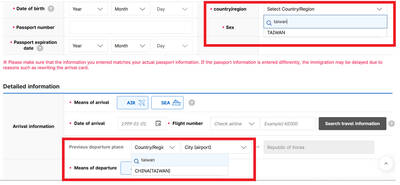
Jason Han says that the e-arrival card spat between South Korea and Taiwan shows that Seoul is signaling adherence to its “one-China” policy, while Taiwan’s response reflects a reciprocal approach. “Attempts to alter the diplomatic status quo often lead to tit-for-tat responses,” the analyst on international affairs tells the Taipei Times, adding that Taiwan may become more cautious in its dealings with South Korea going forward. Taipei has called on Seoul to correct its electronic entry system, which currently lists Taiwan as “China (Taiwan),” warning that reciprocal measures may follow if the wording is not changed before March 31. As of yesterday,

The Portuguese never established a presence on Taiwan, but they must have traded with the indigenous people because later traders reported that the locals referred to parts of deer using Portuguese words. What goods might the Portuguese have offered their indigenous trade partners? Among them must have been slaves, for the Portuguese dealt slaves across Asia. Though we often speak of “Portuguese” ships, imagining them as picturesque vessels manned by pointy-bearded Iberians, in Asia Portuguese shipping between local destinations was crewed by Asian seamen, with a handful of white or Eurasian officers. “Even the great carracks of 1,000-2,000 tons which plied
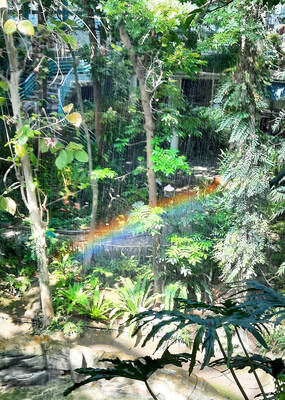
It’s only half the size of its more famous counterpart in Taipei, but the Botanical Garden of the National Museum of Nature Science (NMNS, 國立自然科學博物館植物園) is surely one of urban Taiwan’s most inviting green spaces. Covering 4.5 hectares immediately northeast of the government-run museum in Taichung’s North District (北區), the garden features more than 700 plant species, many of which are labeled in Chinese but not in English. Since its establishment in 1999, the site’s managers have done their best to replicate a number of native ecosystems, dividing the site into eight areas. The name of the Coral Atoll Zone might
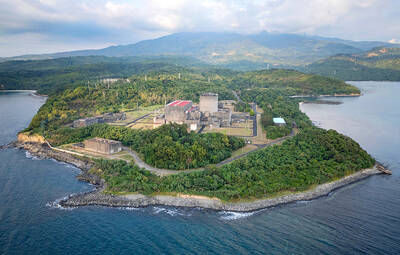
Nuclear power is getting a second look in Southeast Asia as countries prepare to meet surging energy demand as they vie for artificial intelligence-focused data centers. Several Southeast Asian nations are reviving mothballed nuclear plans and setting ambitious targets and nearly half of the region could, if they pursue those goals, have nuclear energy in the 2030s. Even countries without current plans have signaled their interest. Southeast Asia has never produced a single watt of nuclear energy, despite long-held atomic ambitions. But that may soon change as pressure mounts to reduce emissions that contribute to climate change, while meeting growing power needs. The


 RSS
RSS