


Humans should have fewer babies to help the global battle against climate change, according to the renowned British primatologist and conservationist Jane Goodall.
Goodall, whose 1960s research on chimpanzees changed perceptions of relations between humans and animals, fears the controversial issue has slipped down the agenda in the debate about man’s impact on the environment.
“It’s very frustrating as people don’t want to address this topic,” said the 75-year-old English scientist. “It’s our population growth that underlies just about every single one of the problems that we’ve inflicted on the planet. “If there were just a few of us then the nasty things we do wouldn’t really matter and Mother Nature would take care of it — but there are so many of us,” she said.

PHOTO: EPA
The answer, she says, is that “we should be talking about somehow curtailing human population growth.”
Goodall is a patron of the Optimum Population Trust, a registered British charity that campaigns for population stabilization and a gradual decrease both globally and in the UK.
It argues for improved provision of family planning and sex education; better education and rights for women; and advocates that couples voluntarily “stop at two.”
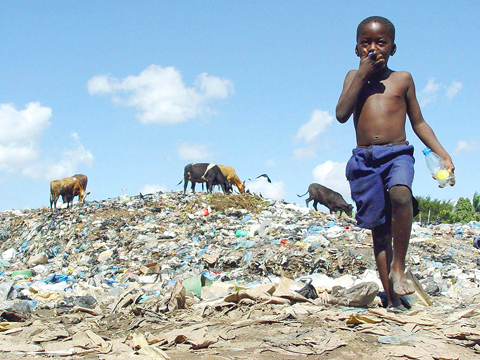
PHOTO: EPA
The trust’s stated mission is to reduce projected population growth of 2.3 billion by 2050 by at least 1.3 billion — to reach no more than eight billion by 2050 instead of the 9.1 billion figure predicted in 2004 by the United Nations Population Division.
Goodall believes a cornerstone in any drive to stabilize population growth, particularly in less developed countries where populations are expanding, must be the improvement in the quality of life of the poorest.
A UN Messenger of Peace — distinguished figures who agree to focus the world’s attention on the work of the UN — since 2002, she also heads a project in the forests of East Africa that aims to combat deforestation by allowing rural dwellers to profit directly from the conservation of their natural environment.
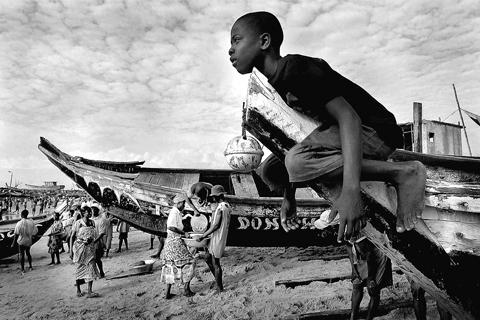
PHOTO: EPA
The UN-backed program known
as REDD (or Reduced Emissions from Deforestation and Degradation) is being implemented in regions of western Tanzania and Uganda by the Jane Goodall Institute, a global non-profit organization she founded. The institute was awarded a grant of US$2.7 million from the Norwegian Embassy in Tanzania in January to help implement the project that aims to conserve natural habitat while also raising the quality of life among local communities.
“If you don’t improve the lives of the people — helping the women so that their babies don’t die, providing information about family planning — then it’s very irresponsible,” she said.
“We provide information about family planning and in most cases people are very grateful, including the men interestingly.”
Reforesting large areas of degraded landscape is central to the project’s goal of promoting sustainable use of tropical forests, whose conservation Goodall believes is vital in the fight against climate change because of their ability to “sequester” — or remove — carbon dioxide from the atmosphere.
“They [the local population] have denuded their hillsides and are struggling to survive — we’re working on the ground in Tanzania and Uganda teaching people new technology to tackle this problem,” explained Goodall.
“Google Earth have a new kind of cell phone which the local people can use with GPS but also video. It allows them to map deforested areas by filling in data points — here the forests are being cut down, here there are new trees.
“If communities can demonstrate that they are having an impact in terms of restoring their forests then they get this money from the carbon polluters.”
Goodall’s belief in the potential benefits of conservation for both humans and animals comes through in her recently published book Hope for Animals and Their World: How Endangered Species Are Being Rescued From The Brink.
In it she relates a number of conservation success stories from different corners of the globe, from the Black Robin of the Chatham Islands near New Zealand to the short-nosed sturgeon of New York’s Hudson River.
A firm believer in the reality of climate change, Goodall hopes the positive tone of her book will translate into practical action to help conserve the environment in the long term, whether this is through reforestation projects or sensible family planning.
“Warming is a cycle but we’ve certainly made it worse — it’s the speed with which it’s happening that’s so terrifying.
“We know the carbon dioxide out there is causing this so shouldn’t we be using our brains, our technology and our skill to do something about it, whether we did it or whether some other force did it?”
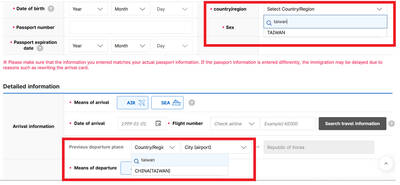
Jason Han says that the e-arrival card spat between South Korea and Taiwan shows that Seoul is signaling adherence to its “one-China” policy, while Taiwan’s response reflects a reciprocal approach. “Attempts to alter the diplomatic status quo often lead to tit-for-tat responses,” the analyst on international affairs tells the Taipei Times, adding that Taiwan may become more cautious in its dealings with South Korea going forward. Taipei has called on Seoul to correct its electronic entry system, which currently lists Taiwan as “China (Taiwan),” warning that reciprocal measures may follow if the wording is not changed before March 31. As of yesterday,

The Portuguese never established a presence on Taiwan, but they must have traded with the indigenous people because later traders reported that the locals referred to parts of deer using Portuguese words. What goods might the Portuguese have offered their indigenous trade partners? Among them must have been slaves, for the Portuguese dealt slaves across Asia. Though we often speak of “Portuguese” ships, imagining them as picturesque vessels manned by pointy-bearded Iberians, in Asia Portuguese shipping between local destinations was crewed by Asian seamen, with a handful of white or Eurasian officers. “Even the great carracks of 1,000-2,000 tons which plied
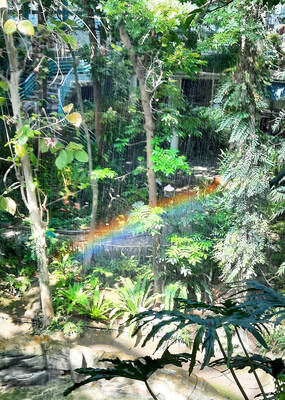
It’s only half the size of its more famous counterpart in Taipei, but the Botanical Garden of the National Museum of Nature Science (NMNS, 國立自然科學博物館植物園) is surely one of urban Taiwan’s most inviting green spaces. Covering 4.5 hectares immediately northeast of the government-run museum in Taichung’s North District (北區), the garden features more than 700 plant species, many of which are labeled in Chinese but not in English. Since its establishment in 1999, the site’s managers have done their best to replicate a number of native ecosystems, dividing the site into eight areas. The name of the Coral Atoll Zone might
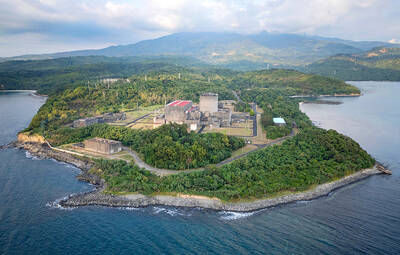
Nuclear power is getting a second look in Southeast Asia as countries prepare to meet surging energy demand as they vie for artificial intelligence-focused data centers. Several Southeast Asian nations are reviving mothballed nuclear plans and setting ambitious targets and nearly half of the region could, if they pursue those goals, have nuclear energy in the 2030s. Even countries without current plans have signaled their interest. Southeast Asia has never produced a single watt of nuclear energy, despite long-held atomic ambitions. But that may soon change as pressure mounts to reduce emissions that contribute to climate change, while meeting growing power needs. The


 RSS
RSS