


Vagina. The word itself is enough to make many uncomfortable. Yet roughly half the population has one.
V-Day is a global movement to end violence against women, raising funds and awareness around the world through productions of founder and playwright Eve Ensler’s award winning play The Vagina Monologues.
A group of volunteers is currently holding Taichung’s second V-Day with a series of events that began with a screening of a documentary earlier this month, an art exhibit that runs until March 28, and live performances this weekend and next Saturday.
“I think this play is relevant because there is so much miscommunication about women, about vaginas, but also about men too,” said promoter Beth Cox, who is also one of the performers. “Women’s issues and men’s issues are interwoven. If we were more open to talking about our feelings and how we feel about our bodies then there would be less violence, less mental anguish and abuse. I think we would all be living in a healthier society on the whole.”
The monologues Cox appears in cover a range of topics relating to vaginas, from The Introduction, which she says gets people comfortable with the idea of vaginas, The Flood, a story written from the perspective of a 72 year old woman, Not-So-Happy-Fact, a gruesome report from UNICEF on female genital mutilation, and A Six-Year-Old Was Asked. The latter “gives us the comparison of the innocence of a child and reminds us how we let taboo and social norms change and dictate our opinions and sense of self,” said Cox.
Monologues alternate between English and Chinese during the performance, with some, including My Angry Vagina, done bilingually. Volunteer Katie Lee Ching-yeh (李青曄) acts in Hair (陰毛), about a male-biased counselor and personal grooming, the more light-hearted Vagina Happy Fact (快樂陰道小常識), done as a dialogue between two sisters, and one of the highlights of the campaign, A Teenage Girl’s Guide to Surviving Sexual Slavery (性奴役少女如何生存之道). Chingyeh did some research on the setting for the piece (Congo), a first-person narrative from a survivor’s perspective, written by Ensler.
“It is shocking to watch the clip titled Rape Is Cheaper Than Bullets [2009, produced by K. Porteous and K. Geraghty] and to learn that the men there were militarily trained to rape,” said Lee. “It gives a quiver of fear for women there.”
Other monologues discuss everything from feminine hygiene sprays, men who help women love their vaginas, homosexual experiences, positive experiences with sex workers and reclaiming ownership of the word “cunt” in a healthy way.
So far reactions have been mixed. Lee found that teachers and friends were excited to hear there was a V-Day in Taichung. She enjoyed practicing in the park and saying the word “vagina” over and over, while people “averted their eyes and acted visibly uncomfortable.”
Cox got a kick out of asking her Chinese teacher how to pronounce one of her Chinese lines correctly. “It’s where I’m describing what young girls call their vaginas,” she said. “He was a bit embarrassed but I think he will come see the play now out of curiosity.”
Fellow volunteer Jennifer Goldfuss was appreciative of the support they’ve received and feels it is “important to spread [the message], to empower women, and let them know they are not alone in their struggles, and they can be overcome.” Melissa Holmes, who also performs at the event, said that she has seen a range of reactions from men, including curiosity, amusement, defensiveness and indifference, with women overall enjoying the show and expressing an eagerness to be part of it. Older viewers exhibit “general discomfort,” she said.
“Half of the people I talk to took an awkward pause when hearing the title of the show [The Vagina Monologues],” said Lee. “They then asked, ‘So ... how exactly do you make a vagina talk?’”


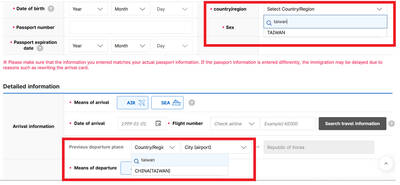
Jason Han says that the e-arrival card spat between South Korea and Taiwan shows that Seoul is signaling adherence to its “one-China” policy, while Taiwan’s response reflects a reciprocal approach. “Attempts to alter the diplomatic status quo often lead to tit-for-tat responses,” the analyst on international affairs tells the Taipei Times, adding that Taiwan may become more cautious in its dealings with South Korea going forward. Taipei has called on Seoul to correct its electronic entry system, which currently lists Taiwan as “China (Taiwan),” warning that reciprocal measures may follow if the wording is not changed before March 31. As of yesterday,
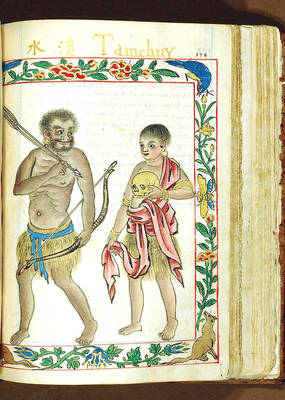
The Portuguese never established a presence on Taiwan, but they must have traded with the indigenous people because later traders reported that the locals referred to parts of deer using Portuguese words. What goods might the Portuguese have offered their indigenous trade partners? Among them must have been slaves, for the Portuguese dealt slaves across Asia. Though we often speak of “Portuguese” ships, imagining them as picturesque vessels manned by pointy-bearded Iberians, in Asia Portuguese shipping between local destinations was crewed by Asian seamen, with a handful of white or Eurasian officers. “Even the great carracks of 1,000-2,000 tons which plied
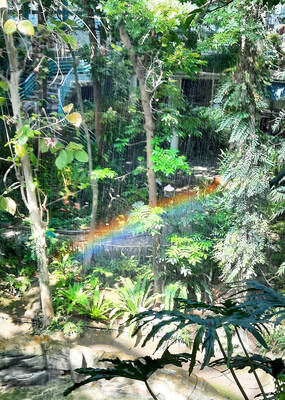
It’s only half the size of its more famous counterpart in Taipei, but the Botanical Garden of the National Museum of Nature Science (NMNS, 國立自然科學博物館植物園) is surely one of urban Taiwan’s most inviting green spaces. Covering 4.5 hectares immediately northeast of the government-run museum in Taichung’s North District (北區), the garden features more than 700 plant species, many of which are labeled in Chinese but not in English. Since its establishment in 1999, the site’s managers have done their best to replicate a number of native ecosystems, dividing the site into eight areas. The name of the Coral Atoll Zone might
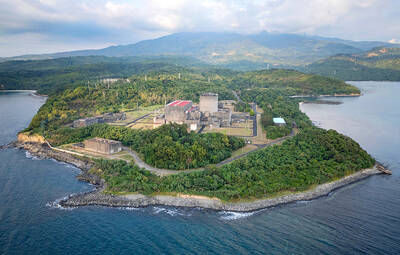
Nuclear power is getting a second look in Southeast Asia as countries prepare to meet surging energy demand as they vie for artificial intelligence-focused data centers. Several Southeast Asian nations are reviving mothballed nuclear plans and setting ambitious targets and nearly half of the region could, if they pursue those goals, have nuclear energy in the 2030s. Even countries without current plans have signaled their interest. Southeast Asia has never produced a single watt of nuclear energy, despite long-held atomic ambitions. But that may soon change as pressure mounts to reduce emissions that contribute to climate change, while meeting growing power needs. The


 RSS
RSS