


Despite rumors of its pending demise because of the economic downturn early last year, Dean & DeLuca’s Taipei branch at Breeze Center (微風廣場) is still around and continues to offer gourmet and specialty foods.
The imported grocery selection is hodge-podge at best — the neighboring supermarket has a wider variety — not to mention overpriced. Unless you really want to fork out NT$780 on a jar of jam from France, spend your money at the excellent deli, which offers hot foods and Mediterranean-style hors d’oeuvres.
The NT$300 set menu includes four items from the cold deli, soup and bread. I liked everything I had on a recent visit: The grilled vegetables (available a la carte for NT$85 per 100g), which consisted of generous portions of sliced zucchini, red bell peppers and pumpkin, had a nice smoky flavor. The Caesar salad (NT$80 per 100g), something that few places in Taipei seem to get right, hit a perfect mix with a light creamy dressing and fresh bacon bits and croutons. The smoked duck slices stuffed with liver pate (NT$150 per 100g) were heavenly.
The deli takes advantage of some local ingredients. The creamy sweet potato and shrimp salad (NT$100 per 100g) could easily pass as nouveau Taiwanese cuisine and I made note of the Aurora sauce (a tomato cream sauce) marinated shrimp and cuttlefish salad (NT$110 per 100g) to try on a future visit.
There’s a hot foods set menu (NT$300, includes a meat or seafood main course, three side items, soup and bread), but the selections sit under a heat lamp and don’t look as appetizing. For something hot and fresh, the deli serves made-to-order hot items, including a truffle mushroom pasta (NT$360), mentaiko pasta with nori seaweed (NT$320) and a club sandwich (NT$280).
Dean & DeLuca’s bacon cheeseburger (NT$250) should have been a runaway winner. They get points for a fresh, homemade beef patty and a proper sesame bun, but they use processed cheese and don’t even bother to melt it onto the burger. And another sin: the bacon was not in the least bit crispy. You’d expect an American gourmet chain to get that right.
The shop, with clean white walls and furnished with marble tables, blurs the line between upscale cafe and grocery store. The spacious design allows you to browse while waiting for your food and offers some relief from the claustrophobic layout of the Breeze Center’s basement floors.
The Taipei store pales in comparison to what one would find at a D&D branch in New York City or Napa Valley. One glaring omission is the lack of a cheese selection, but there are foodie delights such as aged balsamic vinegars and fancy European chocolates. The company also brands a few local delicacies, although it’s hard to imagine Taiwanese shoppers purchasing pineapple jam made in Nantou County at NT$680 a jar and high mountain oolong tea for NT$1,200 for 110g.
Dean & DeLuca also has an espresso bar that serves drinks ranging from NT$70 to NT$130 and stocks a small selection of desserts. A marketing tie-in with clothing label Ed Hardy (the bar is currently dubbed the Ed Hardy Cafe) makes sitting in the dining area annoying as they play a 15-minute promotional video in a continual loop. If hearing the same five songs (1980s music) over and over again sounds unappealing, think twice before dining in.
Catering is available. Visit
Dean & DeLuca’s Taiwan Web site for details, or call (02) 6600-8888 X7321.


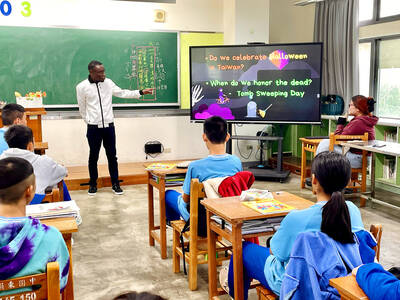
For many people, Bilingual Nation 2030 begins and ends in the classroom. Since the policy was launched in 2018, the debate has centered on students, teachers and the pressure placed on schools. Yet the policy was never solely about English education. The government’s official plan also calls for bilingualization in Taiwan’s government services, laws and regulations, and living environment. The goal is to make Taiwan more inclusive and accessible to international enterprises and talent and better prepared for global economic and trade conditions. After eight years, that grand vision is due for a pulse check. RULES THAT CAN BE READ For Harper Chen (陳虹宇), an adviser
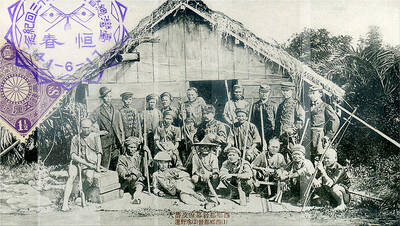
Traditionally, indigenous people in Taiwan’s mountains practice swidden cultivation, or “slash and burn” agriculture, a practice common in human history. According to a 2016 research article in the International Journal of Environmental Sustainability, among the Atayal people, this began with a search for suitable forested slopeland. The trees are burnt for fertilizer and the land cleared of stones. The stones and wood are then piled up to make fences, while both dead and standing trees are retained on the plot. The fences are used to grow climbing crops like squash and beans. The plot itself supports farming for three years.
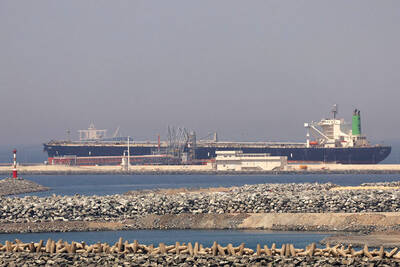
The breakwater stretches out to sea from the sprawling Kaohsiung port in southern Taiwan. Normally, it’s crowded with massive tankers ferrying liquefied natural gas from Qatar to be stored in the bulbous white tanks that dot the shoreline. These are not normal times, though, and not a single shipment from Qatar has docked at the Yongan terminal since early March after the Strait of Hormuz was shuttered. The suspension has provided a realistic preview of a potential Chinese blockade, a move that would throttle an economy anchored by the world’s most advanced and power-hungry semiconductor industry. It is a stark reminder of

May 4 to May 10 It was once said that if you hadn’t performed at the Sapphire Grand Cabaret (藍寶石大歌廳), you couldn’t truly be considered a star. Taking the stage at the legendary Kaohsiung club was more than just a concert. Performers were expected to entertain in every sense, wearing outlandish or revealing costumes and staying quick on their feet as sharp-tongued, over-the-top hosts asked questions and delivered jokes that would be seen as vulgar, even offensive, by today’s standards. Opening in May 1967 during a period of strict political and social control, Sapphire offered a rare outlet for audiences in


 RSS
RSS