


De Stijl (識得) is one of the first — if the not the first — stores in Taiwan to specialize in early 20th-century European and American jewelry. But its storefront near Zhongshan MRT Station (中山捷運站) is layered, literally, with the last 50 years of this country’s architectural history.
Owner Eli Hsieh (謝慶良) originally wanted to give the high-ceilinged space a loftlike atmosphere. But instead of the bare concrete he expected to find, he discovered hidden pockets of Taiwan’s past as he stripped wooden boards off the walls and ceilings.
Chunky cherry red and mustard yellow Bakelite bangles from the 1950s are displayed in front of tiles left over from when the building housed a hotel and bar. Abstract modernist pendants with large stones and delicate filigree necklaces from the Art Nouveau period lie under a plaster ceiling with sculpted moldings, an architectural detail popular in Taiwan during the middle of the past century. A concrete column is embellished with hand-painted, featherlike motifs, while an arch of pine-green brick just inside the entrance outlines the original front of the building.
“Everything was a surprise. We felt like we’d hit the jackpot,” says Hsieh. “Our store decor really combines the old and the new.”
That description also applies to the jewelry in De Stijl, which specializes in pieces from the Art Deco, Art Nouveau and Modernist periods. Unusual items include a silver World War II-era souvenir bracelet from Papua New Guinea (NT$8,500) and an enameled Art Deco pendant with colorful, stylized clowns (NT$16,500). Silver charms from the 1930s to 1970s, many with moving parts, are the store’s best sellers and range in price from NT$900 to about NT$3,000 each. The store’s own line, P+De Stijl, is made using parts salvaged from vintage jewelry.
“There wasn’t a market here for this kind of jewelry before we opened the store, so we had no idea how we’d be received or how we should present ourselves to customers who weren’t familiar with different periods in Western art and design,” says Hsieh.
“We want consumers to understand that our jewelry is something that you can’t find in the mass market,” he adds.
Some pieces in De Stijl are there not because they sell well, but because the store hopes to educate customers. Bakelite jewelry, for example, is highly collectible abroad, but many Taiwanese shoppers are hesitant to pay NT$2,500 for what they see as a simple plastic bangle.
“In Taiwan, Bakelite was used mainly for home appliances like phones and sewing machines,” says Joy Wu (吳忠怜), a store manager and Hsieh’s girlfriend. “Taiwanese people don’t associate it with jewelry. But we keep it here because we hope people will learn more about it and appreciate its value.”
Hsieh started collecting vintage accessories while in high school, starting with jewelry he found in antique shops on Yongkang Street (永康街). He spent so much time there that dealers eventually trusted him to mind their stores.
His interest shifted from traditional Chinese jewelry to Western styles in university. “I finally got exposed to all the different periods in artwork and design from abroad. It really opened my eyes,” says Hsieh. He went to art school for two years in London, spending his spare time exploring the city’s antique stores, flea markets and car boot sales.
Hsieh works with antique sellers in the US, England and Germany to find jewelry for De Stijl. Before buying an item, Hsieh considers its workmanship, rarity and authenticity. Signs of the latter include materials and crafting techniques unique to certain periods, as well as hallmarks stamped into silver or gold items. Hsieh says he focuses more on the aesthetics of each piece than brand names or famous designers (though several, including James Avery, David Andersen and Lea Stein, have been or are currently represented in the store) and worries less about running into knock-offs because many of the pieces in De Stijl are not in high enough demand among collectors (like Tiffany pieces, for example) to support a reproduction market.
De Stijl takes its store name from a period in Dutch design known for its abstraction and use of primary colors; one of its most famous members was the artist Piet Mondrian. The first half of the 20th century was perhaps the most dynamic era for design, says Hsieh: “From the early 1920s onwards, designers were very progressive. Every few years or so there would be a shift in aesthetics. It just kept going.”
Hsieh says that many customers are just as intrigued by De Stijl’s unusual decor as they are by the vintage jewelry — if not more so (“A lot of people come in just to look at the space,” he says, laughing).
After discovering the original structure’s idiosyncrasies, Hsieh and Wu decided to enhance the space with wooden cabinets designed to echo Art Deco furniture. They also covered several walls and counters with a patchwork of recycled wood from demolished houses (some still pasted over with old wallpaper or newspapers). Alcoves are filled with items ranging from a vintage Christian Dior plaster head found in an antique store to early 20th-century typewriters gifted by a neighboring shopkeeper.
Hsieh hopes customers will experience a similar sense of serendipity when they walk into his store.
“A lot of them buy jewelry just because it’s pretty, but knowing it has a story behind it is a bonus,” says Hsieh. “Not only do you have something new to wear, but you’ve also bought a piece of history.”


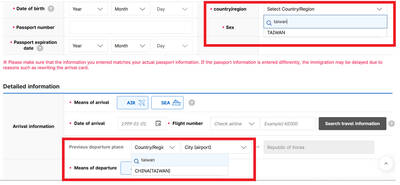
Jason Han says that the e-arrival card spat between South Korea and Taiwan shows that Seoul is signaling adherence to its “one-China” policy, while Taiwan’s response reflects a reciprocal approach. “Attempts to alter the diplomatic status quo often lead to tit-for-tat responses,” the analyst on international affairs tells the Taipei Times, adding that Taiwan may become more cautious in its dealings with South Korea going forward. Taipei has called on Seoul to correct its electronic entry system, which currently lists Taiwan as “China (Taiwan),” warning that reciprocal measures may follow if the wording is not changed before March 31. As of yesterday,
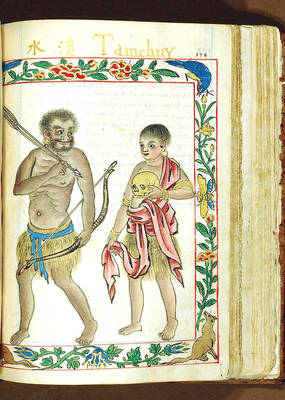
The Portuguese never established a presence on Taiwan, but they must have traded with the indigenous people because later traders reported that the locals referred to parts of deer using Portuguese words. What goods might the Portuguese have offered their indigenous trade partners? Among them must have been slaves, for the Portuguese dealt slaves across Asia. Though we often speak of “Portuguese” ships, imagining them as picturesque vessels manned by pointy-bearded Iberians, in Asia Portuguese shipping between local destinations was crewed by Asian seamen, with a handful of white or Eurasian officers. “Even the great carracks of 1,000-2,000 tons which plied
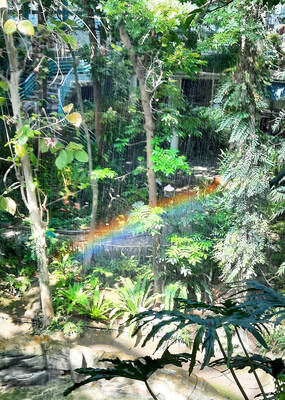
It’s only half the size of its more famous counterpart in Taipei, but the Botanical Garden of the National Museum of Nature Science (NMNS, 國立自然科學博物館植物園) is surely one of urban Taiwan’s most inviting green spaces. Covering 4.5 hectares immediately northeast of the government-run museum in Taichung’s North District (北區), the garden features more than 700 plant species, many of which are labeled in Chinese but not in English. Since its establishment in 1999, the site’s managers have done their best to replicate a number of native ecosystems, dividing the site into eight areas. The name of the Coral Atoll Zone might
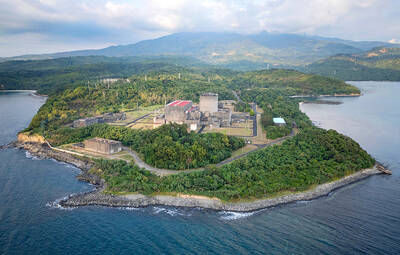
Nuclear power is getting a second look in Southeast Asia as countries prepare to meet surging energy demand as they vie for artificial intelligence-focused data centers. Several Southeast Asian nations are reviving mothballed nuclear plans and setting ambitious targets and nearly half of the region could, if they pursue those goals, have nuclear energy in the 2030s. Even countries without current plans have signaled their interest. Southeast Asia has never produced a single watt of nuclear energy, despite long-held atomic ambitions. But that may soon change as pressure mounts to reduce emissions that contribute to climate change, while meeting growing power needs. The


 RSS
RSS