


The Taichung Jazz Festival (台中爵士音樂節) welcomes the autumn season with a diversity of jazz styles, ranging from the be-bop avant-garde sounds of Italian trumpeter Enrico Rava and the tango-infused music of French accordionist Richard Galliano to the vocal harmonizing of German group Stouxingers and the electric blues of Joey Gilmore.
The festival, which starts tomorrow and runs until Oct. 25, continues to grow. Last year the event attracted around 290,000 people, according to the Taichung Cultural Affairs Bureau. The bureau touts the festival as “the nation’s largest,” and expects to break the 300,000 mark for attendance this year.
The event takes place along the city’s scenic Jingguo Boulevard Parkway (經國綠園道), with the main acts performing at Civic Square (市民廣場).
Many of this year’s acts hail from Europe. Enrico Rava, tomorrow night’s headliner, is one of Italy’s most prominent jazz musicians and a veteran of the international scene. The 70-year-old trumpeter started his career working with Latin jazz saxophonist Gato Barbieri and dabbled in free jazz and avant-garde throughout the mid-1960s, while playing in a quartet with soprano saxophonist Steve Lacy. Rava now mainly performs be-bop.
French accordionist Richard Galliano and his quartet take the stage next Sunday. Galliano, a highly revered figure among accordionists, draws from diverse roots, spanning Mediterranean folk, French Chanson and Musette and classical music. But careful listeners can also discern a clear tango influence. Galliano has worked with Astor Piazzolla and includes the Argentine composer’s work in his repertoire.
The Stouxingers are a German a capella group, distinguished by their ability to sound like a full band with instrumentation. The award-winning sextet not only sings lyrics, but also reels out an array of unconventional noises — they click their tongues in rhythm, beat-box and imitate brass horns with their voices. The group performs next Sunday. The program also pays heed to jazz’s roots by featuring American blues-man Joey Gilmore tomorrow night.
The 65-year-old guitarist and singer has spent the last week wowing audiences in Taipei with his soulful singing and deft guitar work. Blues fans shouldn’t pass up this last chance to see Gilmore, who won the International Blues Challenge in 2006, a major competition held by the Blues Foundation in Memphis. He appears tomorrow at 7pm in Civic Square and later in the evening at 10:30pm in Hotel One in Taichung, located at 532 Yingcai Rd, Taichung City (台中市英才路532號).
Nearly 40 acts from both Taiwan and abroad are also scheduled to perform. For the full schedule, visit the festival Web site at www.jazzfestival.com.tw.

Taiwan’s English education system is being pulled apart by three opposing forces. Bilingual Nation 2030 pulls students toward English and global communication. Artificial Intelligence (AI) readiness pulls them toward digital judgment, verification and AI-mediated work. But Taiwan’s old exam culture pulls them back toward memorization, grammar drills, timed reading and correct answers. If the education system keeps using old exams to define success, it risks producing graduates who are neither genuinely bilingual nor genuinely AI-ready, but trained for tasks machines can already perform. The first force is Bilingual Nation 2030. Launched in 2018, the policy aimed to “help Taiwan’s workforce connect
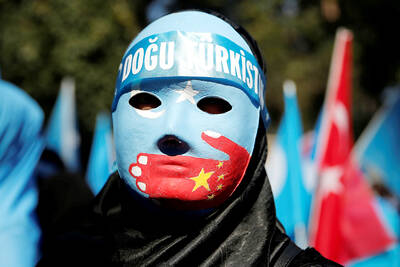
It seems every few days one bumps into one of those “real man” comments in which Taiwan is urged to “face reality” or similar, and “make a deal,” with the speaker implying that soon it will be too late. “Deal” advocates always present themselves as having a superior grip on reality, and the manly ability to make the “hard choice.” Their testosterone-laden language often echoes that of Taiwan sellout advocates. Note that such commentary always specifies a process (“make a deal, work with, make progress”), never the end state of what occupation by a violent authoritarian colonialist state will entail. In

“Taiwan’s Opposition Leader Comes to US With a Message Straight Out of Beijing” read a May 31 headline in the Wall Street Journal. Top US administration officials and members of Congress almost certainly read the WSJ, and if there was a bullet point takeaway that people in Washington should absorb ahead of Chinese Nationalist Party (KMT) Chair Cheng Li-wun’s (鄭麗文) arrival in DC on June 9, that headline is it. The last few columns have discussed this very topic, and the timing is not coincidental. While those top officials likely do not read the Taipei Times, judging by the number
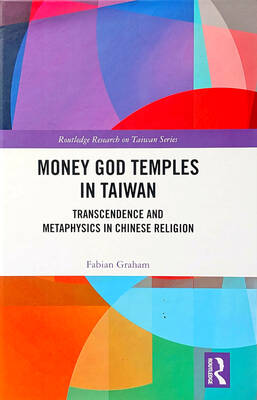
As someone who normally steers clear of books with “transcendence” or “metaphysics” in their subtitles, this reviewer — a casual observer of local belief systems since the 1990s — found Fabian Graham’s Money God Temples in Taiwan a challenging read. Those who’ve only dipped their toes into temple culture will likely need to parse several sections with special care if they’re to keep up with the author, a British ethnographic researcher whose previous books have investigated religious practices among ethnic Chinese in Southeast Asia. This scholarly volume examines a facet of Taiwan’s religious landscape that didn’t exist a century ago, and


 RSS
RSS