


More than 200 celebrities from Taiwan and Hong Kong attended large charity events held by television stations last weekend, all with the goal of raising money for the victims of Typhoon Morakot. Participating glitterati included Andy Lau (劉德華), Leon Lai (黎明), Sandra Ng (吳君如), Chang Fei (張菲), Hu Gua (胡瓜), Shu Qi (舒淇) and Judy Chiang (江蕙).
One of the weekend’s most enthusiastic volunteers, Chinese action star-turned-philanthropist Jet Li (李連杰), accompanied aid workers from Taiwan’s Red Cross Society on a visit to nine locations in Kaohsiung County on Saturday.
On a sadder note, Aboriginal star A-mei (張惠妹) lost both her uncle and brother-in-law to the typhoon in her hometown in Taitung County.
In the latest installment of the developing drug-taking controversy in Japan’s showbiz firmament, police are reportedly investigating possible links between Noriko Sakai and her surfer husband Yuichi Takaso, both arrested for drug possession, and J-pop singer and actor Manabu Oshio, who was arrested on Aug. 3 on suspicion of drug use and has been connected to a 30-year-old woman found dead at an apartment in Tokyo’s Roppongi district.
Oshio, 31, tested positive for ecstasy and admitted he had fled the scene after the unidentified woman, a bar hostess and his mistress of six months, took two pills and lost consciousness.
According to the Liberty Times (the Taipei Times’ sister newspaper), police suspect that Oshio, Sakai and Takaso are part of an intricate network of drug trading that involves big-name stars.
Other celebrities implicated in the snowballing scandal, according to Tokyo Sports, a Japanese daily, include actors Hideaki Ito and Shinji Takeda.
Following news that Jay Chou (周杰倫) has joined the cast of Michel Gondry’s The Green Hornet, assuming the role of Kato alongside Seth Rogen, Nicolas Cage and Cameron Diaz, pop idol Wang Lee-hom (王力宏) revealed last week that he has been working on a film script for the past six months.
While keeping mum about the story, the first-time scriptwriter said that he will soon begin looking for prospective investors, as well as a suitable director to shoot the NT$100 million movie starring none other than Wang himself.
When asked by the Liberty Times if he would make a better martial arts sidekick than Chou, whose English is less than fluent, Wang brushed off the question, saying: “I heard that Chou already began intensive English courses. He should do fine.”
In local showbiz pseudo-news, Apple Daily snappers spotted divorcee Annie Yi (伊能靜) shopping for toys with her son at Breeze Center (微風廣場) last week. The paper printed a detailed account of the trip, gleefully reporting that the boy played with a toy sewing machine and read comic books for girls after being left unattended by his mother.
The concerned newspaper concluded that Yi failed as a mother by exposing her precious son to the danger of kidnapping.
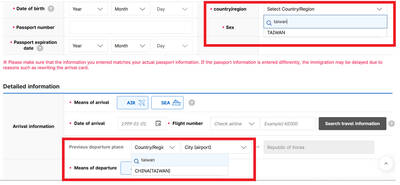
Jason Han says that the e-arrival card spat between South Korea and Taiwan shows that Seoul is signaling adherence to its “one-China” policy, while Taiwan’s response reflects a reciprocal approach. “Attempts to alter the diplomatic status quo often lead to tit-for-tat responses,” the analyst on international affairs tells the Taipei Times, adding that Taiwan may become more cautious in its dealings with South Korea going forward. Taipei has called on Seoul to correct its electronic entry system, which currently lists Taiwan as “China (Taiwan),” warning that reciprocal measures may follow if the wording is not changed before March 31. As of yesterday,
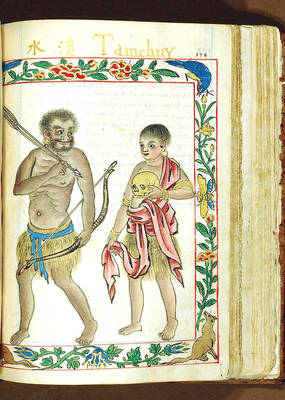
The Portuguese never established a presence on Taiwan, but they must have traded with the indigenous people because later traders reported that the locals referred to parts of deer using Portuguese words. What goods might the Portuguese have offered their indigenous trade partners? Among them must have been slaves, for the Portuguese dealt slaves across Asia. Though we often speak of “Portuguese” ships, imagining them as picturesque vessels manned by pointy-bearded Iberians, in Asia Portuguese shipping between local destinations was crewed by Asian seamen, with a handful of white or Eurasian officers. “Even the great carracks of 1,000-2,000 tons which plied
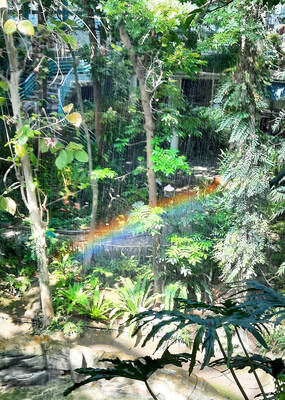
It’s only half the size of its more famous counterpart in Taipei, but the Botanical Garden of the National Museum of Nature Science (NMNS, 國立自然科學博物館植物園) is surely one of urban Taiwan’s most inviting green spaces. Covering 4.5 hectares immediately northeast of the government-run museum in Taichung’s North District (北區), the garden features more than 700 plant species, many of which are labeled in Chinese but not in English. Since its establishment in 1999, the site’s managers have done their best to replicate a number of native ecosystems, dividing the site into eight areas. The name of the Coral Atoll Zone might
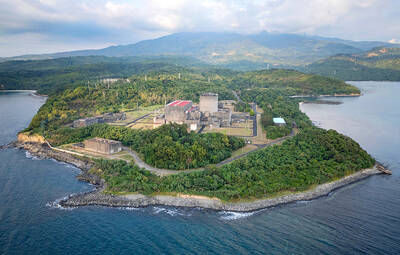
Nuclear power is getting a second look in Southeast Asia as countries prepare to meet surging energy demand as they vie for artificial intelligence-focused data centers. Several Southeast Asian nations are reviving mothballed nuclear plans and setting ambitious targets and nearly half of the region could, if they pursue those goals, have nuclear energy in the 2030s. Even countries without current plans have signaled their interest. Southeast Asia has never produced a single watt of nuclear energy, despite long-held atomic ambitions. But that may soon change as pressure mounts to reduce emissions that contribute to climate change, while meeting growing power needs. The


 RSS
RSS