


The Lohas movement, short for “lifestyles of health and sustainability,” continues to generate plenty of interest among increasingly health-conscious Taiwanese, and has sparked the establishment of many restaurants providing healthy eats. Alohas, a relatively new arrival on the scene, sets off on the right foot with its airy and well-lit interior, giving it immediate appeal.
This is just as well, as the menu itself doesn’t at first sight look particularly interesting or innovative, but having settled down comfortably at one of the tables around the spacious and immaculately clean open-plan kitchen, the atmosphere disposed one to be optimistic about the gratin vegetables and rice (NT$220) and the French lamb stew and cheese with rice (法式起司燉羊肩飯, NT$260), two of 10 set menus on offer.
The bread basket arrived with thick slices of the restaurant’s flax seed and rice bread (亞麻籽米麵包), which was not only unusual, but also extremely tasty. A large loaf of this bread goes for NT$350 from Alohas’ bakery, which also sports a range of other interesting breads using unusual or unprocessed grains. Staff were clearly motivated, and were happy to answer questions about the food on offer.
Given that the price of Alohas’ set menus includes bread, salad and a drink, the portions are quite generous. And while Alohas is not breaking any new ground in either flavor or presentation, the food is tasty without being either oily or salty. The meat of the lamb stew was tender, though the sauce was a tad one-dimensional. The vegetables were crisp, and the rice, into which flax seed had been mixed, had the virtue of novelty. The vegetables with rice was a brightly colored mix of fresh vegetables over Alohas’ flax seed rice in a tasty sauce that still allowed individual flavors to stand out. The topping of melted mozzarella cheese on both the lamb and vegetables was not particularly inspired from either an aesthetic or gastronomic perspective, an ill-considered attempt to add a recognizably European signature touch that, while emanating from a Western tradition, had made many concessions to Taiwanese taste. As with the flax seed rice, this is not necessarily a bad thing.
The menu has been given plenty of thought, with a nice balance between the different courses. The cold green tea that is available as part of the set menu is particularly excellent. The coffee was above average. A wide range of herbal teas (NT$80 to NT$100) are also on offer.
Apart from bread, the bakery also produces a number of sweets. The ubiquitous panna cotta (NT$80), which has become the dessert of choice for lost-cost Western set menus, was in this case distinguished by the presence of real vanilla, and a yogurt cheesecake was deliciously light, with a hint of sourness that raised it above the usual coffee shop fare.
If you take the menu items at face value and walk in expecting authentic Western bistro food, you are going to be disappointed. Making allowances for Alohas’ priority on healthy food over authenticity, and taking into account its price point, this restaurant offers up a very enjoyable dinning experience and some delightful surprises.
If one asks Taiwanese why house prices are so high or why the nation is so built up or why certain policies cannot be carried out, one common answer is that “Taiwan is too small.” This is actually true, though not in the way people think. The National Property Administration (NPA), responsible for tracking and managing the government’s real estate assets, maintains statistics on how much land the government owns. As of the end of last year, land for official use constituted 293,655 hectares, for public use 1,732,513 hectares, for non-public use 216,972 hectares and for state enterprises 34 hectares, yielding

The small platform at Duoliang Train Station in Taitung County’s Taimali Township (太麻里) served villagers from 1992 to 2006, but was eventually shut down due to lack of use. Just 10 years later, the abandoned train station had become widely known as the most beautiful station in Taiwan, and visitors were so frequent that the village had to start restricting traffic. Nowadays, Duoliang Village (多良) is known as a bit of a tourist trap, with a mandatory, albeit modest, admission fee of NT$10 giving access to a crowded lane of vendors with a mediocre view of the ocean and the trains

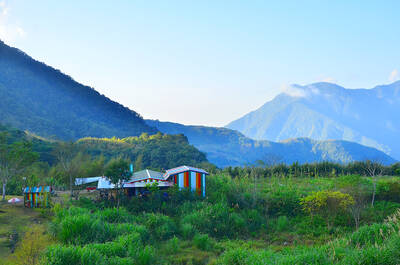
Traditionally, indigenous people in Taiwan’s mountains practice swidden cultivation, or “slash and burn” agriculture, a practice common in human history. According to a 2016 research article in the International Journal of Environmental Sustainability, among the Atayal people, this began with a search for suitable forested slopeland. The trees are burnt for fertilizer and the land cleared of stones. The stones and wood are then piled up to make fences, while both dead and standing trees are retained on the plot. The fences are used to grow climbing crops like squash and beans. The plot itself supports farming for three years.

For many people, Bilingual Nation 2030 begins and ends in the classroom. Since the policy was launched in 2018, the debate has centered on students, teachers and the pressure placed on schools. Yet the policy was never solely about English education. The government’s official plan also calls for bilingualization in Taiwan’s government services, laws and regulations, and living environment. The goal is to make Taiwan more inclusive and accessible to international enterprises and talent and better prepared for global economic and trade conditions. After eight years, that grand vision is due for a pulse check. RULES THAT CAN BE READ For Harper Chen (陳虹宇), an adviser


 RSS
RSS