


Seven Pounds, which reunites Will Smith with Gabriele Muccino (who directed him in The Pursuit of Happyness), begins with a series of riddling, chronologically scrambled scenes. A man calls 911 to report his own suicide. He badgers a blind call-center employee — whom we suspect will be a significant character, since he’s played by Woody Harrelson — with complaints and insults. He embraces a lovely woman in an even lovelier beach house. He visits a nursing home where he terrorizes an administrator and comforts a resident.
For a while it is pleasant enough to contemplate these loose ends, and to tease from them the possible contours of a story. It is never unpleasant to watch Smith, who likes to play peek-a-boo with his charm, hiding it now and then behind fleeting shadows of anguish or malice. The music (Angelo Milli’s score and a handful of emotive pop songs) combines with the deep colors of Philippe le Sourd’s cinematography to summon up intensities of sentiment not yet arrived at by the narrative, creating an interesting frisson of suspense. After a while, though, as the pieces of the puzzle snap together, curiosity gives way to incredulity.
Near the end of Seven Pounds a carefully laminated piece of paper appears, on which someone has written, “DO NOT TOUCH THE JELLYFISH.” I wouldn’t dream of it, and I’ll take the message as a warning not to divulge the astonishing things that happen, not all of them involving aquatic creatures.
Frankly, though, I don’t see how any review could really spoil what may be among the most transcendently, eye-poppingly, call-your-friend-ranting-in-the-middle-of-the-night-just-to-go-over-it-one-more-time crazily awful motion pictures ever made. I would tell you to go out and see it for yourself, but you might take that as a recommendation rather than a plea for corroboration. Did I really see what I thought I saw?
And I wish I could spell out just what that was, but you wouldn’t believe me, and the people at Sony might not invite me to any more screenings. So instead of spelling out what happens in Seven Pounds, I’ll just pluck a few key words and phrases from my notes, and arrange them in the kind of artful disorder Muccino seems to favor (feel free to start crying any time): Eggplant parmesan. Printing press. Lung. Bone marrow. Eye transplant. Rosario Dawson. Great Dane. Banana peel. Jellyfish (but you knew that already). Car accident. Congestive heart failure.
Huh? What the ... ? Hang on. What’s he doing? Why? Who does he think he is? Jesus! That last, by the way, is not an exclamation of shock but rather an answer to the preceding question, posed with reference to Smith. Lately he has taken so eagerly to roles predicated on heroism and world-saving self-sacrifice — see I Am Legend and Hancock — that you may wonder if he has a messiah clause in his contract. Which is not to say that he doesn’t show range in these films, in which he credibly plays a research scientist, a dissolute superhero and, in this latest one, an IRS agent.
An IRS agent who wants only to help people. This is a nice, small joke that provides a few grace notes of levity in what is otherwise a lugubrious exercise in spiritual bushwa. For all its pious, earnest air, Seven Pounds cries out to be remade as an Asian horror movie, so that the deep, creepy grotesqueness of its governing premise might be allowed to flourish, rather than to fester beneath the surface.
As it is, the movie is basically an inverted, twisted tale of revenge. Ben Thomas, Smith’s character, is in essence a benevolent vigilante, harassing, stalking and spying on unsuspecting citizens for their own good, and also to punish himself. Why such misery should also be inflicted on an innocent, affirmation-hungry audience — and also on the marvelous Dawson, who plays one of Ben’s victim-beneficiaries — is another matter entirely.
But maybe I’m approaching this in the wrong way. Maybe Seven Pounds isn’t a spiritual parable about redemption or forgiveness or salvation or whatever, but rather a collection of practical lessons. Don’t drive while using a BlackBerry. Fertilize your rose bushes with banana peels — sorry, that was a spoiler. But please, whatever you do, don’t touch the jellyfish.
I’m serious. Don’t.

Jason Han says that the e-arrival card spat between South Korea and Taiwan shows that Seoul is signaling adherence to its “one-China” policy, while Taiwan’s response reflects a reciprocal approach. “Attempts to alter the diplomatic status quo often lead to tit-for-tat responses,” the analyst on international affairs tells the Taipei Times, adding that Taiwan may become more cautious in its dealings with South Korea going forward. Taipei has called on Seoul to correct its electronic entry system, which currently lists Taiwan as “China (Taiwan),” warning that reciprocal measures may follow if the wording is not changed before March 31. As of yesterday,

The Portuguese never established a presence on Taiwan, but they must have traded with the indigenous people because later traders reported that the locals referred to parts of deer using Portuguese words. What goods might the Portuguese have offered their indigenous trade partners? Among them must have been slaves, for the Portuguese dealt slaves across Asia. Though we often speak of “Portuguese” ships, imagining them as picturesque vessels manned by pointy-bearded Iberians, in Asia Portuguese shipping between local destinations was crewed by Asian seamen, with a handful of white or Eurasian officers. “Even the great carracks of 1,000-2,000 tons which plied
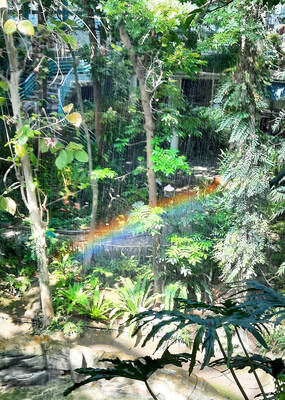
It’s only half the size of its more famous counterpart in Taipei, but the Botanical Garden of the National Museum of Nature Science (NMNS, 國立自然科學博物館植物園) is surely one of urban Taiwan’s most inviting green spaces. Covering 4.5 hectares immediately northeast of the government-run museum in Taichung’s North District (北區), the garden features more than 700 plant species, many of which are labeled in Chinese but not in English. Since its establishment in 1999, the site’s managers have done their best to replicate a number of native ecosystems, dividing the site into eight areas. The name of the Coral Atoll Zone might
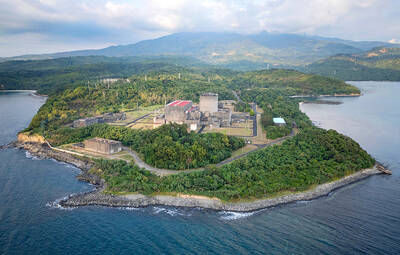
Nuclear power is getting a second look in Southeast Asia as countries prepare to meet surging energy demand as they vie for artificial intelligence-focused data centers. Several Southeast Asian nations are reviving mothballed nuclear plans and setting ambitious targets and nearly half of the region could, if they pursue those goals, have nuclear energy in the 2030s. Even countries without current plans have signaled their interest. Southeast Asia has never produced a single watt of nuclear energy, despite long-held atomic ambitions. But that may soon change as pressure mounts to reduce emissions that contribute to climate change, while meeting growing power needs. The


 RSS
RSS