


VIEW THIS PAGE FOR THE CAR WITH EVERYTHING, A COMPUTER OF ITS OWN
Where haven’t PCs gone? They’re common in dens and living rooms and are even creeping into beds and onto park benches. But until the ClarionMind from Clarion, they have never colonized the automobile.
The Clarion mini PC has an 800-megahertz Intel Atom processor and 512 megabytes of memory. It has a 5-inch touch screen and 4 gigabytes of storage for programs and media. The device can be connected to the Internet via Wi-Fi or by pairing it with a compatible cellphone over Bluetooth. The device uses a special version of Linux and includes software for Global Positioning System mapping, along with a Firefox-based browser for visiting Web sites on the go.
The Mind can play audio and offer driving directions over the car’s speaker system. Video and music can be stored on a microSD card, and quick keys allow instant access to MySpace and YouTube. Clarion has not announced a price but the device should be available next month. Obviously the ClarionMind’s more complex functions are best suited for passenger — not driver — entertainment.
ENABLING A SOUNDTRACK FOR UNDERWATER WORKOUTS
Unlike runners (who put personalized Rocky training-montage soundtracks on their iPods), swimmers tend to exercise in silence. But water enthusiasts who don’t want to sacrifice their headsets have a new option. H20 Audio has created its fourth-generation waterproof headphones, called the Surge, which retail for US$60.
The headsets can withstand up to 6.65m of water and come with five sets of sound-isolation earplugs to help ensure a more customized, watertight fit. The Surge’s speakers have a new in-ear design that increases the bass of their third-generation counterpart. To help minimize dislodging, the cable was lengthened to 112cm, so feel free to perfect that heelside back roll.
AN IPHONE CASE THAT DOES SOLAR-POWERED DOUBLE DUTY AS A CHARGER
The Asian tech importer Brando.com.hk’s latest gadget, a solar-powered iPhone case and charger, taps into two recent and noble obsessions — going green and keeping your iPhone battery full.
The US$48 device is made of black leather and includes a 3.7-volt rechargeable battery and a built-in photocell.
The case can fully charge an iPhone in about 12 hours in direct sunlight (enough power to make a quick call takes less time).
The case comes in two formats — a flip-top model that opens at the bottom and a book-like model with a fastener at the side. The device also includes an AC charger to initially charge the battery. The solar panel can then top off both the auxiliary battery and the iPhone’s battery, when needed. It is compatible with the older iPhone as well as the iPhone 3G.
The case adds about 85g to your phone’s overall weight.
Suddenly, leaving your iPhone out in the sun is not necessarily a bad idea.
DELL’S PORTABLE PROJECTOR FITS IN THE PALM OF YOUR HAND
Backs and shoulders will appreciate Dell’s new portable projector. The computer maker’s new M109S On-the-Go pocket-size projector weighs in at a vertebrae-friendly 0.36kg, and can fit in the palm of your hand.
The M109S features 858 x 600 SVGA resolution, good enough to project a decent image (think more PowerPoint, less David Lean) and a mercury-free LED light source with a four-year life expectancy.
The M109S also comes with a three-in-one multi-input cable that combines the DC power input, VGA and composite connectors, which means fewer peripherals to pack. Vertical adjustment and auto keystone features help restore tilted screens to their rectangular format. The US$500 M109S, out now, is compatible with both US and European television standards, and is HDTV capable. Understandably, chiropractors are up in arms over this.
THIS HEADSET FOLLOWS YOU FROM WORK TO WORKOUT
Your home, neighborhood coffee shop and, on better days, the beach have all served as your mobile office. Unfortunately, not every headset can accommodate such an on-the-go lifestyle.
Sennheiser’s latest Bluetooth headset, the VMX Office, works with landlines, computers and mobile phones, so you only need one device as you move from car to office to home office.
The Office’s Bluetooth compatibility (1.0, 1.1 and 2.0) allows for hands-free calls up to 30.5m away and a single button lets you switch between landline and mobile devices. The VMX’s VoiceMax technology reduces invasive background noise and picks up and enhances human voices, a feature that’s bound to come in handy during those power business walks.
The US$280 VMX Office, out now, also comes equipped with five hours of talk time and more than 100 standby hours. Your 3pm treadmill session/conference call awaits.
AN OVERSIZE MOUSE CAN EXTEND AND TILT FOR A BETTER FIT
Technology should fit your needs, not the other way around. At least that’s the sentiment behind the ergonomically designed Switch Mouse, which can stretch and tilt to fit your hand.
Created by Humanscale, which makes adjustable keyboard and monitor supports, the US$120 Switch Mouse is about 30 percent bigger than a typical mouse. The size is intended to mitigate wrist injuries like carpal tunnel syndrome by incorporating a built-in palm rest and encouraging users to move the mouse with arm motions rather than the more vulnerable wrist muscles.
The device can even be stretched using a ratchet-like internal extender to accommodate larger hands so that fingers fall properly on the mouse buttons.
Also, in an attempt to prevent repetitive stress injury, the underside of the Switch Mouse has a V-shaped bracket that tilts the pointer at a 45-degree angle to keep one’s wrist as straight as possible and minimize pronation. Better still, the bracket can be set for left-or right-handed users.
Just don’t expect it to feel natural the first time you use it. Discouraging bad but ingrained mouse habits can take some time.
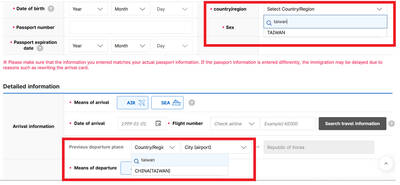
Jason Han says that the e-arrival card spat between South Korea and Taiwan shows that Seoul is signaling adherence to its “one-China” policy, while Taiwan’s response reflects a reciprocal approach. “Attempts to alter the diplomatic status quo often lead to tit-for-tat responses,” the analyst on international affairs tells the Taipei Times, adding that Taiwan may become more cautious in its dealings with South Korea going forward. Taipei has called on Seoul to correct its electronic entry system, which currently lists Taiwan as “China (Taiwan),” warning that reciprocal measures may follow if the wording is not changed before March 31. As of yesterday,

The Portuguese never established a presence on Taiwan, but they must have traded with the indigenous people because later traders reported that the locals referred to parts of deer using Portuguese words. What goods might the Portuguese have offered their indigenous trade partners? Among them must have been slaves, for the Portuguese dealt slaves across Asia. Though we often speak of “Portuguese” ships, imagining them as picturesque vessels manned by pointy-bearded Iberians, in Asia Portuguese shipping between local destinations was crewed by Asian seamen, with a handful of white or Eurasian officers. “Even the great carracks of 1,000-2,000 tons which plied

It’s only half the size of its more famous counterpart in Taipei, but the Botanical Garden of the National Museum of Nature Science (NMNS, 國立自然科學博物館植物園) is surely one of urban Taiwan’s most inviting green spaces. Covering 4.5 hectares immediately northeast of the government-run museum in Taichung’s North District (北區), the garden features more than 700 plant species, many of which are labeled in Chinese but not in English. Since its establishment in 1999, the site’s managers have done their best to replicate a number of native ecosystems, dividing the site into eight areas. The name of the Coral Atoll Zone might
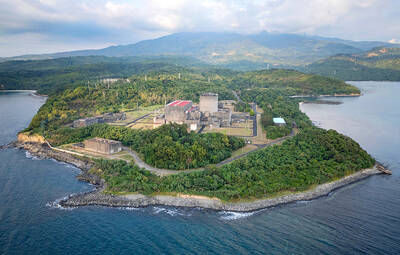
Nuclear power is getting a second look in Southeast Asia as countries prepare to meet surging energy demand as they vie for artificial intelligence-focused data centers. Several Southeast Asian nations are reviving mothballed nuclear plans and setting ambitious targets and nearly half of the region could, if they pursue those goals, have nuclear energy in the 2030s. Even countries without current plans have signaled their interest. Southeast Asia has never produced a single watt of nuclear energy, despite long-held atomic ambitions. But that may soon change as pressure mounts to reduce emissions that contribute to climate change, while meeting growing power needs. The


 RSS
RSS