


Alan Moore was 52, teaching statistics at the University of Wyoming, playing the violin in the university’s symphony and accompanying soloists on the piano when his health took a nosedive in April 2001.
“I felt like I had the flu,” Moore recalled in an interview last month. “I was very weak and fatigued. I had extreme pain and swelling in a lot of my joints. I was in agony when I got up in the morning, so stiff I had to shuffle to the bathroom. I couldn’t peel a banana, turn the key in the ignition or even pull the tab of a tea bag. My wife, Cindy, had to help me with the simplest of tasks. Needless to say, I couldn’t play the violin or piano or use the computer.”
Doctors diagnosed it as rheumatoid arthritis.
“And I thought that my life as I knew it was over,” said Moore, now 59, of Laramie, Wyoming.
But by enrolling in a clinical trial of one of the drugs and drug combinations that are revolutionizing the treatment of the disease, Moore got his life back.
Rheumatoid arthritis is the world’s most common autoimmune disease, striking up to one in 100 in the course of a lifetime. It is most often diagnosed in people ages 30 to 60 but it can occur at any time, including childhood.
As with other autoimmune diseases, women are three to four times likelier than men to develop rheumatoid arthritis. About 80 percent of Caucasians with the disease have a genetic marker, a gene sequence in the HLA-D region of chromosome 6 that is found in only about 35 percent of the general population.
The disease causes chronic joint inflammation and progressive destruction of the cartilage at the ends of bones, which can result in an inability to use the affected joints. Other effects include fatigue, malaise, anemia and damage to organs throughout the body, including the cardiovascular system.
Untreated, 20 percent to 30 percent of people become permanently disabled within three to five years of diagnosis. Life expectancy may be reduced by as much as 15 years, with half of patients succumbing to cardiovascular disease.
Doctors traditionally treated the symptoms of rheumatoid arthritis, usually with anti-inflammatory and pain-relieving medications. But the underlying destruction of tissues continued, leading to chronic disability and premature death.
The goal today is suppression of the disease and prevention of progressive joint destruction by treating patients early with synthetic or biologic agents called disease-modifying antirheumatic drugs.
Though he did not know it at the time, Moore was randomly assigned to the study group that every two weeks self-injected a biologically derived drug called Humira, which acts to block a protein involved in the inflammation associated with rheumatoid arthritis. Humira is one of six biologic treatments for the disease approved by the US federal government. Three other biologic remedies are nearing approval by the Food and Drug Administration.
“Within days, my symptoms declined to nearly zero,” Moore said, “and I’ve had no symptoms since.” He has continued the injections of Humira and participates in a registry of patients to help assess the drug’s long-term benefits and potential risks.
The costly biologic drugs are often used in combination with much cheaper synthetic disease-modifying drugs taken orally, like methotrexate. In some cases, oral medications are all that patients need to keep symptoms and joint destruction under control.
But well-designed clinical trials have typically shown that in patients facing moderate to severe disease, combining the treatments often results in fewer symptoms and less destruction of joints, especially if therapy begins early.
In a study published on July 16 in The Lancet, researchers in Leeds, England, reported that among 542 patients randomly assigned to receive either methotrexate alone or in combination with Enbrel, another biologic agent, those receiving the combination were almost twice as likely to become symptom free and more likely to show no X-ray signs of progressive joint destruction a year later.
In a commentary with the Lancet report, Joel Kremer, a rheumatologist at Albany Medical College, in Albany, New York, said it was important to consider the long-term consequences and costs of the disease when deciding how much to spend on therapy.
“Most of the biologic agents cost in the range of US$16,000 to US$18,000 a year, whereas the oral medications cost only about a tenth that,” Kremer said in an interview.
But, he added, inadequately treated rheumatoid arthritis typically leads to a need for multiple joint replacements, lost productivity, lost tax revenue and a greatly diminished quality of life, as well as an increased risk of life-threatening infections and cardiovascular disease.
“Most patients diagnosed at age 45 will be disabled in five or six years,” Kremer said. “You have to consider what it costs to fix a bridge against what it will cost when the bridge collapses.”
Before the use of disease-modifying drugs, direct medical costs from rheumatoid arthritis were estimated at US$5.5 billion, and that did not include the indirect costs of lost wages and productivity, the need for custodial care and the emotional and social consequences of chronic disability.
While not everyone with rheumatoid arthritis responds to the new treatments as vividly as Moore did, many large studies have shown that there is no longer any reason for pessimism about the diagnosis. But it is vitally important to begin treatment early.
The recent therapeutic developments, Kremer said, mean that doctors in general practice need to remain alert to symptoms of the disease in its early stages and quickly refer patients to rheumatologists who can confirm the diagnosis and prescribe up-to-date treatment before irreparable damage to joints occurs. Treatment is most effective if begun within one year after symptoms appear.
There is no one treatment approach that works for everyone. Rather, studies have indicated that treatment should be tailored to individual patients: the nature and extent of their disease, their other health issues and how they respond to various therapies.
Kremer said that many patients could be started on a single, low-cost drug like methotrexate, as long as their condition was closely monitored and the treatment adjusted if there are signs of progressive disease.
Regular exercise and physical and occupational therapy, along with medication, can help patients maintain function. In addition to antirheumatic drugs to reduce inflammation, Kremer recommends fish oil at a daily dose of 2g of EPA and DHA — about six capsules as they are currently formulated.

The Portuguese never established a presence on Taiwan, but they must have traded with the indigenous people because later traders reported that the locals referred to parts of deer using Portuguese words. What goods might the Portuguese have offered their indigenous trade partners? Among them must have been slaves, for the Portuguese dealt slaves across Asia. Though we often speak of “Portuguese” ships, imagining them as picturesque vessels manned by pointy-bearded Iberians, in Asia Portuguese shipping between local destinations was crewed by Asian seamen, with a handful of white or Eurasian officers. “Even the great carracks of 1,000-2,000 tons which plied

It’s only half the size of its more famous counterpart in Taipei, but the Botanical Garden of the National Museum of Nature Science (NMNS, 國立自然科學博物館植物園) is surely one of urban Taiwan’s most inviting green spaces. Covering 4.5 hectares immediately northeast of the government-run museum in Taichung’s North District (北區), the garden features more than 700 plant species, many of which are labeled in Chinese but not in English. Since its establishment in 1999, the site’s managers have done their best to replicate a number of native ecosystems, dividing the site into eight areas. The name of the Coral Atoll Zone might
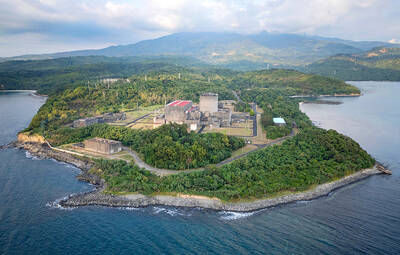
Nuclear power is getting a second look in Southeast Asia as countries prepare to meet surging energy demand as they vie for artificial intelligence-focused data centers. Several Southeast Asian nations are reviving mothballed nuclear plans and setting ambitious targets and nearly half of the region could, if they pursue those goals, have nuclear energy in the 2030s. Even countries without current plans have signaled their interest. Southeast Asia has never produced a single watt of nuclear energy, despite long-held atomic ambitions. But that may soon change as pressure mounts to reduce emissions that contribute to climate change, while meeting growing power needs. The

On Monday morning, in quick succession, the Chinese Communist Party (CCP) and the Chinese Nationalist Party (KMT) released statements announcing “that the Central Committee of the Communist Party of China and General Secretary Xi Jinping (習近平) have invited KMT Chairwoman Cheng Li-wun (鄭麗文) to lead a delegation on a visit to the mainland” as the KMT’s press release worded it. The KMT’s press release added “Chairwoman Cheng expressed her gratitude for the invitation and has gladly accepted it.” Beijing’s official Xinhua news release described Song Tao (宋濤), head of the Taiwan Work Office of the CCP Central Committee, as


 RSS
RSS