


Catherine Tate's spirited performance is one of the few bright spots in a film that from almost every other perspective is just so totally wrong. The story of a teacher from Bingley, West Yorkshire, who transports his family to the German Democratic Republic (better known as East Germany) to live in a communist utopia, only to discover that the worker's paradise is nothing of the sort, seems hopelessly dated from the get-go, not simply because of the topic, but because the producers seem to be willfully ignorant of the last 20 years of European history.
There is nothing immoral about making a comedy about life under intolerable political regimes - after all, one only has to recall Florian Henckel von Donnersmarck's 2006 The Lives of Others to realize the darkly comic potential that films set in such societies can provide. Unfortunately the makers of Mrs Ratcliff's Revolution are not only ignorant of history, both political and cinematic, but also seem to be uncertain exactly what sort of movie they are trying to make. If the whole thing had been made as off-the-wall broad comedy, the film might just have passed muster, but attempts to give the situation a moral dimension make the film utterly unacceptable.
As for the performances, they are all solid if relatively uninspired. The one exception is Catherine Tate, whose Mrs Ratcliffe, a sensible type of woman whose British grit is brought out by the absurd situations created by a world dominated by secret police and communist ideology, is quite well realized. Unfortunately the producers gave the film a big injection of arch humor that seems to have come directly from the Carry On movies of the early 1970s. At any moment you expect Kenneth Williams to come on wearing a garter strap and going "Oooooh!" He doesn't, and more's the pity, as this might just provide some relief from this ham-fisted mess of a movie.
Instead, the moments of comedy are inter-cut with awful attempts at drama. The performers struggle manfully with the terrible material, but the days that you can make light of escaping over the Berlin wall by balloon or turning children into spies against their parents have well and truly gone. Audiences know too much about the horrors of totalitarian regimes and their efforts to keep their people in a state of terror to find this sort of thing even remotely funny.
Enough talent has been wasted in this mess of movie, don't waste your time as well.
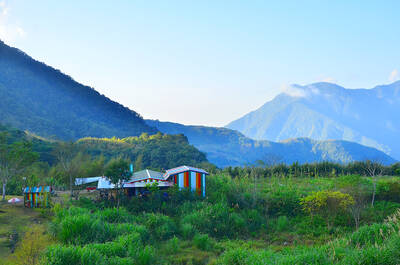
If one asks Taiwanese why house prices are so high or why the nation is so built up or why certain policies cannot be carried out, one common answer is that “Taiwan is too small.” This is actually true, though not in the way people think. The National Property Administration (NPA), responsible for tracking and managing the government’s real estate assets, maintains statistics on how much land the government owns. As of the end of last year, land for official use constituted 293,655 hectares, for public use 1,732,513 hectares, for non-public use 216,972 hectares and for state enterprises 34 hectares, yielding

The small platform at Duoliang Train Station in Taitung County’s Taimali Township (太麻里) served villagers from 1992 to 2006, but was eventually shut down due to lack of use. Just 10 years later, the abandoned train station had become widely known as the most beautiful station in Taiwan, and visitors were so frequent that the village had to start restricting traffic. Nowadays, Duoliang Village (多良) is known as a bit of a tourist trap, with a mandatory, albeit modest, admission fee of NT$10 giving access to a crowded lane of vendors with a mediocre view of the ocean and the trains

Traditionally, indigenous people in Taiwan’s mountains practice swidden cultivation, or “slash and burn” agriculture, a practice common in human history. According to a 2016 research article in the International Journal of Environmental Sustainability, among the Atayal people, this began with a search for suitable forested slopeland. The trees are burnt for fertilizer and the land cleared of stones. The stones and wood are then piled up to make fences, while both dead and standing trees are retained on the plot. The fences are used to grow climbing crops like squash and beans. The plot itself supports farming for three years.
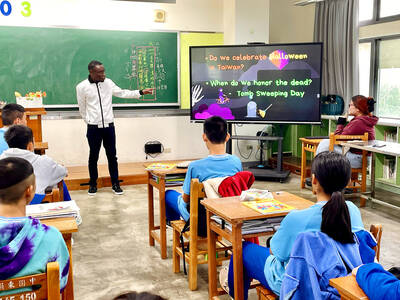
For many people, Bilingual Nation 2030 begins and ends in the classroom. Since the policy was launched in 2018, the debate has centered on students, teachers and the pressure placed on schools. Yet the policy was never solely about English education. The government’s official plan also calls for bilingualization in Taiwan’s government services, laws and regulations, and living environment. The goal is to make Taiwan more inclusive and accessible to international enterprises and talent and better prepared for global economic and trade conditions. After eight years, that grand vision is due for a pulse check. RULES THAT CAN BE READ For Harper Chen (陳虹宇), an adviser


 RSS
RSS