


A hundred years ago this week, a gigantic explosion ripped open the dawn sky above the swampy taiga forest of western Siberia, leaving a scientific riddle that endures to this day.
A dazzling light pierced the heavens, preceding a shock wave with the power of a thousand atomic bombs that flattened 80 million trees in a swathe of more than 2,000km².
Evenki nomads recounted how the blast tossed homes and animals into the air. In Irkutsk, 1,500km away, seismic sensors registered what was initially deemed to be an earthquake.
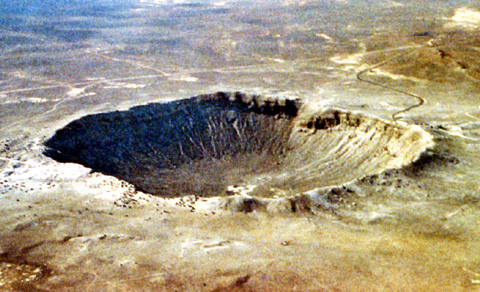
PHOTO: AFP
The fireball was so great that a day later, Londoners could read their newspapers under the night sky.
What caused the so-called Tunguska Event, named after the Podkamennaya Tunguska river near where it happened, has spawned at least a half a dozen theories.
The biggest finger of blame points at a rogue rock whose destiny, after traveling in space for millions of years, was to intersect with Earth at exactly 7:17am on June 30, 1908.
Even the most ardent defenders of the sudden impact theory acknowledge there are many gaps. They strive to find answers, believing this will strengthen defenses against future Tunguska-type threats, which experts say occur at a frequency ranging from one in 200 years to one in 1,000 years.
“Imagine an unspotted asteroid laying waste to a significant chunk of land and imagine if that area, unlike Tunguska and a surprising amount of the globe today, were populated,” the British science journal Nature commented last week.
If a rock was the culprit, the choices lie between an asteroid — the rubble that can be jostled out of its orbital belt between Mars and Jupiter and set on collision course with Earth — and a comet, one of the “icy dirtballs” of frozen, primeval material that loop around the Solar System.
WHERE ARE THE FRAGMENTS?
Comets move at far greater speeds than asteroids, which means they release more kinetic energy kilogram-for-kilogram upon impact. A small comet would deliver the same punch as a larger asteroid.
But no fragments of the Tunguska villain have ever been found, despite many searches.
Finding a piece is important, for it will boost our knowledge about the degrees of risk from dangerous Near Earth Objects (NEOs), say Italian researchers Luca Gasperini, Enrico Bonatti and Giuseppe Longo.
When a new asteroid is detected, its orbit can be plotted for scores of years in the future.
Comets are far less numerous than asteroids but are rather more worrying, as they are largely an unknown entity.
Most comets have yet to be spotted because they take decades or even hundreds of years to go around the Sun and pass our home. As a result, any comet on a collision course with Earth could quite literally come out of the dark, leaving us negligible time to respond.
“If the Tunguska event was in fact caused by a comet, it would be a unique occurrence rather than an important case study of a known class of phenomena,” Gasperini’s team said in last month’s issue of Scientific American.
“On the other hand, if an asteroid did explode in the Siberian skies that June morning, why has no one yet found fragments?”
NEO experts are likewise unsure about the size of the object.
Estimates, based on the scale of ground destruction, range from 3m to 70m.
All agree that the object, heated by friction with atmospheric molecules, exploded far above ground — up to 10km away.
But there is fierce debate as to whether any debris hit the ground.
This too is important. When the next Tunguska NEO looms, Earth’s guardians will have to choose whether to try to deflect it or blow it up in space, with the risk that objects of a certain size may survive the fiery passage through the atmosphere and hit the planet.
The Italian trio believe the answers lie in a curiously-shaped oval lake, called Lake Cheko, located about 10km from ground zero.
Computer models, they say, suggest it is the impact crater from a 1m-sized fragment that survived the explosion.
They plan a return expedition to Lake Cheko in the hope of reaching a dense object of this size, buried 10m in the lake’s cone-shaped floor, that reflected sonar waves.
But what if neither comet nor asteroid were to blame?
A rival theory is given an airing in the New Scientist.
Lake Cheko does not have the typical round shape of an impact crater, and no extraterrestrial material has been found, which means “there’s got to be a terrestrial explanation,” Wolfgang Kundt, a physicist at Germany’s Bonn University told the British weekly.
He believes the Tunguska Event was caused by a massive escape of 10 million tonnes of methane-rich gas deep within Earth’s crust. Evidence of a similar apocalyptic release can be found on the Blake Ridge on the seabed off Norway, a “pockmark” of 700km², Kundt said.

Jason Han says that the e-arrival card spat between South Korea and Taiwan shows that Seoul is signaling adherence to its “one-China” policy, while Taiwan’s response reflects a reciprocal approach. “Attempts to alter the diplomatic status quo often lead to tit-for-tat responses,” the analyst on international affairs tells the Taipei Times, adding that Taiwan may become more cautious in its dealings with South Korea going forward. Taipei has called on Seoul to correct its electronic entry system, which currently lists Taiwan as “China (Taiwan),” warning that reciprocal measures may follow if the wording is not changed before March 31. As of yesterday,

The Portuguese never established a presence on Taiwan, but they must have traded with the indigenous people because later traders reported that the locals referred to parts of deer using Portuguese words. What goods might the Portuguese have offered their indigenous trade partners? Among them must have been slaves, for the Portuguese dealt slaves across Asia. Though we often speak of “Portuguese” ships, imagining them as picturesque vessels manned by pointy-bearded Iberians, in Asia Portuguese shipping between local destinations was crewed by Asian seamen, with a handful of white or Eurasian officers. “Even the great carracks of 1,000-2,000 tons which plied
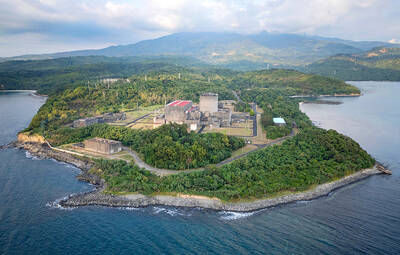
Nuclear power is getting a second look in Southeast Asia as countries prepare to meet surging energy demand as they vie for artificial intelligence-focused data centers. Several Southeast Asian nations are reviving mothballed nuclear plans and setting ambitious targets and nearly half of the region could, if they pursue those goals, have nuclear energy in the 2030s. Even countries without current plans have signaled their interest. Southeast Asia has never produced a single watt of nuclear energy, despite long-held atomic ambitions. But that may soon change as pressure mounts to reduce emissions that contribute to climate change, while meeting growing power needs. The
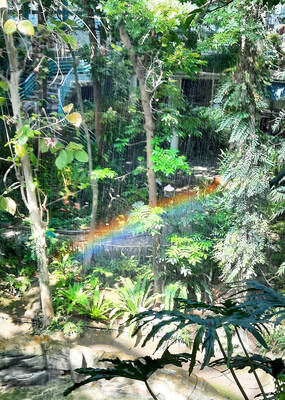
It’s only half the size of its more famous counterpart in Taipei, but the Botanical Garden of the National Museum of Nature Science (NMNS, 國立自然科學博物館植物園) is surely one of urban Taiwan’s most inviting green spaces. Covering 4.5 hectares immediately northeast of the government-run museum in Taichung’s North District (北區), the garden features more than 700 plant species, many of which are labeled in Chinese but not in English. Since its establishment in 1999, the site’s managers have done their best to replicate a number of native ecosystems, dividing the site into eight areas. The name of the Coral Atoll Zone might


 RSS
RSS