


Actor Lee Kang-sheng (李康生), muse to filmmaker Tsai Ming-liang (蔡明亮) for more than a decade, returns to the director's chair five years after his debut feature The Missing (不見). Adhering to his mentor's brand of cinema, Help Me Eros (幫幫我愛神) reflects on the anomie engendered by consumer culture through a kinky hodgepodge of sex, food, marijuana and betel nut beauties.
At the center of the modern fable lies Ah Jie (played by Lee), who, after losing all his money on the stock market, seeks relief by smoking joints rolled from the marijuana plants he grows in the wardrobe in his repossessed apartment. He calls a help line every once in a while to look for comfort from Chyi (Liao Hui-chen, 廖慧珍), a volunteer counselor whose fleshy figure remains hidden on the other side of the line.
When Ah Jie isn't stalking an attractive young woman he thinks is Chyi, he is sexually engaged with Shin (Yin Shin, 尹馨), a new girl working at the betel nut stand near his apartment. The erotic and psychedelic trips soon involve four other scantily clad betel nut girls (played by the F4 girls) in a series of sexual antics.

PHOTO: COURTESY OF HOME GREEN FILMS
Meanwhile, the real Chyi isn't having the time of her life either, trapped in a marriage with a gay TV cooking show host (Dennis Nieh, 聶雲), who has fattened her up with gourmet food.
Ah Jie sells everything he has left to play the lottery, but loses. When Shin walks out on him, he makes a last call to the help line wondering if he is beyond redemption.
The televised image of a trout being prepared and eaten alive in the cooking show opens the film and sets the tone. Striking visuals drive the loosely woven tale of the societal vices with a rich personal tang. Images - designer brand logos projected onto the group-sex hedonists, lottery tickets raining down on the street where hopes and dreams wane - are bold, straightforward and deliver the message with a vulgar charm, though they sometimes run the risk of pushing the film into languid self-indulgence.
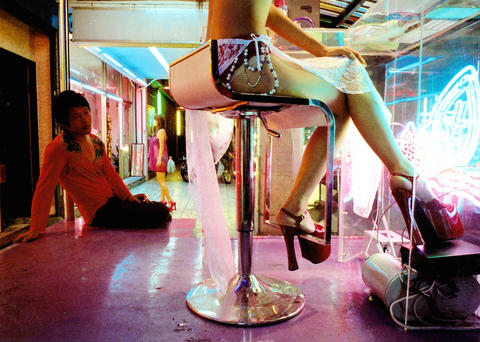
PHOTO: COURTESY OF HOME GREEN FILMS
One of these indulgences, which the film takes pride in, is pot smoking. Marijuana is the source of redemption in the lost man's sealed heaven. One of the film's few humorous moments involves Ah Jie reciting passages from the bible to his precious plants.
Sex, or the empty simulation of eroticism to be exact, is another obsession. Whether it is the sexual acrobatics performed at length or a nude woman sharing the bathtub with a bunch of eels, the visuals intrigue but lack emotional depth. The constant sense of anomie and hokey sexiness gnaw away at the characters' psychological intensity, leaving the film as emotionally void as its protagonists.
The presence of the director's mentor, Tsai, is vividly felt in the film not only as executive producer and production designer but also in the film's content and style. Minimalism, a slow pace and fixation on certain themes (sex) comprise are the aesthetics franchised by Tsai to tell a familiar tale of despair in the contemporary world. Though lacking Tsai's subtlety, poignancy and composition, Lee's raw poetry is expected to score well among the adherents of Tsai-esque cinema.

PHOTO: COURTESY OF HOME GREEN FILMS
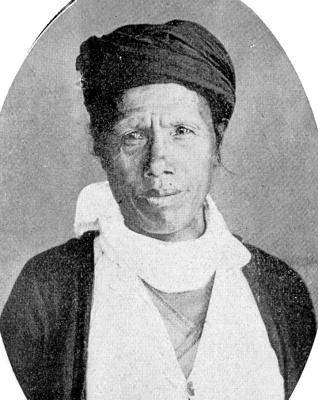
May 11 to May 17 Traversing the southern slopes of the Yushan Range in 1931, Japanese naturalist Tadao Kano knew he was approaching the last swath of Taiwan still beyond colonial control. The “vast, unknown territory,” protected by the “fierce” Bunun headman Dahu Ali, was “filled with an utterly endless jungle that choked the mountains and valleys,” Kano wrote. He noted how the group had “refused to submit to the measures of our authorities and entrenched themselves deep in these mountains … living a free existence spent chasing deer in the morning and seeking serow in the evening,” even describing them as

As a different column was being written, the big news dropped that Chinese Nationalist Party (KMT) caucus whip Fu Kun-chi (傅?萁) announced that negotiations within his caucus, with legislative speaker Han Kuo-yu (韓國瑜) of the KMT, party Chair Cheng Li-wun (鄭麗文), Taichung Mayor Lu Shiow-yen (盧秀燕) and Taiwan People’s Party (TPP) Chair Huang Kuo-chang (黃國昌) had produced a compromise special military budget proposal. On Thursday morning, prior to meeting with Cheng over a lunch of beef noodles, Lu reiterated her support for a budget of NT$800 or NT$900 billion — but refused to comment after the meeting. Right after Fu’s

Yesterday, the Democratic Progressive Party (DPP) nominated legislator Puma Shen (沈伯洋) as their Taipei mayoral candidate, the Chinese Nationalist Party (KMT) put their stamp of approval on Wei Ping-cheng (魏平政) as their candidate for Changhua County commissioner and former legislator Tsai Pi-ru (蔡壁如) of the Taiwan People’s Party (TPP) has begun the process to also run in Changhua, though she has not yet been formally nominated. All three news items are bizarre. The DPP has struggled with settling on a Taipei nominee. The only candidate who declared interest was Enoch Wu (吳怡農), but the party seemed determined to nominate anyone
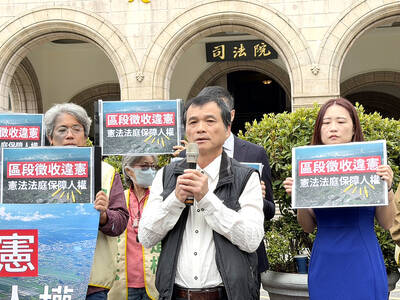
What government project has expropriated the most land in Taiwan? According to local media reports, it is the Taoyuan Aerotropolis, eating 2,500 hectares of land in its first phase, with more to come. Forty thousand people are expected to be displaced by the project. Naturally that enormous land grab is generating powerful pushback. Last week Chen Chien-ho (陳健和), a local resident of Jhuwei Borough (竹圍) in Taoyuan City’s Dayuan District (大園) filed a petition for constitutional review of the project after losing his case at the Taipei Administrative Court. The Administrative Court found in favor of nine other local landowners, but


 RSS
RSS