


A survey by the Bureau of Food Safety found that 43 percent of lunchboxes sold by restaurants, stalls and convenience stores exceeded the Department of Health's recommendation for calorie intake per meal.
The department advises 700 Calories to 900 Calories per meal. Each meal should have 1.5 servings of vegetables.
The lunchbox survey included 16 samples from lunchbox chains and convenience stores in Taipei's Songshan District (松山). The bureau did not comment on the validity of a survey with only 16 samples.
The bureau found that 70 percent of the lunchboxes contained too much oil. Sixty percent contained a surplus of protein-rich food, while none included the recommended quantity of vegetables.
In terms of staple foods such as rice and noodles, all of the lunchboxes met the department's recommended serving size.
The survey was conducted as part of the department's "Challenge 1824" campaign. The number 1824 refers to body mass index (BMI), which should fall between 18 and 24.
The department asked nutritionists to select three of the healthier lunchboxes sampled to illustrate the need to limit oil and calorie intake and eat enough vegetables.
Huang Ya-huei (黃雅惠), a nutritionist at Taipei City Hospital, encouraged people to adopt a diet appropriate for their lifestyle.
Adults who sit in an office for long periods of time each day should consider cutting the amount of rice or noodles they consume, she said.
For those who spend a lot of time staring at a computer screen, Huang advised eating plenty of dark-green vegetables rich in vitamin A.
For those working under high pressure, Huang said eating extra servings of vegetables each day would help the body cope with stress and avoid constipation.
Huang recommended that consumers vary the lunchboxes they eat to keep a balanced diet. She also recommended avoiding lunchboxes with finely chopped vegetables, because they tend to absorb more oil.
Those aspiring to eat a healthy diet should also avoid deep-fried food and remove the skin of the meat when possible, she said.
Huang recommended adding a fresh salad, cucumber or fruit as a side dish with meals.
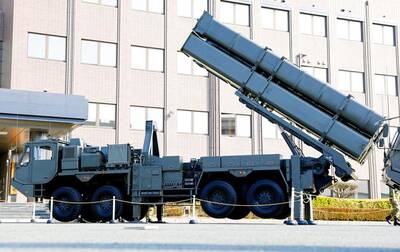
Japan has deployed long-range missiles in a southwestern region near China, the Japanese defense minister said yesterday, at a time when ties with Beijing are at their lowest in recent years. The missiles were installed in Kumamoto in the southern region of Kyushu, as Japan is attempting to shore up its military capacity as China steps up naval activity in the East China Sea. “Standoff defense capabilities enable us to counter the threat of enemy forces attempting to invade our country ... while ensuring the safety of our personnel,” Japanese Minister of Defense Shinjiro Koizumi said. “This is an extremely important initiative for

The nation’s fastest supercomputer, Nano 4 (晶創26), is scheduled to be launched in the third quarter, and would be used to train large language models in finance and national defense sectors, the National Center for High-Performance Computing (NCHC) said. The supercomputer, which would operate at about 86.05 petaflops, is being tested at a new cloud computing center in the Southern Taiwan Science Park in Tainan. The exterior of the server cabinet features chip circuitry patterns overlaid with a map of Taiwan, highlighting the nation’s central position in the semiconductor industry. The center also houses Taiwania 2, Taiwania 3, Forerunner 1 and
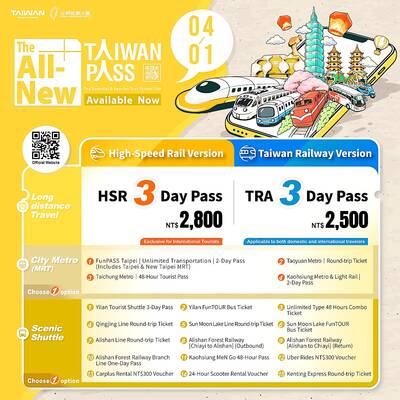
MORE POPULAR: Taiwan Pass sales increased by 59 percent during the first quarter compared with the same period last year, the Tourism Administration said The Tourism Administration yesterday said that it has streamlined the Taiwan Pass, with two versions available for purchase beginning today. The tourism agency has made the pass available to international tourists since 2024, allowing them to access the high-speed rail, Taiwan Railway Corp services, four MRT systems and four Taiwan Tourist Shuttles. Previously, five types of Taiwan Pass were available, but some tourists have said that the offerings were too complicated. The agency said only two types of Taiwan Pass would be available, starting from a three-day pass with the high-speed rail and a three-day pass with Taiwan Railway Corp. The former costs NT$2,800
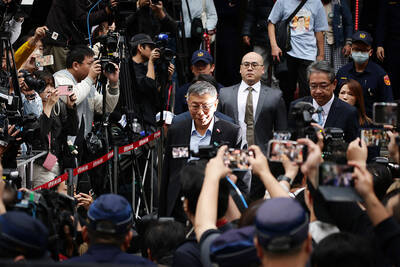
FIRST TRIAL: Ko’s lawyers sought reduced bail and other concessions, as did other defendants, but the bail judge denied their requests, citing the severity of the sentences Former Taipei mayor Ko Wen-je (柯文哲) was yesterday sentenced to 17 years in prison and had his civil rights suspended for six years over corruption, embezzlement and other charges. Taipei prosecutors in December last year asked the Taipei District Court for a combined 28-year, six-month sentence for the four cases against Ko, who founded the Taiwan People’s Party (TPP). The cases were linked to the Core Pacific City (京華城購物中心) redevelopment project and the mismanagement of political donations. Other defendants convicted on separate charges included Chinese Nationalist Party (KMT) Taipei City Councilor Angela Ying (應曉薇), who was handed a 15-year, six-month sentence; Core Pacific


 RSS
RSS