


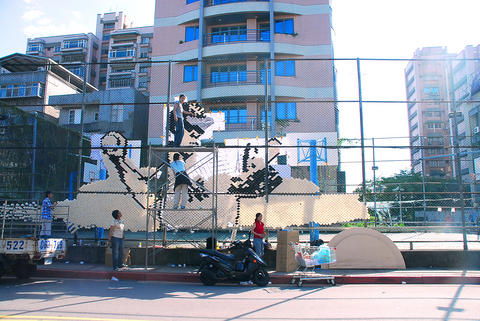
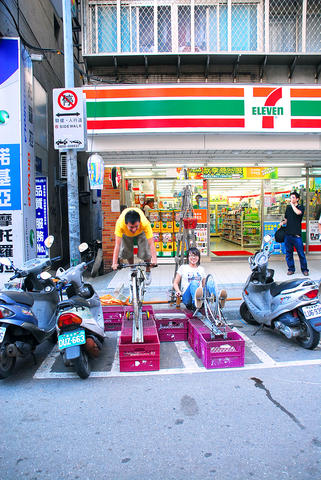
Walking around the Mingde (明德) MRT station or National Taiwan University campus (國立台灣大學), you might notice a strange trend in unused, public spaces near 7-Elevens. Along Dingzhou Road (汀州路), there is a posterized image of baseball hero Wang Jian-ming (王建明), for example. It is made from paper cups inserted in a wire fence; further down, motorcycle parking spaces have been blocked off with milk crates and contraptions made from disused bicycles adorn the sidewalk.
"You're not really meant to see them until you come upon them," said Tseng Wei (曾瑋), an architect from Taichung who also teaches at the College of Design at the Shih Chien University (實踐大學). "It is supposed to inspire a new way of looking at how urban space can be used." There is a handbook hanging from a nearby signpost describing how the sculptures, which look like dangerous gym equipment, can be used.
This installation is one of eight that is part of a project called 7-Eleven City: Poetry, Architecture, New Communities, funded in part by the President Chain Store Corp (統一超商) - parent company of 7-Eleven. The project teamed four foreign and four local architects with eight poets to create eight installations. Part of the challenge was that although the individual 7-Eleven stores which serve as markers for the installations were all participants, architects had to liaise with the community as well.
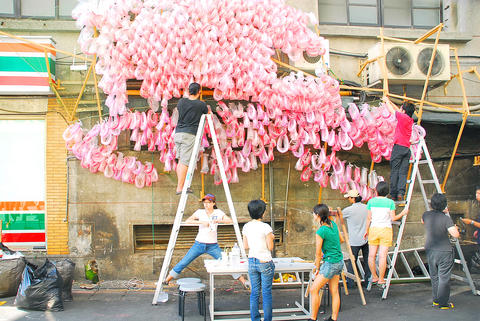
PHOTOS: COURTESY OF SHIH CHIEN UNIVERSITY
Information about the location of the eight projects can be found in participating 7-Eleven stores. Installations are meant to remain in place until next weekend, but some are likely to fall victim to the elements or local residents.
Circle of Hope, just outside Mingde MRT station, created from massive blocks of ice by Taipei architect Lien Hao-yen (連浩延), unsurprisingly did not survive the first day.
Marco Casagrande, a Helsinki-based architect who is currently a visiting professor at Tamkang University (淡江大學), found that his Finnish sauna was not uniformly appreciated by local residents. There were complaints about the smoke from the wood fire.
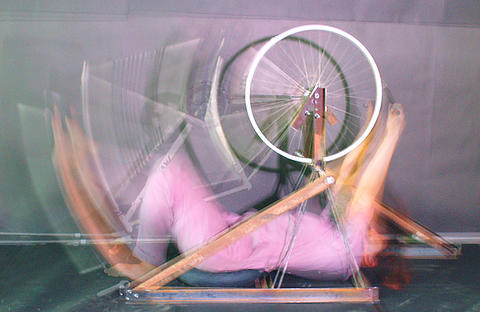
"The project raised issues of how we perceive public space," said Ruan Ching-yue (阮慶岳), one of the project's organizers. An army of scarecrows that stand half-hidden on Wenzhou Street (溫州街) required permission from local shop owners. "People here are always willing to go for it," Casagrande said. "I think there would be much more resistance in the US or Europe to a project like this."
For Beijing-based architect Wang Yun (王昀), it is the multiplicity of networks in which we now live that gave interest to the project. "7-Elevens are everywhere, and form a network which we negotiate when moving through the community. Mobile phones are another. Internet another. There are layers of networks which we are negotiating constantly. A project like this helps architecture students and the public become more aware of the networks in which they are enmeshed."
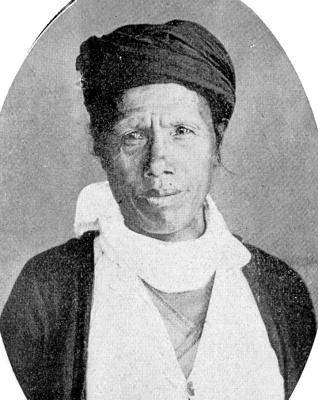
May 11 to May 17 Traversing the southern slopes of the Yushan Range in 1931, Japanese naturalist Tadao Kano knew he was approaching the last swath of Taiwan still beyond colonial control. The “vast, unknown territory,” protected by the “fierce” Bunun headman Dahu Ali, was “filled with an utterly endless jungle that choked the mountains and valleys,” Kano wrote. He noted how the group had “refused to submit to the measures of our authorities and entrenched themselves deep in these mountains … living a free existence spent chasing deer in the morning and seeking serow in the evening,” even describing them as
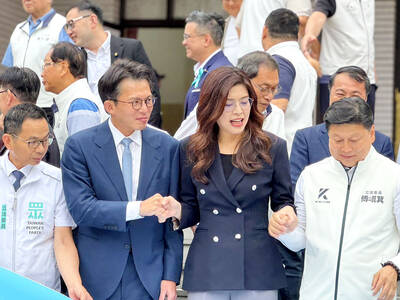
As a different column was being written, the big news dropped that Chinese Nationalist Party (KMT) caucus whip Fu Kun-chi (傅?萁) announced that negotiations within his caucus, with legislative speaker Han Kuo-yu (韓國瑜) of the KMT, party Chair Cheng Li-wun (鄭麗文), Taichung Mayor Lu Shiow-yen (盧秀燕) and Taiwan People’s Party (TPP) Chair Huang Kuo-chang (黃國昌) had produced a compromise special military budget proposal. On Thursday morning, prior to meeting with Cheng over a lunch of beef noodles, Lu reiterated her support for a budget of NT$800 or NT$900 billion — but refused to comment after the meeting. Right after Fu’s

Yesterday, the Democratic Progressive Party (DPP) nominated legislator Puma Shen (沈伯洋) as their Taipei mayoral candidate, the Chinese Nationalist Party (KMT) put their stamp of approval on Wei Ping-cheng (魏平政) as their candidate for Changhua County commissioner and former legislator Tsai Pi-ru (蔡壁如) of the Taiwan People’s Party (TPP) has begun the process to also run in Changhua, though she has not yet been formally nominated. All three news items are bizarre. The DPP has struggled with settling on a Taipei nominee. The only candidate who declared interest was Enoch Wu (吳怡農), but the party seemed determined to nominate anyone
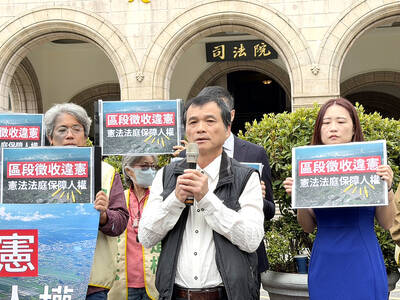
What government project has expropriated the most land in Taiwan? According to local media reports, it is the Taoyuan Aerotropolis, eating 2,500 hectares of land in its first phase, with more to come. Forty thousand people are expected to be displaced by the project. Naturally that enormous land grab is generating powerful pushback. Last week Chen Chien-ho (陳健和), a local resident of Jhuwei Borough (竹圍) in Taoyuan City’s Dayuan District (大園) filed a petition for constitutional review of the project after losing his case at the Taipei Administrative Court. The Administrative Court found in favor of nine other local landowners, but


 RSS
RSS