


The narrator of An Arsonist's Guide to Writers' Homes in New England is an accidental firebug "with blood and soot on his hands."
He committed the unspeakable crime of burning down Emily Dickinson's house. Thus, he threw Amherst, Massachusetts, into turmoil, not only because he violated the legacy of the college town's cherished literary Belle but also because he killed "two of its loafered citizens" in the process.
His name, Sam Pulsifer, is redolent of both pusillanimity and Lucifer. But the actual Sam is too mousy and naive for either. He would have fared better in life had he been less dimwitted, "like a child, only bigger" in the opinion of one of his smarter acquaintances. But he wouldn't have been as wildly, unpredictably funny. And the hilarity of Sam's narrative voice is fine compensation for its apparent idiocy.
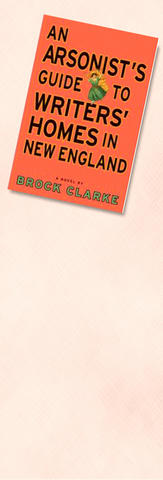
An Arsonist's Guide to Writers' Homes in New England is as cheerfully oddball as its title. Its cover art includes a tiny cartoon sketch of a green-frocked literary lioness garlanded in flames, and that captures the irreverence of the author, Brock Clarke's, enterprise. Although it is his fourth book, it feels like the bright debut of an ingeniously arch humorist, one whose hallmark is a calm approach to insanely improbable behavior.
"I could think of no bigger betrayal than a wife's changing the locks on her husband," thinks an aggrieved Sam, "just as long as I didn't think about my burning and killing and then lying about it."
Clarke's premise gives him an immediate problem to solve. If Sam really torched a treasured landmark and killed people, then served 10 years in prison by the time this story begins, what kind of monster is he? In order to treat this character as a lovable marshmallow, as well as an occasionally inspired literary satirist, Clarke must figure out how to sustain this novel's sunny atmosphere without having to justify heinous violence.
So it gradually develops that Sam didn't exactly mean to incinerate anything or hurt anyone. It happened to him as accidentally as everything else in his life occurs, amid the cloud of bewilderment that follows him everywhere.
Sam never meant to become a serial arsonist. It's just that the Dickinson fire brought forth a barrage of strange correspondence. Sam predictably prompted the rage of scholars, even if their fury failed to impress him. "There is something underwhelming," he writes, " about scholarly hate mail - the sad literary allusions, the refusal to use contractions - so I didn't pay much attention to those letters at all." But Sam also got dozens of letters from angry lunatics requesting that he burn down more writers' homes.
Here too Clarke must be careful. His book's craziness must stay jokey. It gets no crazier than the man who wants Ralph Waldo Emerson's house destroyed to avenge his parents' naming him Waldo. So Sam has no plans to fulfill his fans' requests. He prefers a safer course. After prison he went to college to major in packaging science, which comes in handy whenever he wants to use a Ziploc bag or a mayonnaise jar as a metaphor during this narrative.
He met a woman named Anne Marie. He invited her to have dinner. ("'With you?' she asked.") Then he married her and took up the life of a suburban father. As the book begins, he lives on Hyannisport Drive in a subdivision called Camelot, a place so quiet on weekdays that "you couldn't clip your toenails on your front porch without fear of bothering someone with the noise." Sam accurately surmises that despite Camelot's proximity to Amherst, the two are worlds apart, and nobody cares about Emily Dickinson in a place like this.
Soon Clarke has indulged his slightly condescending screwball tendencies to the point where this comic novel is in overdrive. Sam has an angry stalker, the son of the loafered couple who perished in the Dickinson fire. Sam becomes a suspect when other New England writers' homes begin to burn. And he is dogged by the overweening ambition of his prison buddies, a bunch of bond analysts eager to write best-selling memoirs even though they don't have anything interesting to remember.
When this leads Sam to open his wide, dewy eyes to the present-day literary world, he finds that the memoir is "like the Soviet Union of literature, having mostly gobbled up the smaller, obsolete states of fiction and poetry." He finds this truly baffling: "Who knew that there were so many people with so many necessary things to say about themselves?" He wonders how a newspaper reporter from upstate New York can begin a book with the line "I was working as a newspaper reporter in upstate New York."
Even as Sam begins collecting insights for a book of his own, the Arsonist's Guide of Clarke's title, he runs headlong into practitioners of other literary genres. The parodies here are priceless, particularly the grim, depressive, snowbound story of a lonely and miserable man, one that instantly brings to mind Russell Banks' Affliction.
Clarke sets this part of the book in bleakest New Hampshire, so that Sam can feel sorry for the houses for "having to be compared to the white snow and failing so completely." This frozen setting also allows him to express a long-smoldering schoolboy hatred of Edith Wharton's Ethan Frome.
Eventually over-plotted to the point of overkill, An Arsonist's Guide to Writers' Homes in New England (Miriam Levine's real guidebook has the same title, absent the arson) still manages to remain sharp-edged and unpredictable, punctuated by moments of choice absurdist humor. At the home of Edward Bellamy, the author of Looking Backward, Sam notes: "It was very, very pretty. You wouldn't have noticed anything was wrong with it except that it was ringed by yellow police tape, and there were some faint black singe marks near the foundation."
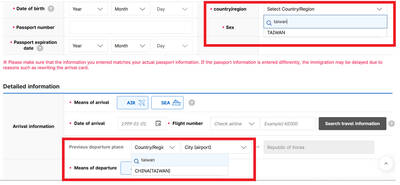
Jason Han says that the e-arrival card spat between South Korea and Taiwan shows that Seoul is signaling adherence to its “one-China” policy, while Taiwan’s response reflects a reciprocal approach. “Attempts to alter the diplomatic status quo often lead to tit-for-tat responses,” the analyst on international affairs tells the Taipei Times, adding that Taiwan may become more cautious in its dealings with South Korea going forward. Taipei has called on Seoul to correct its electronic entry system, which currently lists Taiwan as “China (Taiwan),” warning that reciprocal measures may follow if the wording is not changed before March 31. As of yesterday,
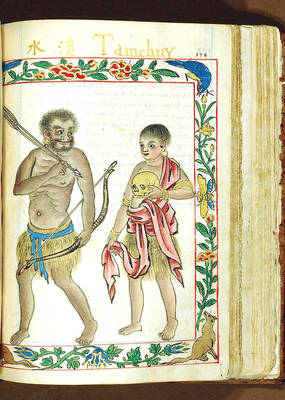
The Portuguese never established a presence on Taiwan, but they must have traded with the indigenous people because later traders reported that the locals referred to parts of deer using Portuguese words. What goods might the Portuguese have offered their indigenous trade partners? Among them must have been slaves, for the Portuguese dealt slaves across Asia. Though we often speak of “Portuguese” ships, imagining them as picturesque vessels manned by pointy-bearded Iberians, in Asia Portuguese shipping between local destinations was crewed by Asian seamen, with a handful of white or Eurasian officers. “Even the great carracks of 1,000-2,000 tons which plied
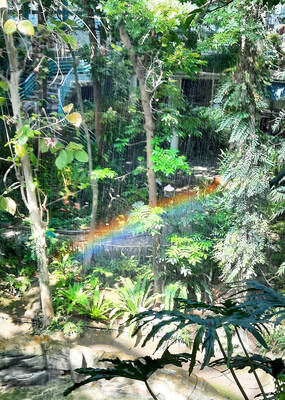
It’s only half the size of its more famous counterpart in Taipei, but the Botanical Garden of the National Museum of Nature Science (NMNS, 國立自然科學博物館植物園) is surely one of urban Taiwan’s most inviting green spaces. Covering 4.5 hectares immediately northeast of the government-run museum in Taichung’s North District (北區), the garden features more than 700 plant species, many of which are labeled in Chinese but not in English. Since its establishment in 1999, the site’s managers have done their best to replicate a number of native ecosystems, dividing the site into eight areas. The name of the Coral Atoll Zone might
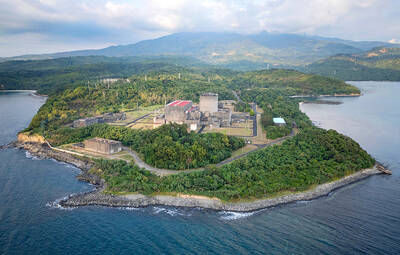
Nuclear power is getting a second look in Southeast Asia as countries prepare to meet surging energy demand as they vie for artificial intelligence-focused data centers. Several Southeast Asian nations are reviving mothballed nuclear plans and setting ambitious targets and nearly half of the region could, if they pursue those goals, have nuclear energy in the 2030s. Even countries without current plans have signaled their interest. Southeast Asia has never produced a single watt of nuclear energy, despite long-held atomic ambitions. But that may soon change as pressure mounts to reduce emissions that contribute to climate change, while meeting growing power needs. The


 RSS
RSS