


The Million Star Gang (星光幫) has dominated gossip rags for months now, and Pop Stop has been nothing if not indefatigable in following the group's struggle to stay fresh. The motley crew has taken publicity stunts to a new melodramatic level and now, in the latest installment, gang leader Aska Yang (楊宗緯) is being portrayed as a prince charming, involved in a love triangle with a gay twist, involving members Sharon Li (李宣榕) and Peter Pan (潘裕文).
After taking a trip together to Hong Kong and Shanghai last week, Yang and Li appeared to be showbiz's latest item. The couple wined, dined, shopped, went sightseeing and was tailed by hordes of tabloid reporters during what looked like a vacation the late Princess Diana would have been proud of. Savvy members of the press pack didn't buy the story of innocent love, however, and suggested that Yang was using Li as a "beard," to cover up his infatuation with Pan, who reportedly snapped over the insinuation.
Yang flew into a press feeding frenzy when he returned to Taipei last Friday and after failing to shake off his pursuers, the star invited reporters for a group talk on the playground at Yuan Ze University (元智大學), Jhongli (中壢).
Yang's tactic, apparently, was to talk the reporters to death with endless gripes and moans.
According to a private ranking compiled by the Chinese-language Liberty Times (the Taipei Times' sister newspaper), Jay Chou (周杰倫) won first place as local tabloid reporters' worst nightmare for his drifting interview technique and collection of 10 speedy cars.
Chou's rival in the speed stakes is local actor and professional race car driver Jimmy Lin (林志穎). The self-dubbed Michael Schumacher of the Chinese-speaking entertainment firmament, Lin once boasted that paparazzi would have to buy a racer and hire a professional driver before they could even think of having him tailed.
Hong Kong's Aaron Kwok (郭富城) came in third for his five Ferraris and three Lamborghinis. It is said that whenever there is a belle in one of Kwok's cars, the chances of the far less well-equipped paparazzi catching up to the star's taillight is extremely slim.
On a melancholy note, ABT pop star Wang Lee-hom (王力宏) is suspected to be suffering from depression after canceling 20 publicity events, six album-signing gatherings and one nearly sold-out concert. Even veteran gossipmongers are lost for a cause of Wang's woes as his career has been on a stratospheric trajectory of late.
The star's agent issued a statement denying the speculation, and emphasized that while Wang did go to the hospital, he visited the shenching (神經), or neurosurgery, department for severe back problems, and not the chingshen (精神), or psychiatry department.
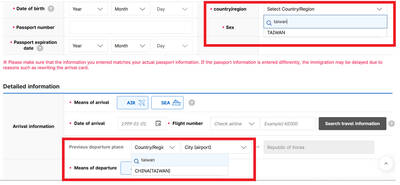
Jason Han says that the e-arrival card spat between South Korea and Taiwan shows that Seoul is signaling adherence to its “one-China” policy, while Taiwan’s response reflects a reciprocal approach. “Attempts to alter the diplomatic status quo often lead to tit-for-tat responses,” the analyst on international affairs tells the Taipei Times, adding that Taiwan may become more cautious in its dealings with South Korea going forward. Taipei has called on Seoul to correct its electronic entry system, which currently lists Taiwan as “China (Taiwan),” warning that reciprocal measures may follow if the wording is not changed before March 31. As of yesterday,
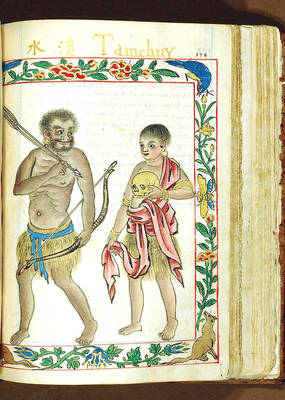
The Portuguese never established a presence on Taiwan, but they must have traded with the indigenous people because later traders reported that the locals referred to parts of deer using Portuguese words. What goods might the Portuguese have offered their indigenous trade partners? Among them must have been slaves, for the Portuguese dealt slaves across Asia. Though we often speak of “Portuguese” ships, imagining them as picturesque vessels manned by pointy-bearded Iberians, in Asia Portuguese shipping between local destinations was crewed by Asian seamen, with a handful of white or Eurasian officers. “Even the great carracks of 1,000-2,000 tons which plied
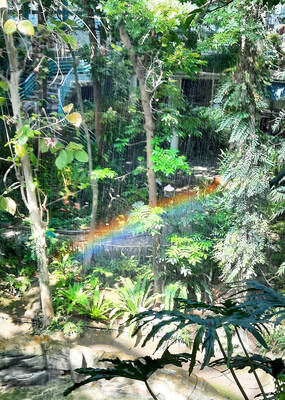
It’s only half the size of its more famous counterpart in Taipei, but the Botanical Garden of the National Museum of Nature Science (NMNS, 國立自然科學博物館植物園) is surely one of urban Taiwan’s most inviting green spaces. Covering 4.5 hectares immediately northeast of the government-run museum in Taichung’s North District (北區), the garden features more than 700 plant species, many of which are labeled in Chinese but not in English. Since its establishment in 1999, the site’s managers have done their best to replicate a number of native ecosystems, dividing the site into eight areas. The name of the Coral Atoll Zone might
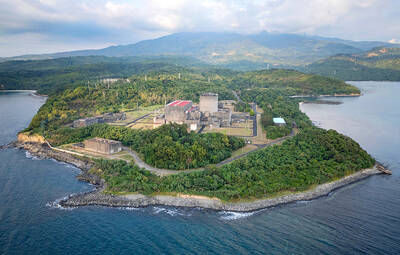
Nuclear power is getting a second look in Southeast Asia as countries prepare to meet surging energy demand as they vie for artificial intelligence-focused data centers. Several Southeast Asian nations are reviving mothballed nuclear plans and setting ambitious targets and nearly half of the region could, if they pursue those goals, have nuclear energy in the 2030s. Even countries without current plans have signaled their interest. Southeast Asia has never produced a single watt of nuclear energy, despite long-held atomic ambitions. But that may soon change as pressure mounts to reduce emissions that contribute to climate change, while meeting growing power needs. The


 RSS
RSS