


As a supermodel in the 1980s, Isabella Rossellini appeared on 28 covers of Vogue, nine of them photographed by Richard Avedon. Then, in 1986, she brilliantly subverted her chic image by playing the sadomasochistic lounge singer in Blue Velvet. The role launched an avant-garde screen career that proved there was more to Rossellini than a beautiful face — or her relationships with directors Martin Scorsese and David Lynch. But it is as the daughter of Ingrid Bergman and Roberto Rossellini that she is still, perhaps, most famous.
It's a fate she readily embraces. Now 54, Rossellini is the devoted gatekeeper of her parents' celluloid legacy. In the past year, she has lovingly promoted her father's centenary via a book about their relationship — In the Name of the Father, the Daughter and the Holy Spirits — and a short film, My Dad Is 100 Years Old. On Sunday she introduced a retrospective season of the great Italian neo-realist's work in London. The films included in the season — from Rome, Open City and Stromboli to Viaggio in Italia — formed the backdrop to her parents' scandalous romance and troubled marriage.
Sitting in her Manhattan apartment, Rossellini is quick to admit that she has never pursued film acting with the same tenacity as did her mother. "I don't have that body of work she had," she says, "my successful career was in modeling, not film. I don't know whether it was because I started late or because Hollywood was closed to foreign actors by then, but I have never been a bankable actress."
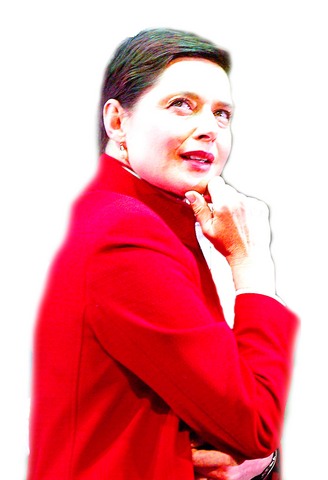
PHOTO: NY TIMES NEWS SERVICE
She has starred in landmark movies, notably David Lynch's Blue Velvet, but generally though she has sought out talented directors such as Vincente Minnelli, Peter Weir and John Schlesinger, she hasn't always appeared in their best films, or biggest roles. Her career has been patchy. "Mom's bankability meant she could command more of what she wanted to do," she says, "I think it's much clearer where she was going."
Where Ingrid Bergman was going in 1949 had momentous consequences for her career and her life. The previous spring she and her husband, Petter Lindstrom, had attended a Hollywood screening of Rossellini's Rome, Open City. Filmed in Roman locations and casting ordinary people alongside its stars, his stark, docudrama style was revelatory. In her 1972 autobiography, Bergman described the film as "heart-shocking. No one looked like an actor and no one talked like an actor. There was darkness and shadows, and sometimes you couldn't hear, and sometimes you couldn't even see it. But that's the way it is in life."
During the 1940s, Bergman had starred in Casablanca, For Whom the Bell Tolls, Joan of Arc, three Hitchcock thrillers — Spellbound, Notorious, and Under Capricorn — and seven other Hollywood features. She won an Oscar for her portrayal of the psychologically tortured niece in George Cukor's Gaslight. But it wasn't enough. After her Open City epiphany, she sent Rossellini a letter that has become part of movie lore: "If you need a Swedish actress who speaks English very well ... and who, in Italian knows only ti amo I am ready to come and make a film with you." The note was as calculatedly ambitious as Rossellini's avid reply, which offered Bergman the lead in Stromboli, the story of a war refugee who marries a Sicilian fisherman and finds herself trapped on the volcanic island where he lives. Bergman, whose affairs had been tolerated by Lindstrom, wanted to escape her marriage and Hollywood career. Rossellini wanted a star.
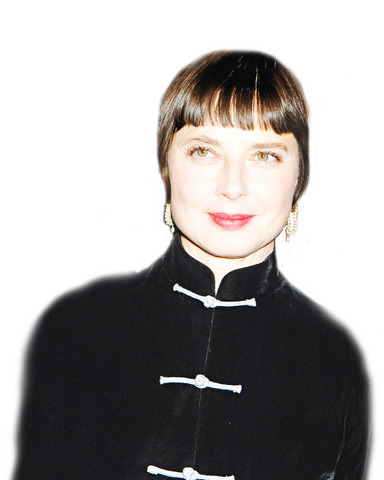
"I can't imagine my mother didn't love her success and the ability to do films like Casablanca," says Rossellini, "but there must have been a longing in her, otherwise she wouldn't have had an affair with Robert Capa and wouldn't have become a friend of Hemingway. I think when she saw Open City she saw the possibility of doing what she admired so profoundly in Capa and Hemingway, but with a film director.
"If you compare Capa's photography with my father's neo-realism, it is exactly the same. As an actor, she was an interpreter, so she needed an author to give her a voice. I think she was being funny, not coquettish, when she wrote the ti amo letter. I believe that when she wrote that letter she was thinking she could lend her fame so that my father's talent could find an international platform. That was the intention." Whatever her intention, almost as soon as Bergman arrived on set, she and Rossellini began a passionate romance. Before filming was over, she was pregnant. Bergman abandoned Lindstrom, and their 10-year-old daughter, Pia, giving birth to a son, Robertino, before she and Rossellini were married in 1950.
Their adulterous affair caused an international scandal. Pious American senators lambasted "the vile and unspeakable Rossellini" and called Bergman "a powerful influence for evil." The forces of self-righteousness weren't prepared to accept that the immensely popular Swedish star could so easily turn her back on the country that had made her.
In Rossellini's living room today, your eye is drawn immediately to Bergman's face on a huge framed poster for Europa '51, the second of the six films she made with Isabella's father. "When I see my father's films, I see his mind," Rossellini says, "when I see my mother in his films, I see a woman who's always so much younger than the mother I remember, because I wasn't even born when she did Europa '51 — she was pregnant with me and my sister at the time. I remember my mum looking like she did in [Ingmar Bergman's] Autumn Sonata in 1978. That for me is much harder to watch, though the voice of that youthful, beautiful Bergman is like a knife in my heart. That voice ... oh, it goes deep into me, because that younger look is not Mama's."
Bergman and Rossellini's masterpiece was Viaggio in Italia, about a repressed middle-class English couple whose marriage unravels on a trip to Naples. The desiccated husband — George Sanders — contemplates sleeping with some local women. The tense wife, played by Bergman, notices pregnant women and courting couples on the streets, and is shocked by the spectacle of ancient lovers entombed in a plaster mould at Pompeii. In its depiction of northern and southern European sensibilities, the film has been described as an autobiographical commentary on Bergman and Rossellini's own union. Their daughter demurs.
"I don't think that my father did what modern artists do when they use their own psychology to reveal themselves so that other people can identify with them," she says. "I think he was looking into the conflict between Mediterranean culture and Anglo-Saxon culture, which Mother brought so much closer to him at home. But I doubt he was making a revelation about his marriage." She points out that her father would never have maintained Sanders' reserve in a marital row: "He would have screamed."
Bergman and Rossellini's marriage, characterized by his attempts to control her career, ended with their separation in 1957 when Isabella was five. From then on, she grew up with her brother and twin sister Isotta in hotels and apartments, cared for by nannies and visited by their parents on weekends and holidays. This upbringing didn't make her resentful, however. In fact, it may even have fuelled her hero-worship of her father.
"Between the ages of five and eight, I lived in Paris, because my mother was there," she says. "Then we [she and her siblings] returned to Italy and lived in an apartment next door to my father, who had a new wife. So I would see my father much more than I would see my mother."
Rossellini is the mother of a daughter, Elettra Ingrid, whom she had with Jon Wiedemann, the former model to whom she was married from 1983 to 1986, and an adopted teenage son, Roberto. In her memoir of her father, she explains that Elettra was his mother's name, then draws attention to its deeper ramifications. "I had the Elettra complex, I may still have it. I loved my dad exaggeratedly. I never wanted to kill my mother. I loved her, but as a child I was definitely my dad's girl."
In My Dad Is 100 Years Old, the corpulent Roberto Rossellini is represented by an artificial belly even larger than the one Isabella fondly remembers lying on, while she herself plays Chaplin, David Selznick, Hitchcock, and Fellini, as well as her mother. Perhaps because Rossellini is an actor herself, being the daughter of the Casablanca star and the "father of neo-realism" has become more of a vocation for her than it has for her sister Isotta (known as Ingrid), a professor of Italian literature. Ingrid, who did not approve of her sister's film about their father, has said that neither of them had close contact with him, and that she, for one, never got to lie on his stomach. Whatever their dynamic, Rossellini has said that the day her father died in 1977 was the worst of her life.
More insight into Rossellini is likely to be gained from comparing her 1979-82 marriage to Martin Scorsese and her five-year relationship with David Lynch with her parents’ marriage. Asked if it was hard being involved with Scorsese or Lynch, Rossellini says it was “great — because they are exceptional people. Highly intelligent, funny, bubbling. But I think with each of them marriage and family was not the main thing. Probably the hard part for me was not counting so much as their first love, which is film, though I’m not saying they haven’t had other relationships where they made the woman the priority. Marriage, family and raising children definitely wasn’t my parents’ first love — it was their work. For me, my children are very important.”
There’s something poignant about the fact that Rossellini memorializes the work that kept her parents from her as a child but for her, it’s less personal obsession than public service.
“I had the example of my mother,” she says. “Once, when she was coming to the end of a show, I found her on stage, looking very sad and alone as she looked out at the darkness. ‘Why are you so sad?’ I said. And she said, ‘All this talent that was gathered to make this play, the director, the designers, the actors, and all this work we’ve done, it’s now going to dissipate. Theater is so ephemeral. Thank God for films, because something will remain.’
“This must have been in the late 70s, and she was wrong, because at that time there was little awareness that films would deteriorate unless they were rescued, and until recently there was no infrastructure to restore them. My effort to preserve my parents’ work is a commitment to the idea of film preservation.
“People say to me, ‘Why do you always talk about your dad?” Rossellini continues. “Most of the interviews I’ve given recently were about my dad because it was his centennial. But I champion my mother’s work, too. I’m already thinking of how to celebrate her centennial in 2015. Mother’s body of work is very unusual because it spans Hollywood, father’s films, Renoir, and Ingmar Bergman.”
Rossellini has written a script that she wants to direct, and remains busy as an actor, but the two characters she played for David Lynch — Dorothy Vallens in Blue Velvet and Perdita Durango in Wild at Heart — remain her favorites. “Dorothy was beautiful, crazy, and slightly fading, too,” she says. “I had it in mind that she was a sexual victim — because she had been ceremonially raped by the Dennis Hopper character — but one who was aware of her beauty and sexuality. She was mad, you know. Ambiguity is at the heart of what David does — you don’t know if something is funny or scary, sexy or horrifying. But I played Dorothy very clearly.”
Perdita, she says, was inspired by Frida Kahlo. “I was very taken with the iconic image of her as someone monkey-like, with her eyebrows and moustache. I told David that I would love to play a character who is attractive and repellent at the same time. When we did the make-up test, I tried to have a little moustache. David thought it was too much, but we left the single eyebrow and the blonde wig.”
More recently, Rossellini has embarked on a fruitful collaboration with Guy Maddin, whom she chose to direct My Dad Is 100 Years Old. The Canadian auteur, whose witty, melancholy films pay homage to silent cinema, first cast Rossellini in The Saddest Music in the World as a beer baroness and double amputee whose glass legs contain a sparkling amber brew. The character “was kind of written with Isabella in mind,” Maddin says. “It wasn’t that we smugly thought we’d get her, but we knew we stood a chance, because if you look at her filmography, it’s full of adventurous career choices.
“Just meeting her, I learned how many things she can be simultaneously — a wide-eyed little girl with daddy issues and a well-traveled super-sophisticate, and then she’s unbelievably raunchy at times,” Maddin adds. “I think it comes down to her belief that it’s important for her to be as honest as she can be. She thinks she’s being honest, I’ll put it that way. It’s almost a literary approach to pursuing the truth, and that involves being funny and sexy and clinical. She’d fit right into a men’s locker room. There’s something very charming about that.”
For all Rossellini’s frankness, Maddin says, “I’m not so sure she could tell you exactly what her quest is in pursuit of, and maybe it’s best that the things between her and her dad, or between her and both her parents, are wonderfully unresolvable.”
Rossellini says that if her parents were alive now and she could ask them anything, she’d readdress the autobiographical content of their work together. “I’d ask them how much of themselves they put in their films and how much of it was fictional, and what is the dividing line between the public and the private, what is important and what isn’t … . And they’d probably tell me everything is important.”

Jason Han says that the e-arrival card spat between South Korea and Taiwan shows that Seoul is signaling adherence to its “one-China” policy, while Taiwan’s response reflects a reciprocal approach. “Attempts to alter the diplomatic status quo often lead to tit-for-tat responses,” the analyst on international affairs tells the Taipei Times, adding that Taiwan may become more cautious in its dealings with South Korea going forward. Taipei has called on Seoul to correct its electronic entry system, which currently lists Taiwan as “China (Taiwan),” warning that reciprocal measures may follow if the wording is not changed before March 31. As of yesterday,
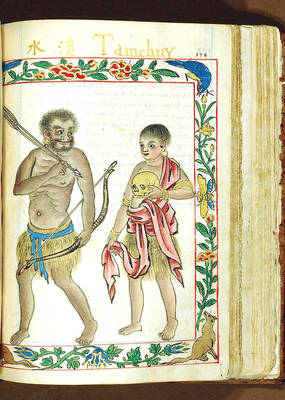
The Portuguese never established a presence on Taiwan, but they must have traded with the indigenous people because later traders reported that the locals referred to parts of deer using Portuguese words. What goods might the Portuguese have offered their indigenous trade partners? Among them must have been slaves, for the Portuguese dealt slaves across Asia. Though we often speak of “Portuguese” ships, imagining them as picturesque vessels manned by pointy-bearded Iberians, in Asia Portuguese shipping between local destinations was crewed by Asian seamen, with a handful of white or Eurasian officers. “Even the great carracks of 1,000-2,000 tons which plied

On Thursday, former Taipei mayor and founder of the Taiwan People’s Party (TPP) Ko Wen-je (柯文哲) was sentenced to 17 years in prison and had his civil rights suspended for six years over corruption, embezzlement and other charges. Seven others related to the case were also handed prison sentences, while two were found not guilty. It has been a bad week for the TPP. On Tuesday, prosecutors charged Chinese immigrant Xu Chunying (徐春鶯) with suspicion of taking part in Beijing-directed election interference. Xu has strong links to the TPP, which once offered her a party list legislator nomination. Tuesday also
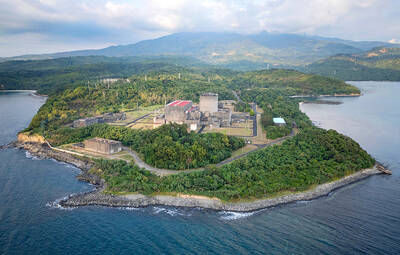
Nuclear power is getting a second look in Southeast Asia as countries prepare to meet surging energy demand as they vie for artificial intelligence-focused data centers. Several Southeast Asian nations are reviving mothballed nuclear plans and setting ambitious targets and nearly half of the region could, if they pursue those goals, have nuclear energy in the 2030s. Even countries without current plans have signaled their interest. Southeast Asia has never produced a single watt of nuclear energy, despite long-held atomic ambitions. But that may soon change as pressure mounts to reduce emissions that contribute to climate change, while meeting growing power needs. The


 RSS
RSS