


Taike (台客) returns to Taichung this weekend when Wu Bai (伍佰), A-mei (張惠妹) and a legion of other performers shake the stages at the TK Rock Concert (2007台客搖滾嘉年華) and show Taiwan just how tai they really are. Now in its third year, TK Rock has helped change terms like taike, and hen tai (很台), or "very tai," from ethnic slurs into badges that young Taiwanese wear with pride.
Many of the headliners who made the first two TK Rock shows a hit are returning for this weekend's fest, including rapper MC Hotdog, rock and hip-hop singer Chang Chen-yue (張震嶽) and his backing band Free Night, old-skool crooner Bobby Chen (陳昇), and alt-rock bands like WonFu (旺福) and The Chairman (董事長樂團). Also returning are the poll-dancing girls, who will be joined by cheerleaders, an extreme sports squad and temple dancers. There will be a street market offering a new season of taike fashions, stalls serving Taiwanese food and smaller stages for up-and-coming bands and the finalists of a rap contest. "TK Rock is a carnival of Taiwanese culture," said Ma Tien-tsung, (馬天宗), one of the festival's producers. "There's a lot more going on in Taiwan than just Taipei 101 or Warner Village, and this is the chance to see it."
The term taike was coined by immigrants who accompanied the Chinese Nationalist Party (KMT) as it fled China and reestablished itself in Taiwan. With China as their cultural touchstone, they saw Taiwan as "an island with no history" and looked down on native-born Taiwanese as low-class and uncultured.
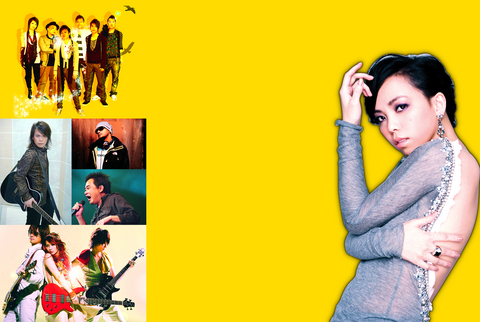
PHOTOS: NEURON INNOVATIONS
Referring to someone as taike, which literally means a "Taiwanese character," was the rough equivalent of calling someone a redneck, and the adjective tai was used to denigrate someone as low-class and provincial.
Taiwan's alternative music scene has long been home to bands like the Clippers (夾子) and LTK Commune (濁水溪公社) who embraced a kind of raw, unpolished Taiwanese identity and translated it into street credibility.
But it wasn't until 2005 that trendsetters gave the phenomena a name, taike, and began aggressively promoting it in the media, fashion and music.
That year saw the publication of a book, Call Me Tai Ke (Call Me 台客), and the devotion of an entire issue of the Eslite Reader (誠品好讀雜誌) to the subject. At a press conference promoting the first TK Rock Concert in Taipei, bad-boy rocker cum DJ cum rapper Chang Chen-yue was declared to be the "most" taike, while Wu Bai was declared the "craziest" taike. Fashion magazines said that taike meant embracing elements of Taiwan's working-class culture, such as chewing betel nuts, wearing flip-flops and gloriously tacky clothing and talking bluntly. In music, the standards were MC Hotdog and his hit song I Love TW Girls (我愛台妹), and a renewed appreciation of the quintessential Taiwanese rockers Wu Bai and Bobby Chen.
It was the perfect message for a youth audience that was increasingly proud of its Taiwanese identity. A recent survey by National Chengchi University, for example, found that 60 percent of the population identified themselves as "Taiwanese," compared to 20 percent in surveys conducted a decade ago.
MC Hotdog and Chang Chen-yue have been riding the taike wave ever since. Last year, the pair fronted a well-orchestrated media blitz in advance of the second TK Rock Concert. They appeared on talk shows and a co-released album titled Wake Up. The lyrics expounded on the beauty of taimei (台妹), meaning Taiwanese hot chicks, and ranked them — Shu Qi (舒淇) was No 1. and A-mei cracked the top five because of her colorful skirts. The buzz drew an estimated 30,000 people to the second TK Rock Concert, which was held in Taichung and featured an expanded lineup and added attractions like pole dancers.
Now everyone wants to be taike. This weekend's TK Rock Concert lineup includes artists like F.I.R., a group that was previously known as a copycat of a Japanese band, and the Australian-educated singer Faith Yang (楊乃文).
One of the trendsetters behind all of this, youth culture mogul Landy Chang (張培仁) of Neuron Innovations (中子創新), says taike is like the punk movement of the late 1970s. "It's like the early days of punk," Chang said in a phone interview Tuesday. "The word used to have a negative connotation, but now it's positive and is like a new passion."
Festival Notes:
What: 2007 TK Rock Concert
(2007台客搖滾嘉年華)
When: Tomorrow and Sunday from 6pm to 10pm
Where: Taichung Metropolitan Opera House (台中大都會歌劇院), which is behind the Mitsukoshi (新光三越) building and a block from the Tiger City (老虎城) mall
Tickets: NT$499 one-day and NT$950 two-day advance tickets can be purchased at 7-Eleven through iPhone and online at www.books.com.tw. One-day tickets will be available at the door for NT$699
On the Net: taik.streetvoice.com
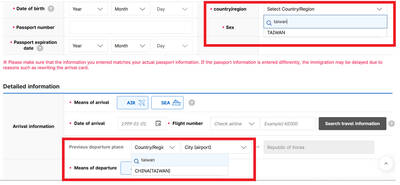
Jason Han says that the e-arrival card spat between South Korea and Taiwan shows that Seoul is signaling adherence to its “one-China” policy, while Taiwan’s response reflects a reciprocal approach. “Attempts to alter the diplomatic status quo often lead to tit-for-tat responses,” the analyst on international affairs tells the Taipei Times, adding that Taiwan may become more cautious in its dealings with South Korea going forward. Taipei has called on Seoul to correct its electronic entry system, which currently lists Taiwan as “China (Taiwan),” warning that reciprocal measures may follow if the wording is not changed before March 31. As of yesterday,
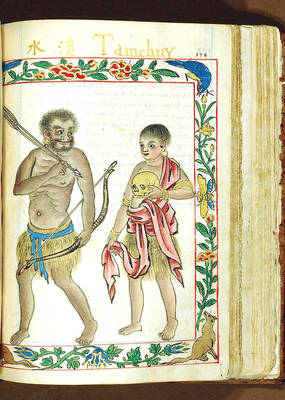
The Portuguese never established a presence on Taiwan, but they must have traded with the indigenous people because later traders reported that the locals referred to parts of deer using Portuguese words. What goods might the Portuguese have offered their indigenous trade partners? Among them must have been slaves, for the Portuguese dealt slaves across Asia. Though we often speak of “Portuguese” ships, imagining them as picturesque vessels manned by pointy-bearded Iberians, in Asia Portuguese shipping between local destinations was crewed by Asian seamen, with a handful of white or Eurasian officers. “Even the great carracks of 1,000-2,000 tons which plied
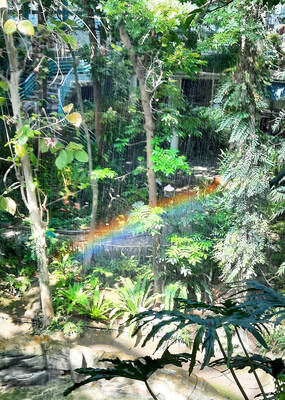
It’s only half the size of its more famous counterpart in Taipei, but the Botanical Garden of the National Museum of Nature Science (NMNS, 國立自然科學博物館植物園) is surely one of urban Taiwan’s most inviting green spaces. Covering 4.5 hectares immediately northeast of the government-run museum in Taichung’s North District (北區), the garden features more than 700 plant species, many of which are labeled in Chinese but not in English. Since its establishment in 1999, the site’s managers have done their best to replicate a number of native ecosystems, dividing the site into eight areas. The name of the Coral Atoll Zone might
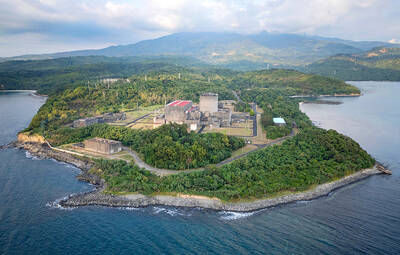
Nuclear power is getting a second look in Southeast Asia as countries prepare to meet surging energy demand as they vie for artificial intelligence-focused data centers. Several Southeast Asian nations are reviving mothballed nuclear plans and setting ambitious targets and nearly half of the region could, if they pursue those goals, have nuclear energy in the 2030s. Even countries without current plans have signaled their interest. Southeast Asia has never produced a single watt of nuclear energy, despite long-held atomic ambitions. But that may soon change as pressure mounts to reduce emissions that contribute to climate change, while meeting growing power needs. The


 RSS
RSS