


If idle hands are the devil's playthings, Warren Haynes is as angelic as they come.
The acclaimed US guitarist and songwriter logs most of his time in the bluesy power trio Gov't Mule. He also plays in the Allman Brothers Band, a group many credit him with revitalizing when he joined in 1989.
But wait: The Dead and Phil Lesh and Friends also claim Haynes as a member. He's released two well-received solo albums, co-written a No. 1 single with Garth Brooks, and popped up on records and stages with Dave Matthews Band, Kid Rock, Jason Newsted, Everlast, Vusi Mahlasela, Widespread Panic and many others. He also hosts the star-studded annual Christmas Jam benefit for Habitat for Humanity in his hometown of Asheville, North Carolina.

PHOTO: AP
"To be as busy as I've been for the past seven to eight years is great," said Haynes, 47. "I'd rather be that busy in several different environments as opposed to just one all the time. I'm able to utilize different aspects of my musicality in each one."
Haynes focuses these days on Gov't Mule. He's the perfect example of a multitasking musician because he works it to his advantage. He embodies a tradition of artists rotating projects to refresh their talent and inspiration, just as crop rotation keeps soil rich in nutrients.
Blues-rock guitar prodigy Derek Trucks, the nephew of Allman Brothers drummer Butch Trucks, also straddles projects, balancing his own band with touring stints (Eric Clapton, Allman Brothers Band) and session appearances with Bela Fleck and J.J. Cale. Incidentally, both Haynes and Trucks made it onto Rolling Stone magazine's 100 Greatest Guitarists of All Time.
"The kind of music we play is so improvisational that it's one of the hardest things to constantly reinvent," said Haynes of the hundreds of tunes in his repertoire. "Sometimes you've got to refresh yourself on a song you haven't done in awhile, but there's also something nice about getting away from it and being able to open yourself up to different interpretations."
All rock musicians multitask to a certain extent, frequently acting as engineers and sound mixers in the studio, business managers on the road and with their labels, and parents or spouses at home. Many hip-hop and dance producers are simultaneously guest stars, session rappers and solo artists (Missy Elliott, will.i.am., Timbaland, the Neptunes).
Canadian indie rock supergroups the New Pornographers or Broken Social Scene are perfectly stuffed with multitaskers (Neko Case, Dan Bejar, Emily Haines, Leslie Feist), and a look at any local music scene reveals its incestuousness.
But defining multitasking so broadly — as any musician with a band and solo career — ignores that special stripe: Those who do it because they need to, creatively or financially. Multitaskers are usually not megawatt superstars but working musicians. They're not, say, Beck, who likely would avoid uncredited guest appearances on albums. They aren't simply people who collaborate frequently, or who hooked up with younger artists for a career revitalization.
Multitaskers thrive on near-constant activity, playing at once in several projects and switching between them with buttery ease. Look at Jack White, whose frontman position with the White Stripes has in recent years taken a back seat to producing (Loretta Lynn) and more band-oriented projects (The Raconteurs).
Pragmatism accounts for some of it. Most musicians are quick to recognize the financial risks and personal rigors of playing professionally, so they do what they can to extract value from the down time between gigs.
But the benefit of dipping one's feet in other projects, even if anonymously or briefly, outweighs the chaos.
"When you play with different musicians it informs every project you're doing because you have to figure out ways to communicate differently," said Denver musician Duncan Barlow. "Everyone's ideas influence you."
Barlow fronts the Denver-based group D. Biddle and plays bass in post-punk trio Lion Sized. He also creates more experimental recordings under the moniker of (rye)zome and has sat in or toured with Porlolo, Hot IQs and Bad Weather California.
Barlow noted that the potential for burnout definitely exists.
"In the past I have spread myself too thin, playing in two or three bands that were always on tour or recording," said the 36-year-old English instructor at the University of Denver. "Now it's pretty even. I practice with my bands three times a week total, and each band has one to two shows per month."
Neil Keener, another Denver musician, splits his time between punk heroes Planes Mistaken for Stars, dark country rockers Red Cloud West, and the groups Git Some and Jefferson Slaveship. The cross-pollination of genres can result in wider audiences.
"Each situation brings fresh energy to the other and it similarly brings people from each audience that maybe aren't as familiar with the other," Haynes said. "Like when I did the 2004 Grateful Dead tour, or with (Phil) Lesh. Some of those fans maybe had not been exposed to my music or Gov't Mule's music prior to that."
Roots legend Taj Mahal, who played at Haynes' most recent Christmas Jam, thinks multitasking keeps musicians from getting pigeonholed.
"If you do one thing your whole life then everybody gets to know you from it, and they can't handle it when you do the other things," he said. "But if you come in doing a lot of other things, like Warren, people obviously pick up on it. The guy puts his money where his mouth is."
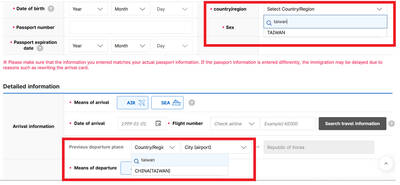
Jason Han says that the e-arrival card spat between South Korea and Taiwan shows that Seoul is signaling adherence to its “one-China” policy, while Taiwan’s response reflects a reciprocal approach. “Attempts to alter the diplomatic status quo often lead to tit-for-tat responses,” the analyst on international affairs tells the Taipei Times, adding that Taiwan may become more cautious in its dealings with South Korea going forward. Taipei has called on Seoul to correct its electronic entry system, which currently lists Taiwan as “China (Taiwan),” warning that reciprocal measures may follow if the wording is not changed before March 31. As of yesterday,
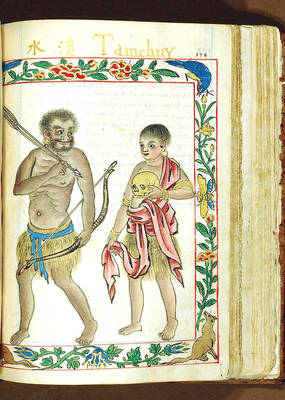
The Portuguese never established a presence on Taiwan, but they must have traded with the indigenous people because later traders reported that the locals referred to parts of deer using Portuguese words. What goods might the Portuguese have offered their indigenous trade partners? Among them must have been slaves, for the Portuguese dealt slaves across Asia. Though we often speak of “Portuguese” ships, imagining them as picturesque vessels manned by pointy-bearded Iberians, in Asia Portuguese shipping between local destinations was crewed by Asian seamen, with a handful of white or Eurasian officers. “Even the great carracks of 1,000-2,000 tons which plied

It’s only half the size of its more famous counterpart in Taipei, but the Botanical Garden of the National Museum of Nature Science (NMNS, 國立自然科學博物館植物園) is surely one of urban Taiwan’s most inviting green spaces. Covering 4.5 hectares immediately northeast of the government-run museum in Taichung’s North District (北區), the garden features more than 700 plant species, many of which are labeled in Chinese but not in English. Since its establishment in 1999, the site’s managers have done their best to replicate a number of native ecosystems, dividing the site into eight areas. The name of the Coral Atoll Zone might
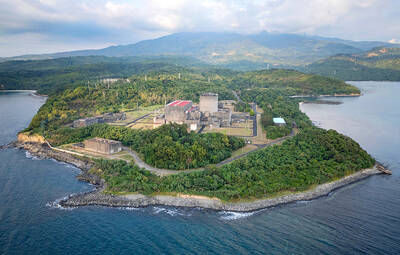
Nuclear power is getting a second look in Southeast Asia as countries prepare to meet surging energy demand as they vie for artificial intelligence-focused data centers. Several Southeast Asian nations are reviving mothballed nuclear plans and setting ambitious targets and nearly half of the region could, if they pursue those goals, have nuclear energy in the 2030s. Even countries without current plans have signaled their interest. Southeast Asia has never produced a single watt of nuclear energy, despite long-held atomic ambitions. But that may soon change as pressure mounts to reduce emissions that contribute to climate change, while meeting growing power needs. The


 RSS
RSS